The optimal sowing date is one of the most important and cost-effective field management practices that affect crop development, nutrient uptake, grain yield, technical quality, and nutritional value. Although it does not require additional inputs, adjusting the sowing date can serve as an efficient and affordable strategy to improve yields under different climatic conditions.
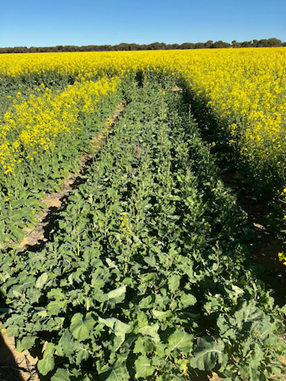
Early sowing refers to sowing up to six weeks before the normal sowing season. This allows for an earlier and quicker establishment of winter crops that can provide cover over winter and of a root network that leads to soil protection. The period in which the soil lies bare is shorter and, therefore, erosion and run-off are less significant and water infiltration is improved.
Early sowing can also help to mitigate summer drought impacts on spring sown crops, in particular the extreme evapotranspiration rates of Mediterranean regions. However, early sown plants are frost sensitive; therefore, farmers run the risk of losing the crops because of the low temperatures. In northern countries, temperature in spring (March) can be adequate but the risk of frost is still serious until May.
The low temperatures in northern countries may also delay crop establishment in spring crops resulting in an increased risk of soil erosion, avoiding cultivation and retaining residues from preceding crops may be preferable. Therefore, early sowing may require specific tools (plastic tunnel covers, onsite green house, etc.) and cannot be applied by all farmers for all crops. Early sowing of spring crops may also require different cultivation techniques (reduced tillage, controlled traffic farming) as soils are likely to be saturated before usual sowing times increasing the risk of soil compaction.
Restrictions on early sowing of winter crops include the harvest date of the preceding crop (particularly root crops) which may be later in northern Europe. For both spring and winter crops, early sowing involves a number of trade-offs. For example, different pest and disease risks arise that might require changes in management.
Shifting sowing dates is a simple but effective adaptation strategy. Although no study has fully quantified the effects of early and late sowing compared to normal sowing, research suggests that early sowing can improve seedling emergence vigour and disease and pest control. Conversely, late sowing tends to reduce plant biomass and yield compared to normal sowing. In particular, research has shown that yield increases are greater when the difference between early and conventional sowing is more pronounced.