Summary
The Paros island is characterized by a typical Mediterranean climate with high temperatures and limited rainfall during the dry months. As a result, Paros suffers from excessive droughts, which is amplified by tourism and the overuse of water resources.
Exploring the sponge functioning of small stone check dams in the Kavouropotamos stream. The ephemeral Kavouropotamos stream is located in the southern part of Paros, an island in the Cyclades.
Exploring the sponge functioning of small stone check dams in the Kavouropotamos stream. The ephemeral Kavouropotamos stream is located in the southern part of Paros, an island in the Cyclades.
Position
Latitude
37.01639°
Longitude
25.20278°
Project
SpongeScapes
Installation date
2021
Contact
WWF Greece
RBD code
EL14
Transboundary
0
Photo gallery
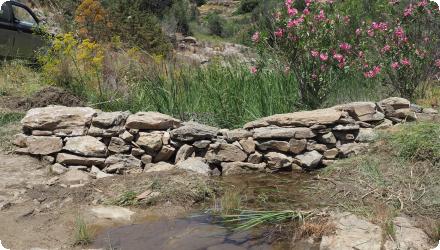
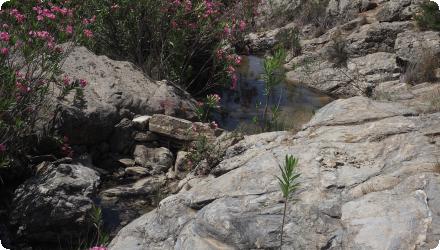
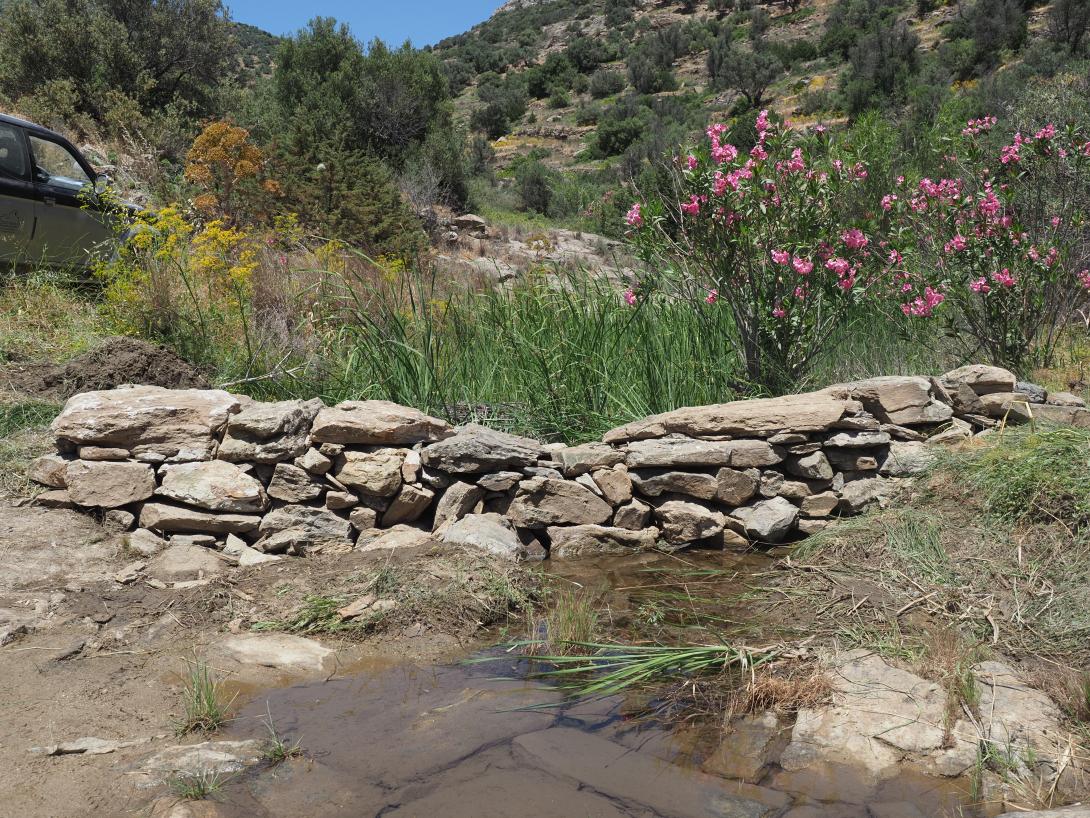
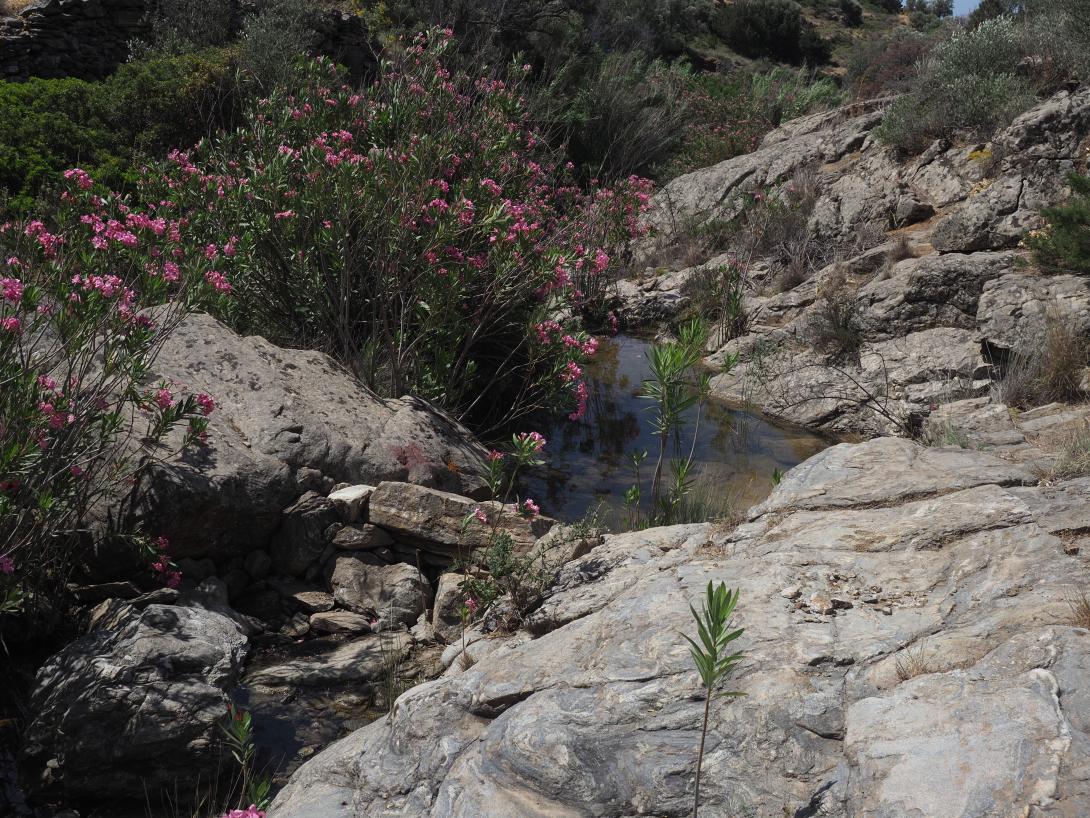
Location of the project
Kavouropotamos stream, southern Paros Island, Cyclades, Greece
NUTS Code
EL42 - Νότιο Αιγαίο (Notio Aigaio)
Project's objectives
Increase water retention capacity (by constructing 34 small retention ponds).
Enhance groundwater recharge.
Improve biodiversity (support habitats for flora and fauna).
Enhance groundwater recharge.
Improve biodiversity (support habitats for flora and fauna).
Involved Partners
| Authority type | Authority name | Role | Comments |
|---|---|---|---|
Climate zone
warm temperate dry
Temperature
17
Annual rainfall range
300 - 600 mm
Soil type
Regosol
Vegetation class
Mediterranean dryland grasses and hydrophytic plants around check dams (post-intervention)
Project scale
Meso
Project scale specification
1.3 km of stream
Performance timescale
1 - 4 years
Project area
The NWRM covers an area of approximately 5.9 km² (or 590 ha).
Area specifications
The area of the river basin where the check dams were constructed.
Size
34 stone check dams constructed along the riverbed
Size unit
m
Lifespan
2021-2023
The traditional stone weirs are designed to collect and retain small amounts of water and improve groundwater recharge during dry periods. The design aims to reduce water velocity and create small biodiversity hotspots. The weirs also contribute to flood mitigation by slowing down water flow.
Design capacity description
The project is designed to reduce water velocity, promote water infiltration, and retain small amounts of water that can later be used for irrigation.
Limited rainfall and high evaporation in the region.
Potential constraints due to local topography and the riverbed’s natural flow.
Potential constraints due to local topography and the riverbed’s natural flow.
The Mediterranean climate and the calcareous soil of the region provide a natural environment conducive to water retention, making this an ideal area for implementing the stone weirs.
Low cost of the measure
Stones availability
Low cost of the measure
Stones availability
Costs total information
The total investment costs include the construction of 34 check dams, ongoing monitoring, and coordination efforts between stakeholders. Specific figures for total costs are not mentioned beyond individual funding sources.
Costs investment information
The total investment for the project includes the construction of 34 stone weirs and other infrastructure, as well as contributions to monitoring and coordination efforts among stakeholders.
Costs capital information
The capital costs are primarily the costs related to the construction of the check dams, including the use of local stones and traditional building techniques.
Costs land acquisition information
The project does not mention any land acquisition costs because the project seems to utilise existing land under the jurisdiction of local stakeholders like the Municipality of Paros.
Costs operational information
The project is designed with low maintenance requirements, as it uses traditional stone structures that are sustainable and require minimal intervention.
Costs maintenance information
Maintenance costs would likely involve minor upkeep of the stone weirs to ensure continued water retention and vegetation support.
Costs disposal decommissioning information
The project does not specify any decommissioning costs since it is based on sustainable, low-maintenance infrastructure that is not intended for removal.
Compensations scheme information
No compensation scheme is mentioned for this project.
Policy context
The project addresses water scarcity in small Mediterranean islands by reviving traditional stone weirs to increase water retention and groundwater recharge, support local biodiversity, and mitigate flood risks.
Aiming at increasing the sponge functioning of the stream and enhancing its capacity to support biodiversity, WWF Greece together with Mediterranean Institute for Nature and Anthropos (MedINA), Paros Municipality, Paros Water Supply & Sewerage Company and Boulouki built 34 traditional dry-stone check dams along 1300 meters of the stream in June 2022.
These semi-permanent low-height structures, historically designed to collect small amounts of water for irrigation, also serve a dual purpose: by reducing flow velocity they allow more water to infiltrate into the soil, and by retaining water, they create shallow ponds that are biodiversity hotspots, critical for flora and fauna during dry periods.
Aiming at increasing the sponge functioning of the stream and enhancing its capacity to support biodiversity, WWF Greece together with Mediterranean Institute for Nature and Anthropos (MedINA), Paros Municipality, Paros Water Supply & Sewerage Company and Boulouki built 34 traditional dry-stone check dams along 1300 meters of the stream in June 2022.
These semi-permanent low-height structures, historically designed to collect small amounts of water for irrigation, also serve a dual purpose: by reducing flow velocity they allow more water to infiltrate into the soil, and by retaining water, they create shallow ponds that are biodiversity hotspots, critical for flora and fauna during dry periods.
Community involvment
No
Design consultation activity
| Activity stage | Name | Key issues | Comments |
|---|
Policy target
| Target purpose |
|---|
|
Increase Water Storage
|
|
Groundwater Recharge
|
|
Improved Biodiversity
|
Target Remarks
The primary targeted problem is water scarcity due to low rainfall, high evaporation, and increased water demand, particularly in islands with high tourism.
Policy pressure
| Pressure directive | Relevant pressure |
|---|---|
|
WFD identified pressure
|
Water Scarcity
|
Pressures remarks
The project primarily addresses the pressure of water scarcity, which is exacerbated by climate change, urbanization, and tourism activities in the region.
Policy impact
| Impact directive | Relevant impact |
|---|---|
|
WFD identified impact
|
Impact remarks
The impact of the project is expected to include increased water availability, improved biodiversity, and enhanced ecosystem services in arid island systems.
Requirement directive
| Requirement directive | Specification |
|---|---|
Requirement directive remarks
The project aligns with the EU Water Framework Directive (WFD), contributing to the sustainable management of water resources and the protection of aquatic ecosystems.
Policy challenges requirements
The project addresses the challenge of managing water resources in arid and semi-arid regions, with an emphasis on providing water for both human and ecological needs.
Contractual arrangements
0
| Arrangement type | Responsibility | Role | Name | Comments |
|---|---|---|---|---|
Part of wider plan
0
Wider plan type
| Wider plan type | Wider plan focus | Name | Comments |
|---|---|---|---|
|
Regional
|
Water
|
Mediterranean Islands Collective Action Plan
|
Water conservation, biodiversity, climate adaptation
|
While such check dams have been widely used for water management in the Mediterranean region for hundreds of years, our knowledge of their contribution to water availability (especially groundwater recharge) is limited. To support the case study, pre- and post- monitoring actions on biotic and abiotic factors are being conducted to monitor the impact of the dry-stone check dams on groundwater levels and biodiversity.
Biotic factors (biodiversity)
Abiotic factors (groundwater levels)-Pre and post monitoring of aquifer level by the project team.
Biotic factors (biodiversity)
Abiotic factors (groundwater levels)-Pre and post monitoring of aquifer level by the project team.
Maintenance
Low
In-Stream
The performance of the check dams was evaluated based on groundwater recharge, surface water retention, and biodiversity (flora and fauna surveys). Monitoring focused on measuring the extent of groundwater recovery, the formation and persistence of shallow ponds, and the development of vegetation.
Biotic Factors: Monitoring of flora and fauna, species diversity, and vegetation growth.
Abiotic Factors: Monitoring water retention, groundwater levels, and pond formation and persistence.
Data Collection: Pre and post-construction monitoring was carried out to determine the impact on local biodiversity and hydrological conditions.
Abiotic Factors: Monitoring water retention, groundwater levels, and pond formation and persistence.
Data Collection: Pre and post-construction monitoring was carried out to determine the impact on local biodiversity and hydrological conditions.
Estimations were made based on the implementation costs of building the 34 check dams, ongoing monitoring expenses, and coordination between stakeholders. Costs are considered low due to the simple construction techniques.
The direct benefits of this project include water retention, groundwater recharge, biodiversity improvement, and the creation of habitats for endangered species. Additionally, there is a benefit for human activities downstream, as the check dams also provide flood mitigation.
The ancillary benefits include the revival of traditional techniques, enhanced skills through training, and the creation of recreational opportunities related to the restored ecosystems. The project also contributes to increased resilience to droughts.
1
Ecosystem provisioning services
Increased biodiveristy
Success factor(s)
| Success factor type | Success factor role | Comments | Order |
|---|---|---|---|
|
Attitude of relevant stakeholders
|
main factor
|
<p>Engaging local stakeholders from the start ensured community buy-in and effective implementation. The simplicity of the design also ensured low maintenance costs, making it a sustainable solution.</p>
|
Driver
| Driver type | Driver role | Comments | Order |
|---|---|---|---|
|
Other
|
main driver
|
The project was initiated in response to the environmental challenges posed by climate change, particularly on small islands where water scarcity is becoming more acute due to low rainfall and high evaporation rates.
|
Flexibility adaptability
The project demonstrates flexibility in terms of scaling up the stone weir method, which can be adapted for use in other Mediterranean islands with similar conditions.
Transferability
The approach of using traditional stone weirs can be easily transferred to other Mediterranean islands facing similar water scarcity issues. Given that the technique relies on locally available materials and simple construction methods, it is adaptable to various regions with similar environmental challenges.
Basin characteristics influence
The calcareous soil and Mediterranean climate of the basin (high evaporation rates, low rainfall) strongly influence the effectiveness of the check dams in promoting water retention and supporting local biodiversity.
Cost effectiveness
The intervention is highly cost-effective due to the use of local materials (stones) and the low maintenance requirements of the check dams.
English