Content
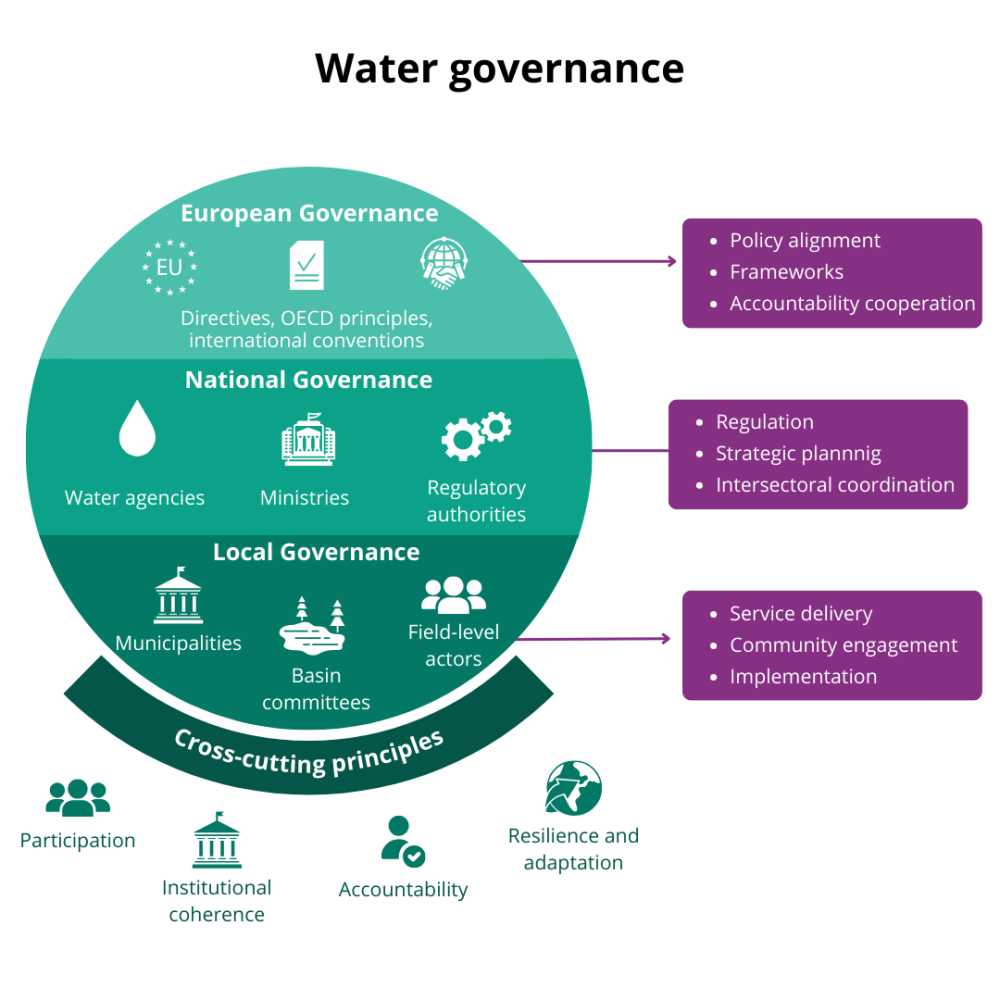
Water governance means the rules, institutions, and relationships that determine how decisions are made, and put into practice, when it comes to managing water. It happens across different,interconnected levels, from local communities to national authorities to basin organisations, and even international bodies. Understanding how these layers interact helps reveal both new possibilities and real obstacles for building fair, effective, and sustainable water systems.
This section opens up the different layers and perspectives in water governance, from the local all the way up to the European and international level. It starts by clarifying what “governance” really means, how it’s different from management, and what core roles and functions it involves. Then, it tackles common real-world challenges, like fragmented responsibilities, conflicting priorities, or limited enforcement, and underlines why coordination between sectors and across all levels is so crucial.
You will discover key ideas like Integrated Water Resources Management (IWRM), multi-level governance, and regulatory frameworks, all illustrated with real-world examples and case studies from the InnWater pilot sites. This section also introduces practical tools and methods, developed in the project, to help assess and improve of governance systems at any scale.
By linking conceptual foundations with practical applications, this section sets the stage for the rest of the Learning Environment, giving you a strong, shared understanding of water governance as something multi-layered, dynamic, and always evolving.