Descriptive Fields
Water Governance, Resilience and the Ecological Transition
Water governance is at the heart of building resilience and pushing forward the ecological transition across Europe. It’s not just about technical rules or paperwork; governance provides the backbone for deadling with today’s big, interconnected environmental challenges are addressed in a coordinated and legitimate manner.
Governance is what shapes how institutions face shocks like drought, flooding, pollution, or ecological degradation. As climate change increases these risks, solid governance lets societies prepare for, respond to, andadapt tostress, while still keeping equity and sustainability front and center.
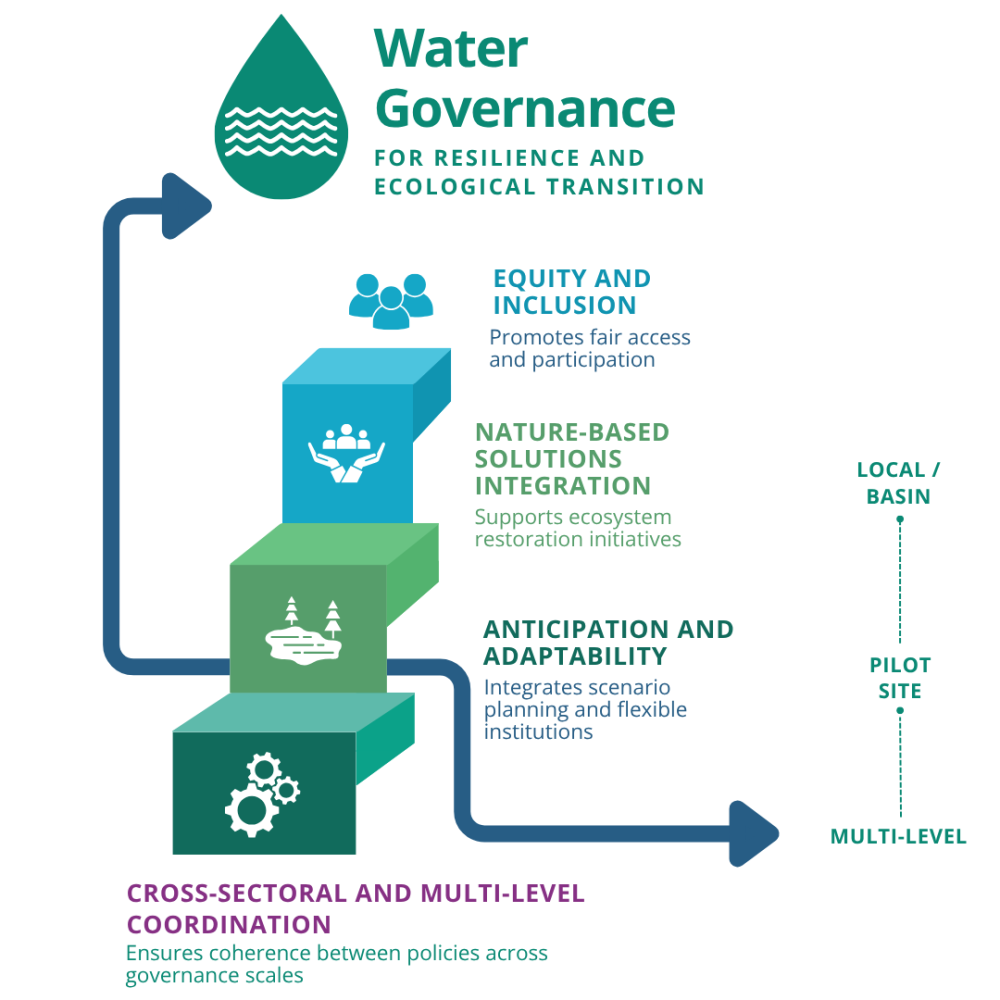
The InnWater project points to four big areas where governance can boost resilience and help drive the ecological transition:
1. Coordination across sectors and scales
Climate, farming, biodiversity, energy, and urban planning are all deeply connected by water. Good governance makes sure these policy areas work together, not against each other, so responses to big risks are coordinated – not piecemeal.
2. Anticipatory and adaptive capacity
Governance needs to support flexible, quick decision-making, especially when the future is uncertainy. This means using early warning systems, planning for scenarios, and having the flexibility to adjust rules or responsibilities when faced with floods, droughts, or other extremes.
3. Integration of nature-based solutions (NBS)
Moving towards a greener future means making ecosystem protection and restoration part of the main governance processes. That means making room in laws and institutions for NbS, encouraging investment in them, and aligning funding, like green infrastructure programs, with long-term ecological goals.
4. Inclusive and equitable access
You can’t build real climate resilience if you leave people behind. Governance must make sure everyone, including vulnerable groups, marginalized communities, and future generations, has a seat at the table and gets their fair share of the benefit from adaptation.
This all-round approach is key for making the EU Green Deal and Biodiversity Strategy 2030 real, both of which see water as a core driver of broader transformation. For InnWater, water governance isn’t just a way to to put these policies into practice, it’s the meeting point where environmental ambition, democratic, and real institutional capacity come together