
Content
The integration of local knowledge was a fundamental component of the OPTAIN methodology. While the project relied on advanced process-based modelling tools and multi-objective optimisation algorithms, these analytical frameworks required contextual input to ensure realism and relevance.
Agricultural catchments are highly heterogeneous systems. Soil properties, crop rotations, drainage infrastructure, farming practices and governance structures vary significantly across regions. For this reason, purely technical modelling without stakeholder input would risk oversimplifying local constraints.
In OPTAIN, stakeholder participation ensured that modelling scenarios were grounded in practical realities. Importantly, participation did not involve field implementation of measures. Instead, local actors contributed to shaping the analytical framework used to evaluate Natural Small Water Retention Measures (NSWRM).
Local knowledge supported the project in several key areas:
-
Selection of relevant NSWRM to be included in modelling scenarios
-
Identification of suitable locations within catchments for potential measure allocation
-
Definition of meaningful performance indicators, including locally relevant priorities
-
Assessment of perceived feasibility and acceptability of alternative NSWRM portfolios
-
Interpretation of optimisation trade-offs generated through modelling
This contribution was particularly important in translating theoretical modelling outputs into context-sensitive planning insights.
Bridging Scientific Modelling and Practical Experience
The modelling systems used in OPTAIN (e.g., SWAT+, SWAP) simulate hydrological and nutrient processes at field and catchment scales. However, parameterisation choices—such as which measures to simulate, how intensively to apply them, and where to locate them spatially—require informed assumptions.
Through structured engagement formats (including Multi-Actor Reference Groups and stakeholder surveys), local participants helped ensure that:
-
modelled measures reflected realistic agricultural practices,
-
spatial allocation scenarios considered actual land-use constraints,
-
optimisation objectives aligned with regional priorities,
-
cost-related assumptions were compatible with local economic conditions.
This collaborative approach increased the credibility and robustness of simulation-based analyses without implying practical deployment.
Participation in Evaluating Trade-Offs
One of the distinguishing features of OPTAIN is its use of multi-objective optimisation, which generates sets of Pareto-optimal NSWRM portfolios rather than a single “best” solution.
These portfolios represent different trade-offs between:
-
Water retention efficiency
-
Nutrient retention efficiency
-
Agricultural productivity
-
Cost-related indicators
Stakeholder participation was crucial in evaluating these trade-offs. Through discussion and structured rating exercises, participants expressed preferences and highlighted constraints, thereby contributing to the interpretation of optimisation results.
This ensured that optimisation outcomes were not treated as purely technical outputs but as decision-support insights requiring contextual understanding.
Strengthening Legitimacy and Transparency
By integrating stakeholder input at multiple stages of the modelling process, OPTAIN strengthened:
-
Transparency of assumptions
-
Relevance of selected scenarios
-
Acceptability of analytical outcomes
-
Transferability of insights across regions
The participatory process therefore enhanced the legitimacy of the project’s modelling results while preserving its scientific integrity.
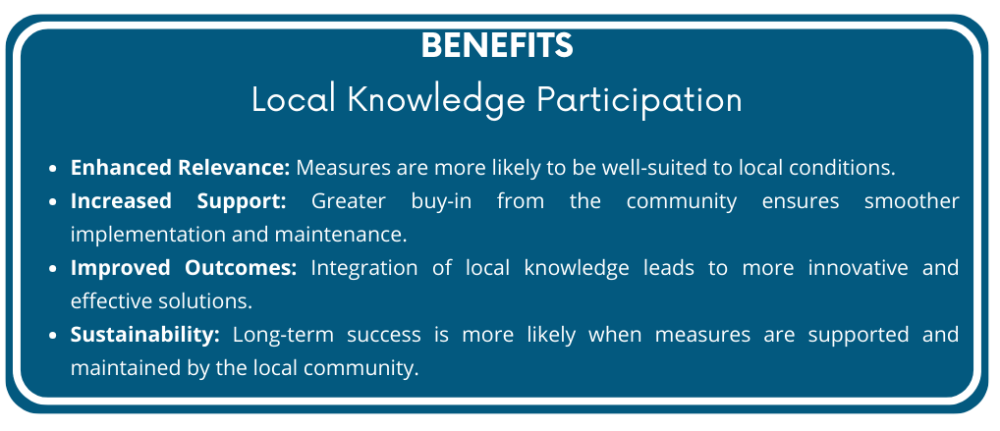
By emphasizing the importance of local knowledge and participation, NSWRM projects can achieve higher effectiveness, sustainability, and community support, ultimately leading to improved water and nutrient management outcomes.