
Content
Within OPTAIN, collaborative workshops were organised in each case study region to support the structured evaluation of potential NSWRM. These workshops were conducted with members of the Multi-Actor Reference Groups (MARGs), including farmers, advisors, researchers and local authorities.
The purpose of these sessions was not to decide on real-world implementation, but to assess and rank measures for further modelling and optimisation analysis. Participants were invited to discuss:
-
the relevance of specific NSWRM under local soil and climate conditions,
-
perceived feasibility within existing farming systems,
-
potential synergies or conflicts between different measures,
-
practical constraints affecting their applicability.
Through guided discussions and structured rating exercises, stakeholders provided qualitative evaluations that helped narrow down the set of measures to be included in scenario simulations.
This collaborative process ensured that the subsequent modelling work reflected locally realistic assumptions, while maintaining a strictly analytical focus.
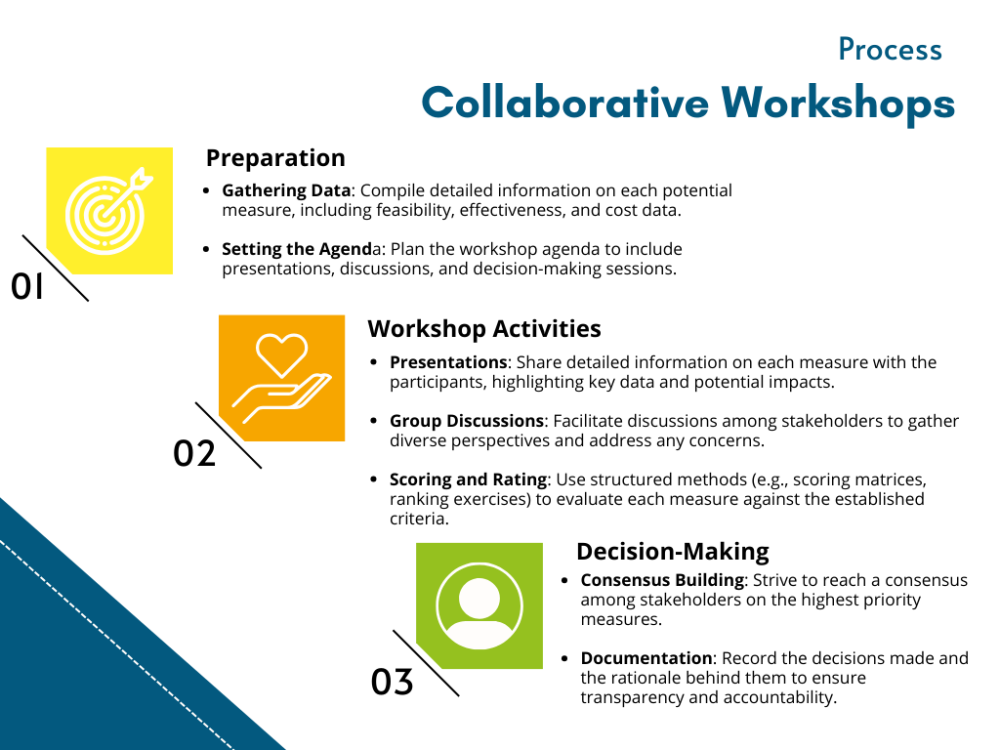
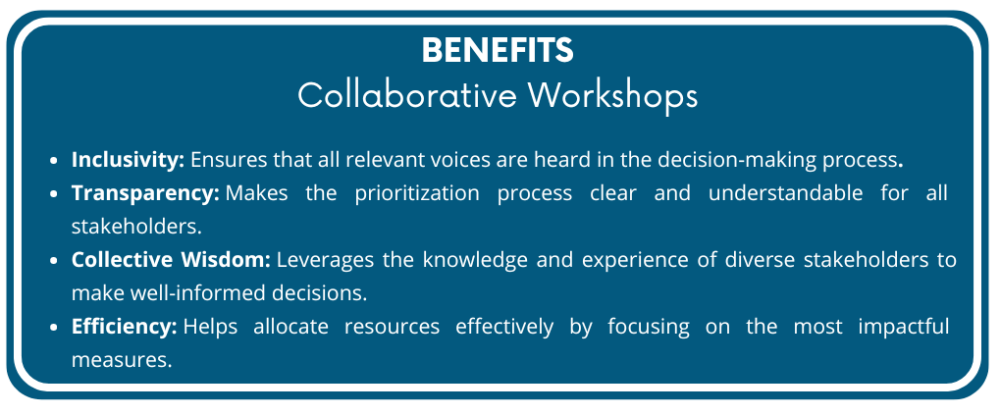
By following these processes and criteria, NSWRM projects can prioritize measures in a systematic and collaborative manner, ensuring that the most feasible, effective, and beneficial interventions are implemented first. This structured approach enhances the overall success and sustainability of the project.