
Content
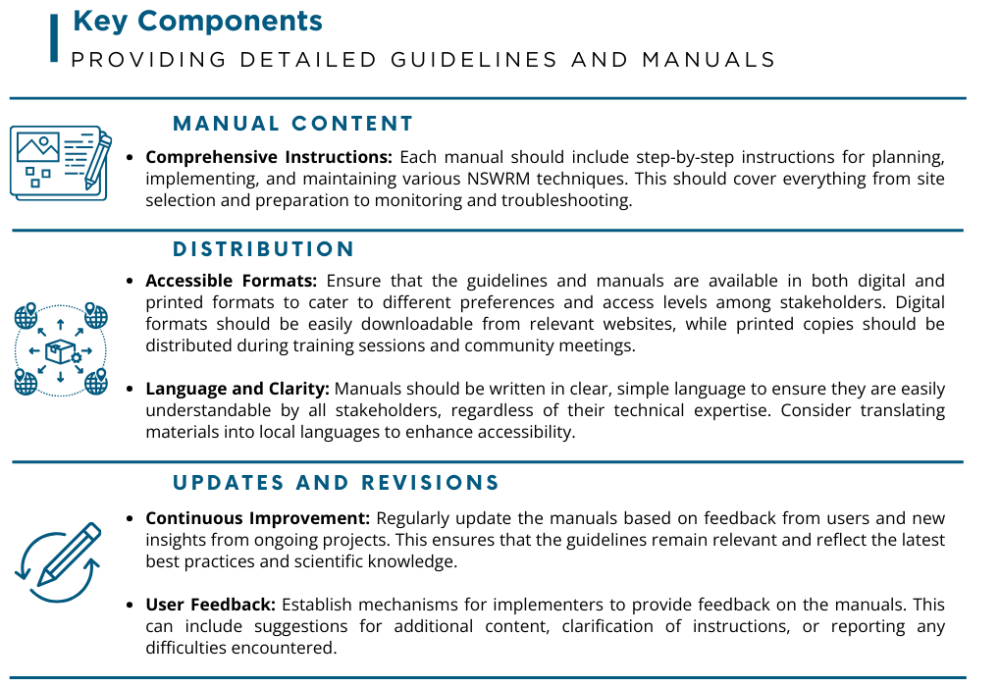
In addition to training sessions, OPTAIN developed structured guidelines and explanatory materials to support stakeholders in understanding the project’s modelling and optimisation framework. These materials were not intended as field implementation manuals, but as resources to clarify how Natural Small Water Retention Measures (NSWRM) were analysed within calibrated catchment models.
The guidelines provide detailed explanations of:
-
How NSWRM are parameterised within process-based models
-
How scenario simulations are designed and interpreted
-
How performance indicators are calculated and compared
-
How multi-objective optimisation identifies Pareto-optimal portfolios
These documents help users understand the analytical steps linking measure identification, modelling, scenario development and optimisation. They also clarify the assumptions underlying simulations and the limitations of model-based predictions.
By making methodologies transparent, the guidelines enhance credibility, reproducibility and transferability of the project’s analytical results. They support informed use of modelling outputs in policy dialogue, strategic planning and research contexts, without implying direct implementation in agricultural practice.
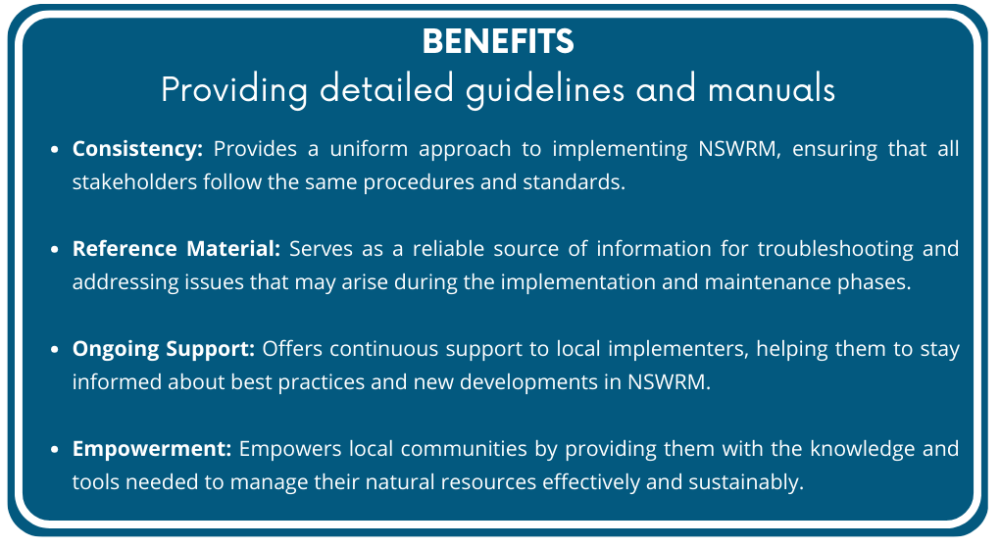
By providing detailed guidelines and manuals, NSWRM projects can ensure that local implementers have access to the information and support they need to successfully carry out and sustain these measures. This approach enhances the overall effectiveness and sustainability of NSWRM, leading to long-term improvements in water and nutrient management.