
Content
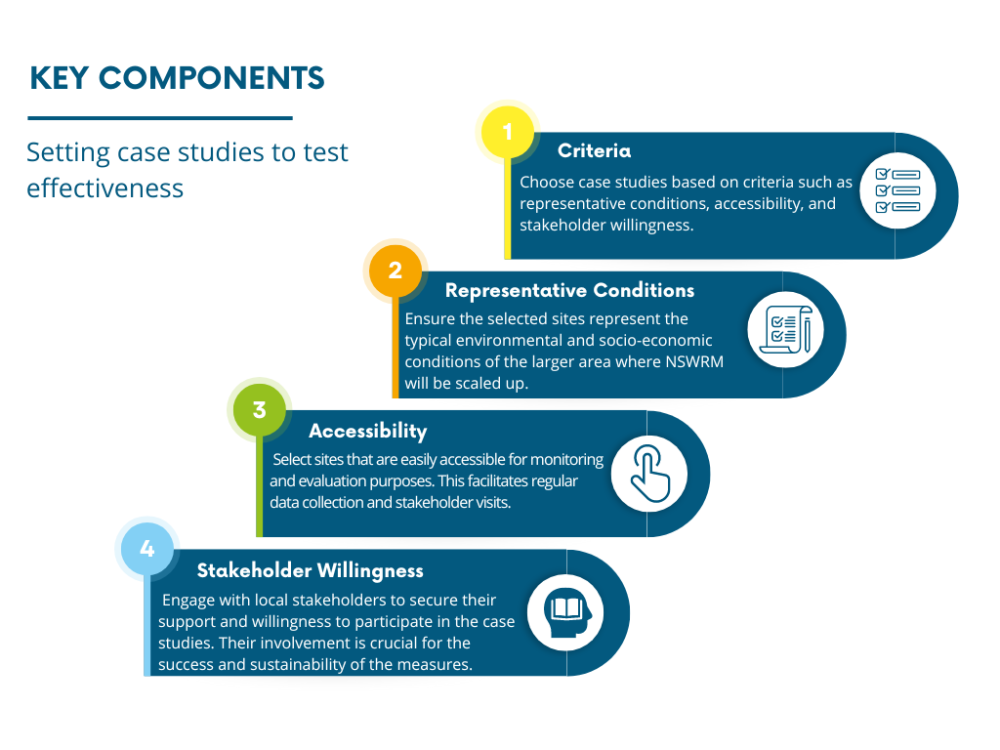
Within OPTAIN, the case studies were established as calibrated modelling environments representing real agricultural catchments, rather than as implementation sites. Each case study provided the spatial and environmental framework necessary to simulate and analyse Natural Small Water Retention Measures (NSWRM) under region-specific conditions.
The selection of case studies aimed to represent three major European biogeographical regions (Boreal, Continental and Pannonian) thereby capturing a wide diversity of climatic conditions, soil properties, hydrological dynamics and agricultural systems. This diversity was essential for ensuring that modelling results reflected contrasting environmental contexts and allowed structured comparison across regions.
Setting up each case study involved defining catchment boundaries, harmonising environmental and agricultural datasets, and calibrating process-based hydrological and nutrient transport models. These calibrated models served as the baseline reference against which alternative NSWRM scenarios were later simulated.
Once established, the case studies functioned as analytical platforms for scenario exploration and multi-objective optimisation. They enabled the systematic evaluation of how different spatial allocations and combinations of measures could influence water retention efficiency, nutrient transport and agricultural productivity under both current and projected climate conditions.
In this way, the case studies provided a consistent and scientifically robust framework for simulation-based assessment, without implying physical implementation of measures in the field.
Implementation
-
Techniques: Apply selected NSWRM techniques at case studies, following detailed guidelines and best practices. This includes preparatory work, installation, and initial management.
-
Monitoring: Establish comprehensive monitoring protocols to collect data on various metrics such as water retention, nutrient levels, soil health, and biodiversity. Use both qualitative and quantitative methods to capture a holistic view of the measures' impacts.
-
Stakeholder Involvement: Ensure continuous involvement of local stakeholders throughout the implementation process. Provide training and support to enable them to contribute effectively to the project.
Evaluation
-
Data Analysis: Analyse the collected data to assess the effectiveness of the implemented measures. This includes comparing pre- and post-implementation conditions to determine the impact of NSWRM.
-
Feedback: Gather feedback from local stakeholders and adjust techniques as needed. This iterative process helps refine the measures and addresses any issues that arise during implementation.
-
Reporting: Document the findings and lessons learned from the case studies. Share these insights with a broader audience to inform future implementations and policy decisions.
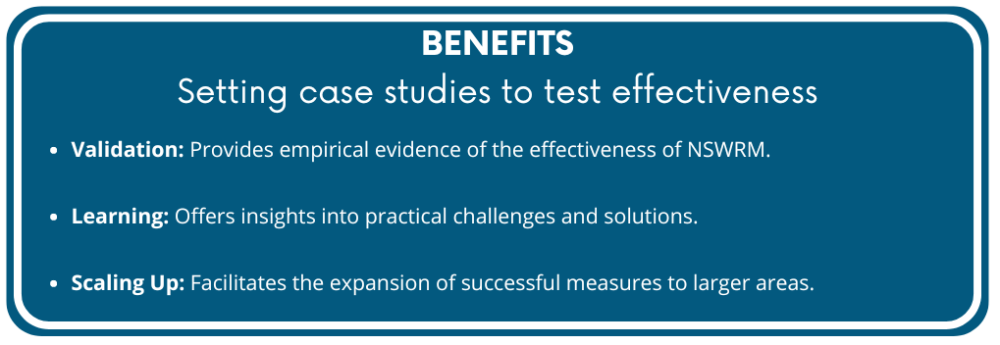
By implementing case studies, NSWRM initiatives can be tested and refined in real-world conditions, ensuring that the most effective and sustainable practices are adopted for broader application. This approach helps build confidence among stakeholders and supports the successful scaling up of NSWRM efforts.