
Content
Performance indicators are essential tools for measuring the effectiveness of Natural Small Water Retention Measures (NSWRM). These indicators provide quantifiable data that help stakeholders understand the impact of the measures on both the environment and local communities. By tracking specific metrics, performance indicators enable continuous monitoring and evaluation of NSWRM, ensuring that they meet their intended objectives and deliver sustainable benefits.
Environmental and socio-economic indicators
Performance Indicators refer to specific metrics designed to evaluate the environmental and socio-economic impacts of Natural Small Water Retention Measures (NSWRM). These indicators are crucial for assessing how well the implemented measures are achieving their intended goals, such as improving water retention, enhancing water quality, reducing nutrient runoff, and promoting biodiversity. These indicators are used to monitor progress, inform decision-making, and optimize the implementation of NSWRM in different agricultural contexts.
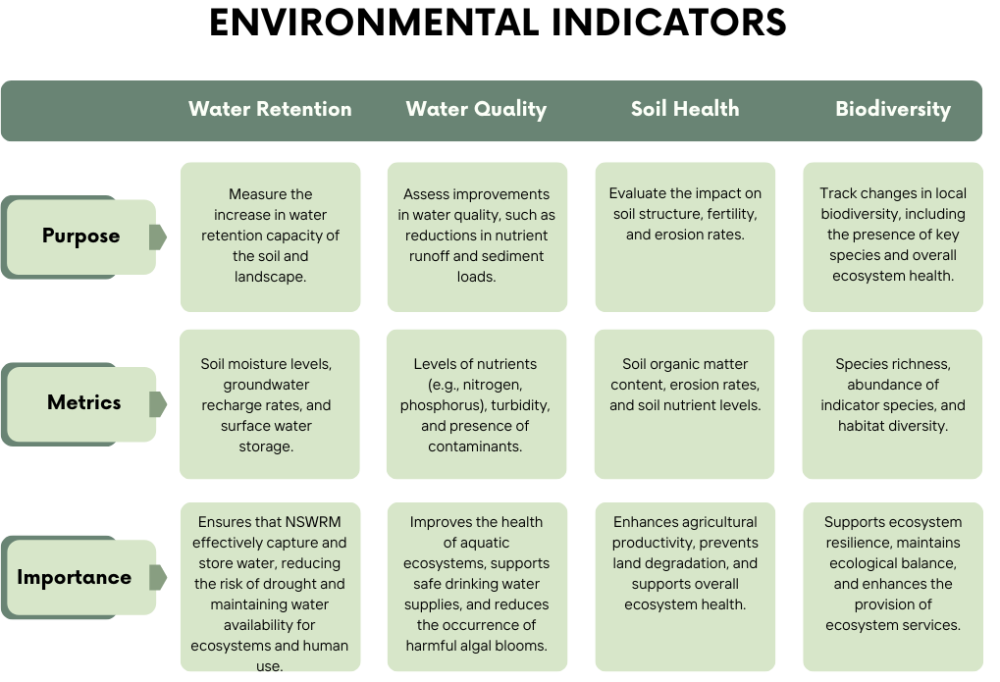
Environmental indicators
Environmental indicators concern the environmental and biophysical impacts of NSWRM on water quantity and quality (e.g., water and nutrient fluxes), soil erosion and yield at field and catchment scale.
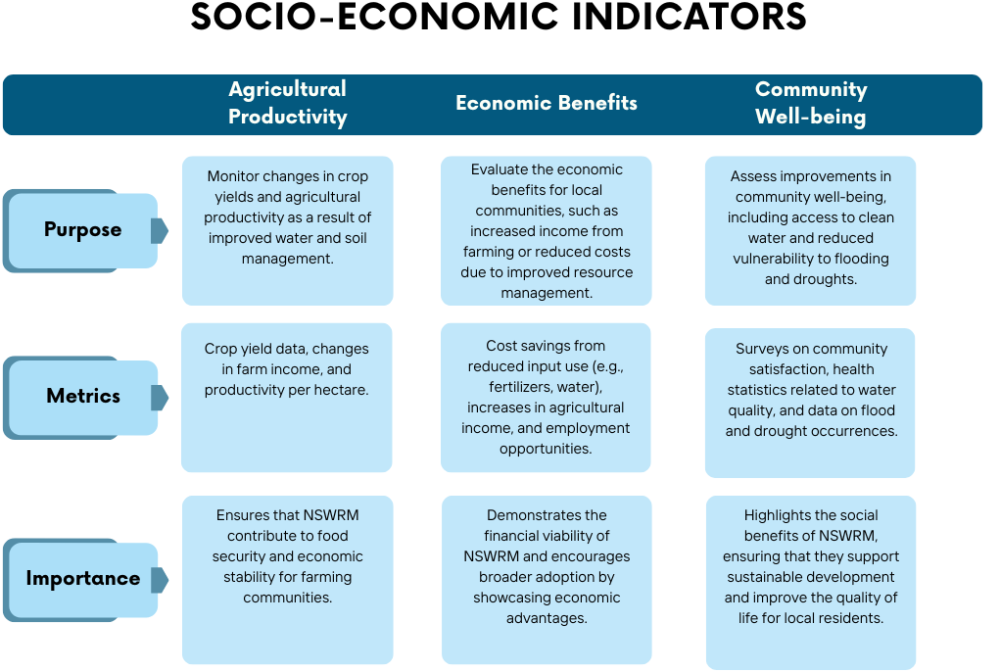
Socio-Economic Indicators
Socio-economic indicators relate to the financial and/or economic features of individual measures (e.g., implementation costs), but also to the possible implications on the economics of agriculture at farm- and catchment-level (e.g., farm gross margin, agricultural net value added). They also concern the societal impacts expected from NSWRMs’ implementation, owing to a better quality of natural resources or to a higher resilience to climate and environmental risks.
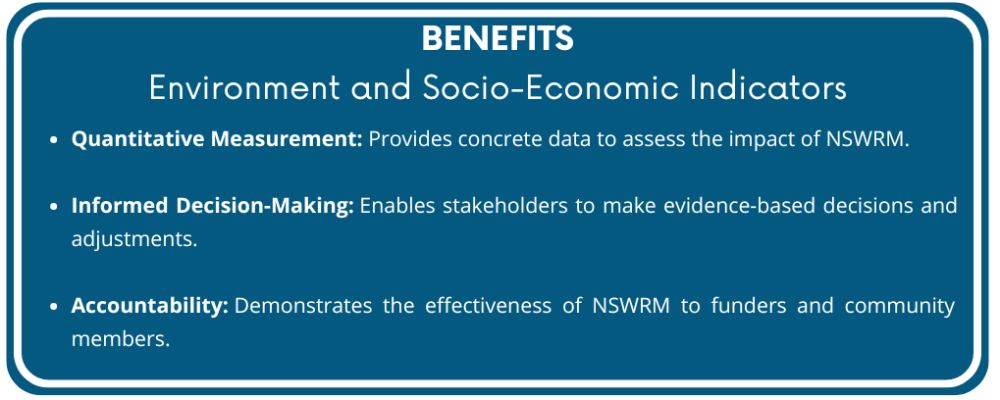
By systematically tracking environmental and socio-economic indicators, stakeholders can gain a comprehensive understanding of the effectiveness of NSWRM and make informed adjustments to enhance their performance. This approach ensures that the measures deliver sustained environmental and socio-economic benefits, ultimately contributing to greater resilience against climate change and improved ecosystem health.