Content
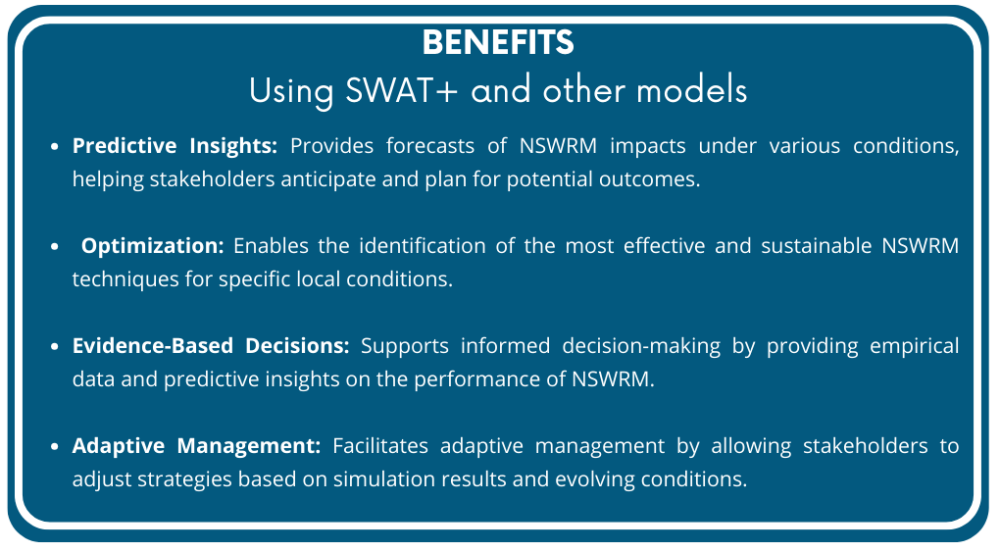
Model simulations, such as SWAT+ (Soil and Water Assessment Tool Plus), play a central role in the OPTAIN analytical framework. These models are used to simulate hydrological and nutrient transport processes in order to assess the potential performance of Natural Small Water Retention Measures (NSWRM) under different environmental and climate scenarios.
Rather than evaluating implemented measures in the field, the modelling framework provides predictive, simulation-based assessments of alternative NSWRM configurations. This allows exploration of how different spatial allocations and combinations of measures may influence water retention, nutrient dynamics and agricultural performance at catchment scale.
What is SWAT+?
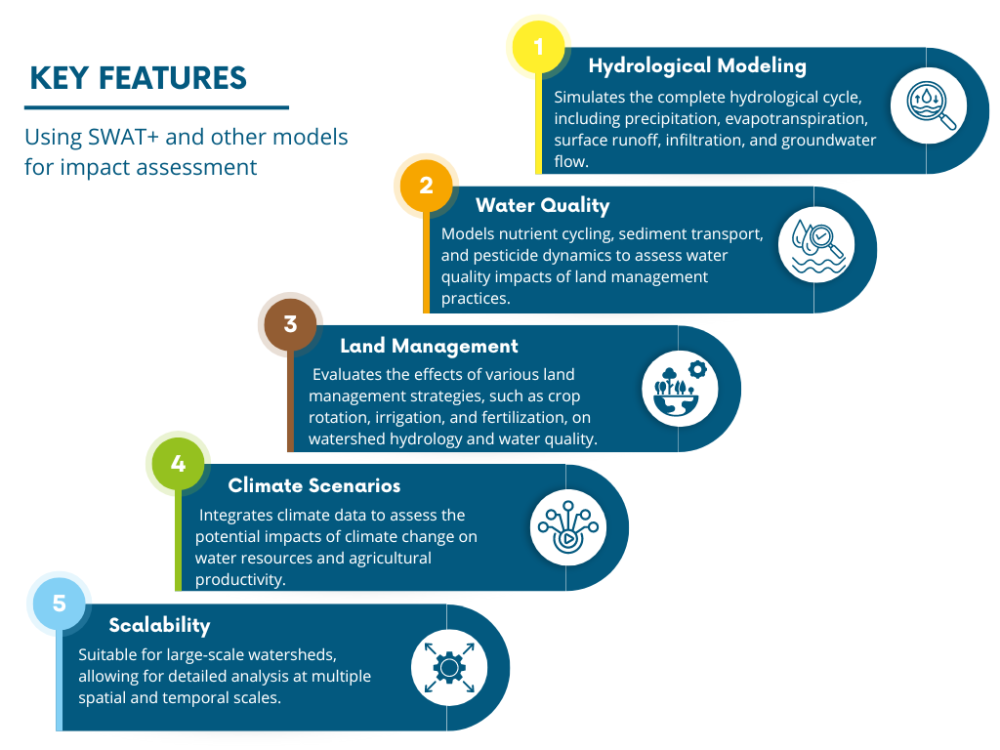
SWAT+ is an advanced, process-based hydrological model designed to simulate water flow, sediment transport and nutrient cycling across complex watersheds. It integrates climate data, land use information, soil characteristics and management practices to generate detailed simulations over long time periods.
Within OPTAIN, SWAT+ is used to:
-
Simulate hydrological processes, including surface runoff, infiltration and groundwater flow
-
Assess nutrient transport dynamics, including nitrogen and phosphorus fluxes
-
Evaluate the impacts of alternative land management scenarios
-
Explore responses under future climate projections
Scenario-Based Impact Assessment
The modelling workflow includes:
-
Establishing a baseline scenario representing current conditions
-
Developing multiple NSWRM scenarios, reflecting different spatial allocations and combinations of measures
-
Running simulations to quantify changes in hydrological and nutrient indicators
-
Analysing outputs to identify trade-offs between environmental and agricultural objectives
The results derived from SWAT+ and complementary models are integrated into the project’s multi-objective optimisation framework, where alternative NSWRM portfolios are compared through Pareto-based analysis.
Role in Decision Support
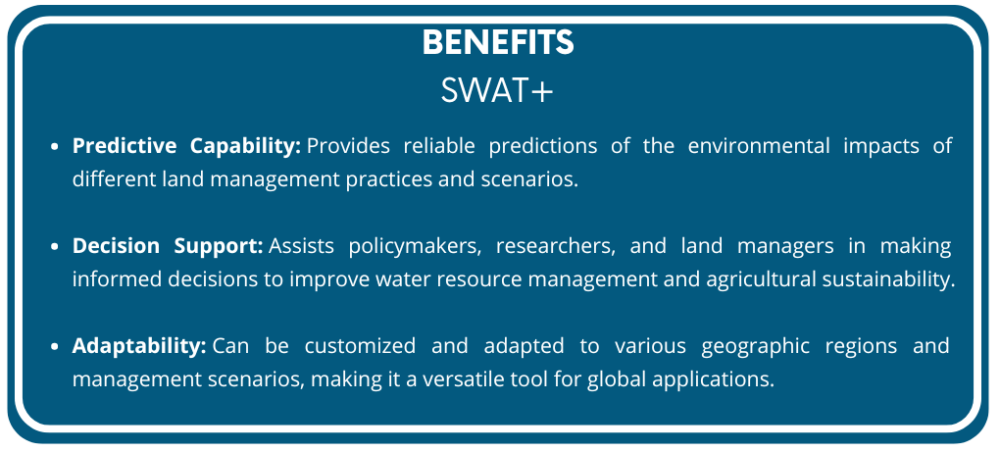
Model outputs provide structured, quantitative insights that support informed discussion among stakeholders. These insights are based exclusively on process-based simulations and optimisation analyses, not on field implementation or monitoring activities.
By using SWAT+ and related models, OPTAIN enables systematic exploration of alternative planning strategies and assessment of their projected impacts under current and future climate conditions.