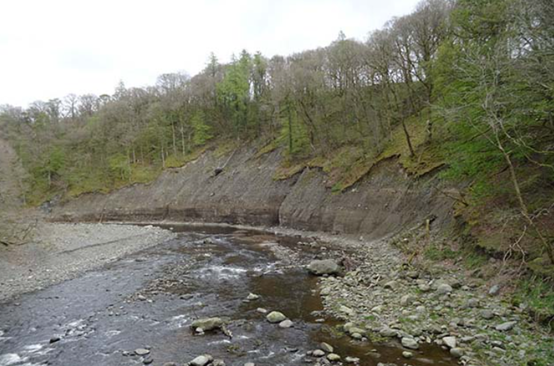
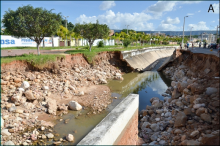
- Elimination of riverbank protection
- Elimination of River Bank Impermeable Surfaces
Riverbanks hold a key position in the functionality of floodplains as they constitute the gradual transition between aquatic and terrestrial ecosystems. However, due to technical constructions, the majority of riverbanks in temperate regions are far from their ecological potential.
A riverbank protection is an inert or living construction providing bank fixation but also an obstacle for the lateral connection of the river. Eliminating it consists in removing some parts of the bank protection, especially the inert one, in order to improve lateral connectivity of the river, diversify flows (depth, substrate, and speed) and habitats, but also cap floods in the mainstream. It is a prerequisite for many other measures like re-meandering or widening, as well as initiating subsequent channel migration and dynamics.
This measure is appropriate and very effective in impounded large gravel riverbeds where gravel bars are drowned and shallow low-velocity habitats are virtually absent. In these impounded rivers, spawning and nursery habitats like shallow near-bank gravel bars, side channels, and backwaters are often the bottleneck for stream-type specific fish species. River banks have been heavily fixed and the potential for river restoration is limited by uses such as navigation, hydropower or flood control and mitigation measures are restricted to the river banks.
Techniques such as riverbank fascines made up of dead wood branches taken from local bushes and trees, or living willow rods, or planting vegetation decrease erosion, stabilise riverbank and slow down runoff. They can be an alternative to grey river bank protection.