
Content
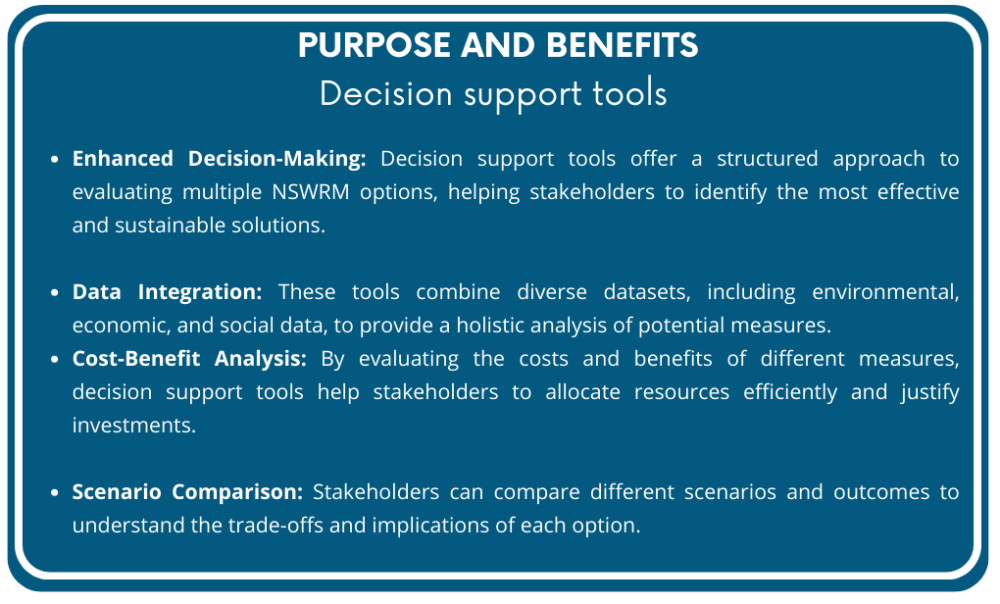
Decision-support within OPTAIN is entirely grounded in model-based simulation results and multi-objective optimisation analysis. The objective is not to prescribe predefined solutions, but to provide a structured analytical environment in which alternative Natural Small Water Retention Measure (NSWRM) portfolios can be evaluated against multiple, potentially conflicting objectives.
The decision-support framework integrates:
-
Outputs from process-based hydrological and nutrient transport models
-
Results from multi-objective optimisation algorithms
-
Visualisation tools for analysing Pareto-optimal portfolios
-
Stakeholder-informed evaluation processes
Central to this approach is the identification of efficient trade-off solutions. Rather than defining a single optimal strategy, the optimisation framework generates sets of Pareto-optimal configurations, where improvements in one objective (e.g., water retention efficiency) cannot occur without compromising another (e.g., agricultural productivity or cost-related indicators).
Decision-support tools enable structured comparison of portfolios according to:
-
Water retention efficiency
-
Nutrient retention efficiency
-
Agricultural productivity
-
Cost-related metrics
Post-processing tools (e.g., Pareto-based visualisation environments) allow users to explore trade-offs interactively, facilitating transparent interpretation of optimisation results. These tools support analytical decision-making in simulated environments and do not represent deployment instruments.
Key Features
-
Multi-Criteria Analysis (MCA): Evaluates NSWRM options based on various criteria, such as environmental impact, cost, feasibility, and stakeholder preferences.
-
Cost-Benefit Analysis (CBA): Assesses the economic viability of NSWRM options by comparing the expected benefits with the associated costs.
-
Geographic Information Systems (GIS): Integrates spatial data to visualize the potential impacts of NSWRM and support spatial planning.
-
User-Friendly Interfaces: Designed to be accessible to both technical and non-technical users, facilitating broader stakeholder engagement.
Examples of Decision Support Tools
-
WOCAT Database: Provides detailed descriptions and evaluations of various NSWRM, enabling users to compare and select appropriate measures based on their specific needs and conditions.
-
SWAT+ (Soil and Water Assessment Tool): In addition to scenario exploration, SWAT+ serves as a decision support tool by predicting the long-term impacts of different land management practices on water resources.
-
DSS (Decision Support System) for Water Management: A comprehensive tool that integrates hydrological models, economic analysis, and stakeholder inputs to support decision-making in water management.
-
CoMOLA (Common Multi-Objective Layered Approach): A critical methodology within OPTAIN, CoMOLA integrates multiple objectives, such as environmental sustainability, economic viability, and social acceptability, to optimize the selection and application of NSWRM. This layered, multi-objective framework facilitates the identification of Pareto-optimal solutions, ensuring balanced and effective decision-making in complex and dynamic environments.
Lessons Learned
-
Stakeholder Involvement: Effective use of decision support tools requires active involvement of stakeholders to ensure that the selected measures align with local needs and preferences.
-
Training and Capacity Building: Providing training to stakeholders on how to use these tools enhances their ability to make informed decisions and increases the overall success of NSWRM projects.
-
Continuous Feedback and Adaptation: Regular feedback and updates based on real-world implementation and monitoring data help to refine decision support tools and improve their accuracy and relevance.
By leveraging decision support tools, stakeholders can make well-informed, evidence-based decisions that enhance the effectiveness and sustainability of NSWRM. These tools provide a comprehensive framework for evaluating and selecting the most appropriate measures, ensuring successful outcomes for water and nutrient management.