
Content
The methodology translates citizen engagement into a practical three‑step journey that any territory can follow to plan, run, and evidence participation that is clearly connected to decisions, using the River Basin Water Forum (RBWF) as an overarching vision for collaboration rather than a new administrative layer. It standardizes how objectives, engagement approaches along the participation ladder, timing, resources, feedback to participants, and a concise set of indicators are defined and reported so that results are comparable and understandable to non‑specialists across sites.
How it works in practice
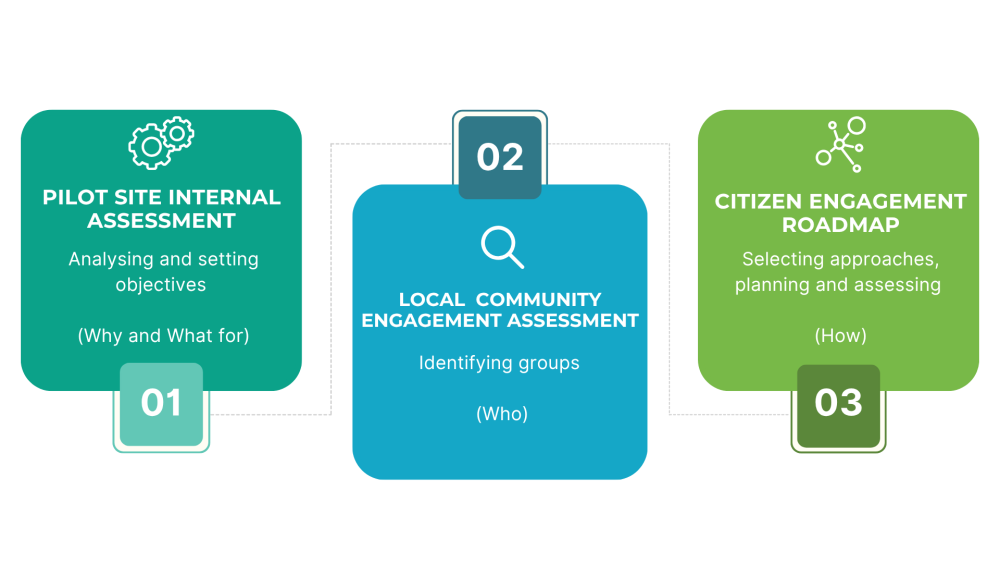
STEP 1. INTERNAL ASSESSMENT - ANALYSING AND SETTING OBJECTIVES (Why and What for)
Step 1 answers why and what for. It clearly defines the scope and objectives of the site in relation to citizen engagement, in other words, the context within which they are working, and the potential outcomes and impact they anticipate. This step is an internal assessment as it focuses on gathering and analysing information to:
-
Characterize the problem.
-
Identify which pre-existing conditions and experience are already available to address the problem.
-
Determine the objective and potential outcome and how it relates to the creation of a RBWF.
-
Establish a timeline for citizen engagement and the associated resources and capacities that are needed.
STEP 2. LOCAL COMMUNITY ENGAGEMENT ASSESSMENT - IDENTIFYING GROUPS (Who)
Step 2 addresses who should be involved. It identifies individuals and groups and analyses them to perform a local community engagement assessment (second section of the form). It requires gathering information to:
-
Study the demographics of the basin affected area.
-
Identify how connected/networked is the local community and to what extent organised groups represent collective interests.
-
Analyse citizens’ and groups’ activities to understand attitudes and preferences of the local community.
-
Identify pre-existing decision-making entities, networks or processes involving citizens.
-
List effective channels of communication with the local community.
STEP 3. CITIZEN ENGAGEMENT ROADMAP - SELECTING APPROACHES, PLANNING AND ASSESSING (How)
Step 3 addresses how to plan citizen engagement by integrating the previous assessments to select the most appropriate engagement tools and timeline and project a roadmap. This final step is oriented to:
-
Analyse where in the engagement ladder is the site.
-
Select the engagement approaches and feedback provision mechanisms that can be most efficiently and effectively put in place.
-
Establish a timeline for implementation aligned with the available resources and capacities.
-
Identify assessment indicators to monitor progress of the engagement solutions.
-
Project planning and implementation into a Roadmap.
A form to support your process
InnWater has produced a specific document to guide sites in the process of gathering and analyzing data to set a Citizen Engagement Roadmap.
The InnWater guidelines embed safeguards clarity of objectives and decision links, transparency and feedback, inclusive and accessible formats, integrity and privacy protections, and ambitions calibrated to available budgets, staff time, community capacity, and existing channels to keep engagement credible and sustainable over time.
Dedicated support helps teams tailor the approach locally and later consolidate results so lessons learned, contributions to key indicators, and policy‑relevant insights persist beyond individual activities and project.