
Content
1. Assessment of NSWRM effectiveness at field scale for present climate conditions
- Water balance perspective
The effectiveness of NSWRMs at field scale was evaluated by examining the changes in soil water balance elements (Fig. 1). Soil water balance refers to the amount of water in the soil (defined for a certain time period and for the whole soil profile or a particular soil layer), and it reflects the difference between the inputs (e.g. precipitation, irrigation, runon) and outputs (e.g. interception, runoff, evaporation, transpiration, drainage, percolation). When analysing the water balance of the soil profile as a whole (commonly defined as the root zone), matrix and macropore flows contribute to the redistribution of water between the different soil layers, not to the total balance.
Figure 1. Key water balance elements of a soil profile
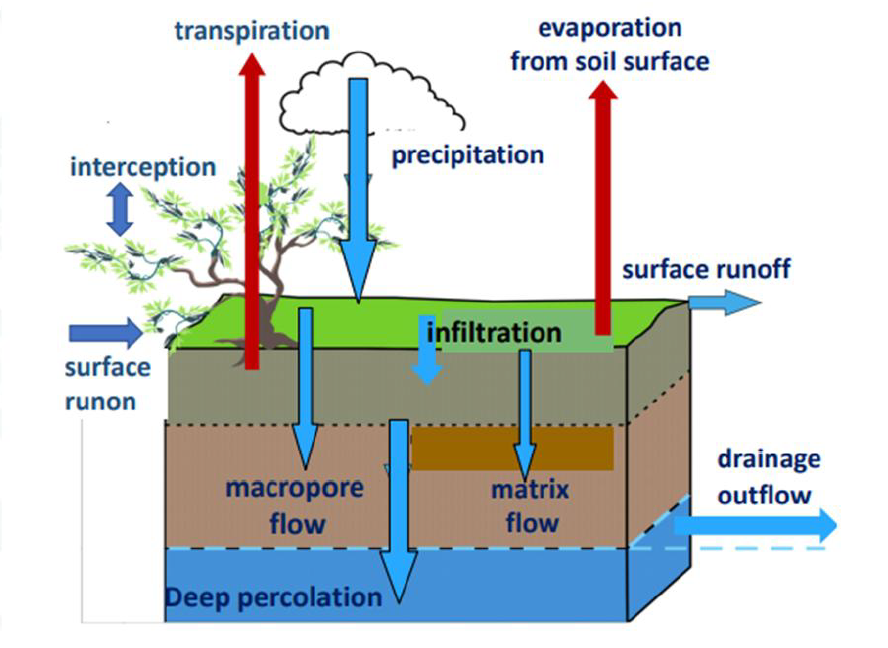
It is important to mention that the effect of an individual NSWRM on water retention cannot be evaluated directly in terms of increased soil water storage. Plants may benefit from the increase of available water in the soil, which leads to increased transpiration and reduced soil water storage. Thus, the impact of soil water retention measures on the water regime should be evaluated in a more complex way, considering all the water balance elements together. As an example, soil water content of a heavily cultivated soil can be higher in the deeper layers than in a soil with reduced tillage, as the compacted layer at the plough/disk pan prevents the infiltration of the water in the deeper layers, as well as root growth. Thus, the plants are suffering from drought while there can be valuable amounts of water below the compacted layers. That is why the effectiveness of NSWRMs has to be evaluated by looking at all the water balance elements simultaneously. On the other hand, reductions in water balance elements that lead to water loss from the soil profile (interception, surface runoff, evaporation from soil surface, drainage outflow and deep percolation) all indicate increased water retention within the field.
Generally, increased plant transpiration, alongside reduced deep percolation and runoff, indicate improved retention of water within the soil profile. At the bottom of the soil profile, the SWAP model calculates either drainage outflow or percolation to deeper layers. This is because, with subsurface drainage, the model assumes zero percolation to the deeper layers.
Figures 2 - 4 give an overview of the impact of NSWRMs on water balance elements assessed using the SWAP field-scale model. Changes in soil water content for a certain period are calculated using the following equition:
ΔSW = P - INTCEPT - RUNOFF - EVAP - TRANSP - DRAIN - BFLUX (Eq. 1)
Where: ΔSW - changes in soil water content (cm), P - precipitation sum (cm), INTCEPT - interception (cm), RUNOFF - surface runoff (cm), EVAP - evaporation from soil surface (cm), TRANSP - transpiration or plant water uptake (cm), DRAIN - drainage outflow (cm) and BFLUX - bottom flux or percolation (cm). Positive and negative values represent upward and downward fluxes, respectively.
Figure 2. NSWRM effects on soil water balance elements modelled for two soil types of the boreal region for the historical climate (2009-2019).
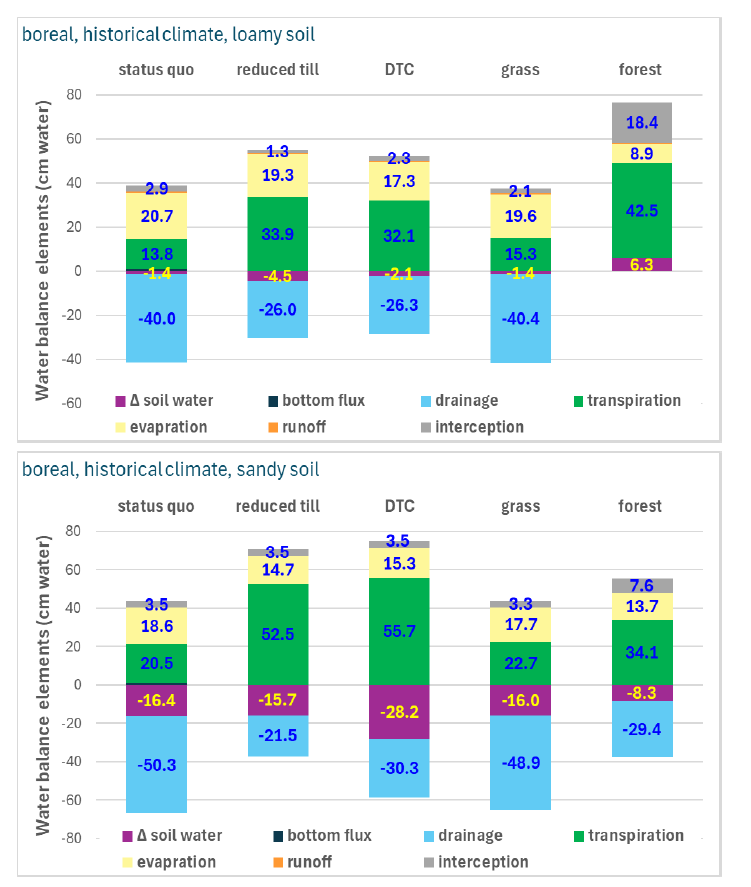
In the boreal regions the main goal for implementing soil water retention measures in agricultural areas is to reduce and/or to slow down surface and subsurface runoff towards surface water bodies. Surface runoff and subsurface drainage water, reaching the streams, contribute to soil erosion and nutrient loads, thus, have harmful impact on soil health and on the conditions of freshwater and marine water ecosystems. With ongoing climate change, summer drought has become a new issue in Norwegian agriculture. Thus, soil water retention is also important from this aspect.
In this region, shifting to grassland seems to have the least impact on soil water balance elements, compared to the baseline scenario. Afforestation, reduced tillage and drought tolerant crops (DTC) reduced drainage outflow significantly, mostly due to increased transpiration, and also interception in case of forest vegetation (Figure 2). The effect of NSWRMs on soil water content was more visible in the sandy soil, also because sandy soils are more susceptible to drought. DTC increased transpiration more than two times, as the newly introduced crops could transpire more water at the expense of soil moisture in the sandy soil.
Figure 3. NSWRM effects on soil water balance elements modelled for the continental region for the historical climate (1991-2020).
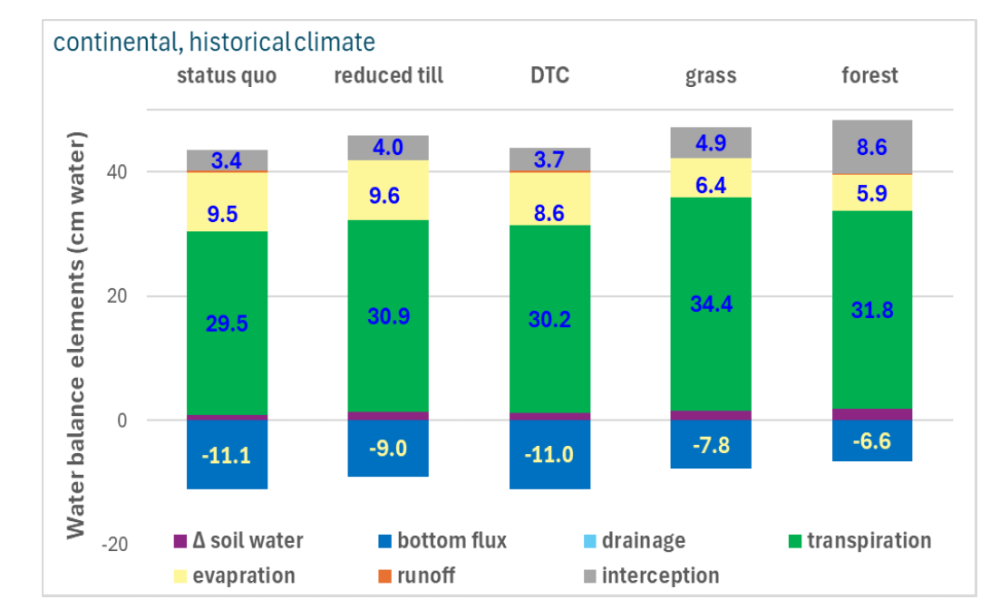
Compared to the boreal region, the effect of NSWRMs on soil water balance elements was less pronounced in the continental region, as demonstrated by the Swiss case study (CS2; Fig. 3). Land use change (shifting to grassland or afforestation) and reduced tillage resulted in a slight decrease of leaching from the soil profile and also slight increase in transpiration. The largest changes were modelled for interception and changes in soil water storage. However, as these water balance elements represent less than 10% of the total soil water balance, the large relative changes did not influence the overall water budget to a large extent.
Figure 4. NSWRM effects on soil water balance elements modelled for the Pannonian region for the historical climate (1991-2020).
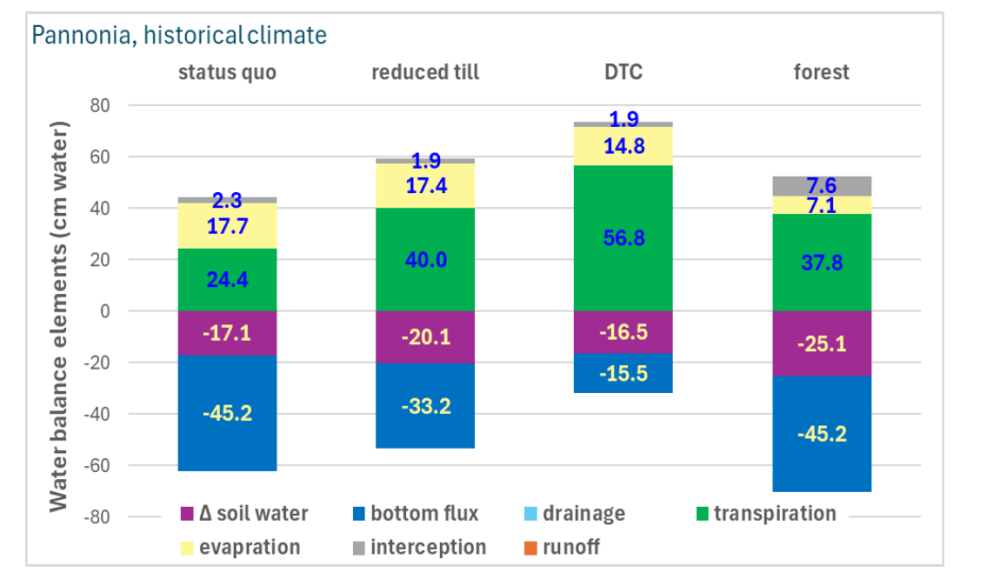
Drought is the major problem in the Pannonian region. All three of the NSWRMs tested for these sites contributed to significant increase in transpiration (Fig 4). The soil profiles of these areas are well developed and more than 1 m deep. Therefore, absolute change in the soil water storage of up to -8 mm (afforestation scenario) does not significantly affect the average soil water content. Planting drought tolerant plant genotypes seems to be the most promising measure to mitigate drought. Hence, transpiration almost doubled in the DTC scenario, as the crop roots could uptake water at higher water potentials (water that is more strongly “bounded” within the unsaturated zone). Meanwhile, percolation to deeper layers is reduced, which is also an important factor as this can prevent nitrate leaching to groundwater, which is another problem in this region. Contradictorily to other regions, where afforestation resulted in a slight (continental region) or very strong (boreal region) reduction in drainage outflow, in the Pannonian region afforestation did not reduce the percolation of water to deeper layers.
Table 1 provides an overview of the effects of in-field NSWRMs on the elements of the water balance for all seven pilot sites, representing the three biogeographical regions. Slight (less than 10%) and strong (more than 10%) increases compared to the baseline are highlighted in light and darker green, respectively. Similarly, slight and strong decreases compared to the baseline are highlighted in light yellow and orange colours, respectively.
In some cases, the seemingly large changes (like an increase in interception with afforestation ranging between 118% to 526 %) cover small absolute changes of up to 15-18 mm. However, as the original value was very small (below 3 mm), an increase of 10-15 mm results in a large relative change in interception.
Reduced surface and subsurface runoff can also strongly contribute to reducing flash flood peaks and the loss of soil particles and nutrients to surface waters, resulting in improved water quality in the long term. Reduced deep percolation leads to an increased amount of water stored in the root zone, thereby mitigating the effects of drought. It also prevents the transport of nutrients towards the subsurface water bodies, preventing their further contamination.
The overall picture shows that the impact of the studied in-field NSWRMs on individual soil water balance elements can vary even within the same biogeographical region, depending on factors such as the crop type and rotation, soil type, soil management and other local conditions (e.g. slope). These findings confirm our expectations and the need for site-specific studies and analyses when optimising the NSWRM types within the field and a catchment as a whole. Moreover, it would be very important to gain as many experimental data as possible, as the evaluation of the model response to a particular measure is difficult without site-specific information about the effectiveness of a certain measure for the typical soil, crop and slope combinations of the pilot sites.
In line with our expectations, reduced tillage resulted in a decrease of various types of water losses from the soil profile. It reduced surface runoff by 100% and by 30-40% in the continental and boreal regions, respectively. These results are consistent with those of the SWAT+ model for these areas, where it was shown that reduced tillage can mitigate flash floods, prevent soil erosion and reduce the loss of nutrients towards the surface water bodies.
Table 1. Effectiveness of in-field NSWRMs in different biogeographical regions
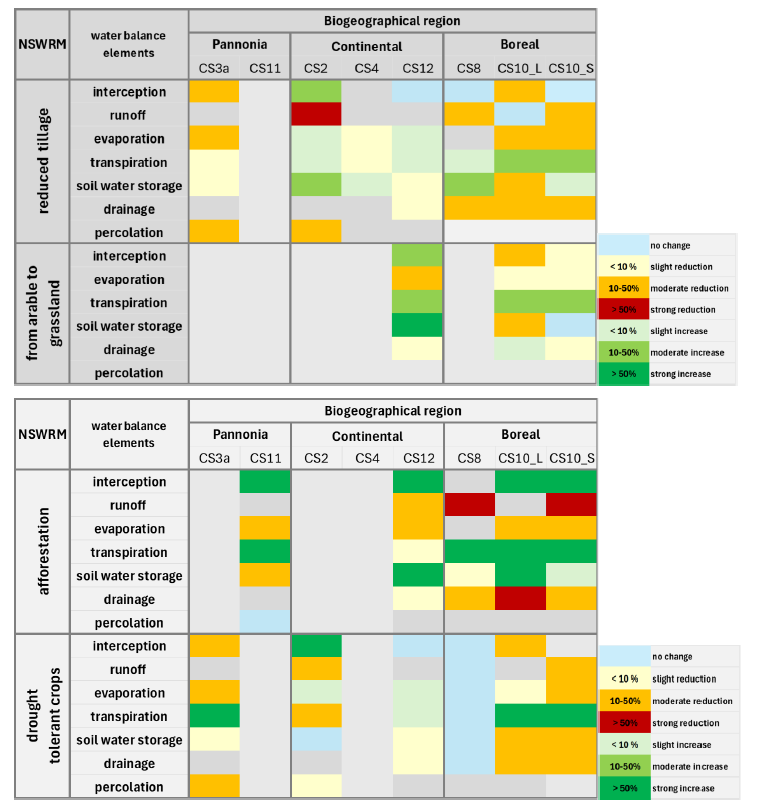
In the Pannonian and Continental regions without subsurface drainage, reduced tillage resulted in a decrease of deep percolation by approx. 25% and 10%, respectively. This has its own environmental benefits, as reduced percolation means reduced leaching of nutrients (especially nitrate) into the groundwater bodies. Nitrate leaching towards the saturated layer is a major problem in many areas of the Pannonian region.
Similar to percolation, reduced tillage systems lead to lower drainage outflow in the areas with subsurface drainage. This effect became more visible when moving from the south (Continental region) to the north (Baltics and Scandinavia of the boreal region). The more positive the overall water balance, the stronger is the reduction effect of reduced tillage on drainage outflow, varying between approx. 3% (CS12) and 34% (CS10).
The effect was also stronger for heavy soils (CS10 with loamy soil) than on soils with lighter texture (CS10 with sandy soils).
Evaporation, transpiration and changes in soil water storage show a more complex picture between the studied regions, sometimes even between the different sites within the same region. The SWAP model simulated a 16-20% reduction in soil evaporation for the Pannonian and Boreal regions when reduced tillage was introduced, and basically no changes for the pilot sites located in the Continental region.
Transpiration (or plant water uptake) shows a very slight decrease (by 1.8% and 0.2%) in the Pannonian (CS3) region and in CS4 of the Continental region. However, these differences are within the uncertainty range of the model outputs, as well as the slight increases in the other Continental pilot sites (CS2 and CS12). The model predicted a large increase in transpiration values for CS10 (Boreal), independent of the soil type. These results, however, should be interpreted carefully as they don’t reflect the impact of reduced tillage itself, but the impact of reduced tillage and crop type. Reduced tillage in the CS10 of the Boreal region usually means no tillage in the autumn, which is associated with shifting from winter crops to summer crops. Thus, the crop type was also changed in the model setup. The large changes thus reflect the combined effect of changes in both soil and crop management.
Shifting from arable to grassland resulted in an increase and decrease of interception for CS12 (Continental) and CS10 (Boreal), respectively. The impact of this measure on the other water balance elements showed more or less similar patterns, with decreases and increases in evaporation and transpiration, respectively. In general, grasslands represent more dense vegetation compared to cereals (row crops), which leads to a higher soil cover fraction and a reduction in evaporation from the soil surface. This water saving effect most likely increases the amount of plant available water in the soil, which leads to an increase in plant transpiration. The reduction of evaporation is more pronounced in the Continental region (by 33%, CS12), which is characterised by drier conditions and larger atmospheric water demand. In the Boreal region, the effect of grassland is less pronounced (around 5%), as the conditions are more humid and cold.
Afforestation gave the most uniform picture regarding the effect of this measure on water balance elements. The results show a significant decrease in evaporation (from 26 to 60%), drainage outflow (from 42 to 100%) and surface runoff losses (from 35 to 67%) in all the three biogeographical regions. Afforestation also led to an extremely high increase in interception and a valuable increase in transpiration, independently from the location of the pilot sites. The changes in soil water storage compared to baseline reflected the region-specific water balance, leading to a strong - 94% - decrease in the Pannonian region, which is generally characterised by a negative water balance, and a strong increase in the CS12 (Continental) and CS10_L (Boreal) pilot sites. Two out of the three pilot fields from the Boreal region showed no significant changes in soil water storage.
The introduction of drought tolerant crops had a rather similar effect in all the pilot sites, with CS2 being the only exception. If the effect of this measure was significant, its implementation resulted in decreases in interception (by approx. 15 to 20%), surface runoff (from 30 to 100%), evaporation (by approx. 7-17%) and drainage outflow (by approx. 35-40%). For some case studies, no changes (CS2, CS8 and CS12) or a 10% decrease (CS2) in transpiration was simulated. In CS3 (Pannonia) a slight increase in crop transpiration of 10% was estimated. The most pronounced effect of drought tolerant plants on transpiration was estimated for CS10 in the Boreal region, independent of the soil type. We assume that these results reflect the fact that drought has become an important factor in these regions, which impacts on crop production are still underestimated. Moreover, the SWAP crop database for boreal conditions does not account for drought tolerance. Both summer and winter cereals had the lowest HLIM3 and HLIM4 values (see OPTAIN D4.3) among all the crops included in this study. Thus, changes in HLIM3 and HLIM4 parameters were the highest in CS10, which could also lead to a drastic increase in plant transpiration. However, this shows the potential of introducing drought tolerant crops into the crop production system of Boreal regions.
- Seasonal patterns
So far, this report focused on the average annual changes in the soil water regime, while it is well known that the elements of the soil water balance vary strongly in time. Hence, we evaluated the seasonal changes in interception, transpiration, evaporation, drainage outflow and soil water content on the example of CS12, located in the Czech Republic.
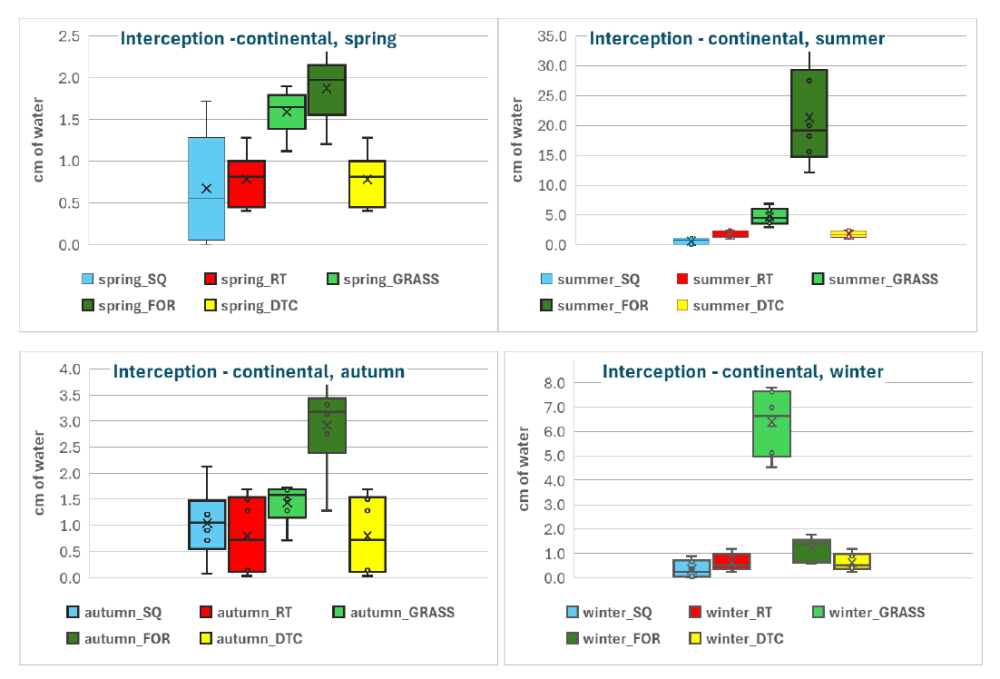
Interception accounts for only a small part of the water balance, and is very small in spring, autumn and winter. For all the scenarios apart from grassland, a significant proportion of the interception occurs during the summer period (Fig. 5). Compared to other measure scenarios, grassland intercepts about 6-7 times more water during the winter, most probably because it retains its leaves while deciduous forests lose theirs in autumn. The interception rate is particularly high in forest scenarios during spring (3 times higher), summer (20 times higher) and autumn (4 times higher), compared to the baseline scenario. Hence, afforestation can also contribute to water retention also by intercepting and evaporating a large amount of water. This phenomenon is also important, as it ensures higher air humidity within and around the vegetation than in areas with arable crops.
Figure 5. Seasonal variation of interception (historical climate, years 2015-2021) in the continental region (CS12) for conventional management (SQ) and after implementing different NSWRMs. RT - reduced tillage, GRASS - shifting from arable land to grassland, FOR - afforestation and DTC - drought-tolerant crops
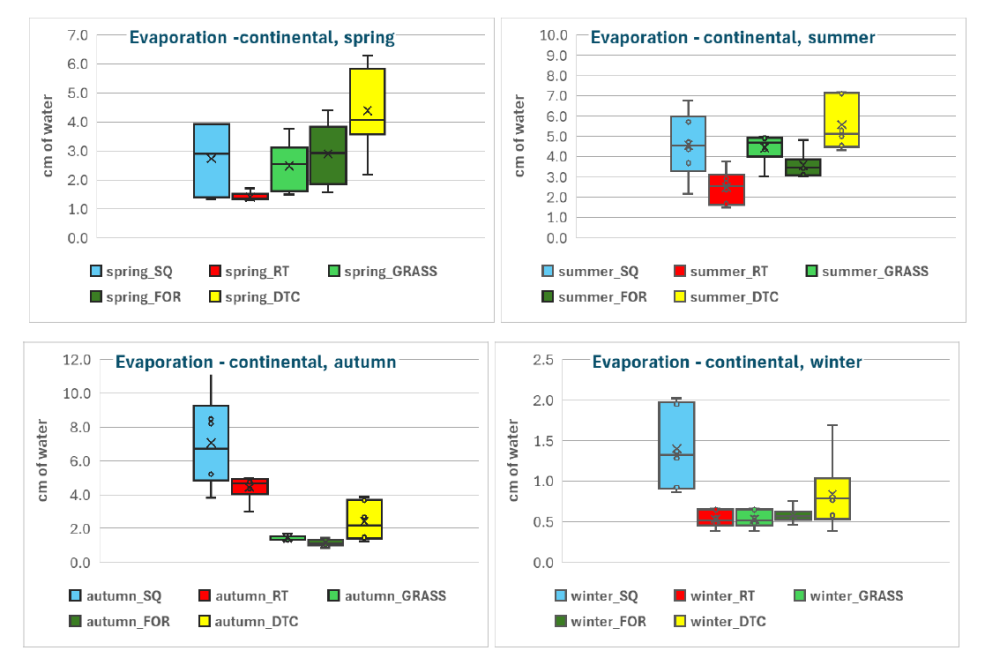
Evaporation from the soil surface (Fig. 6) is the highest during summer and autumn, when the potential evaporation is high due to atmospheric conditions. Apart from the weather conditions, the impact of NSWRMs on evaporation also reflects soil coverage by vegetation throughout the year. Conventional tillage and drought tolerant crops (DTC) have the highest evaporation amounts during spring, summer and winter. Reduced tillage, that incorporates stubble, cover crops or winter crops ensures plant coverage on the soil surface through the year thus, reduces evaporation losses from the soil compared to conventional tillage and DTC.
Figure 6. Seasonal variation of evaporation (historical climate, years 2015-2021) in the continental region (CS12) for conventional management (SQ) and after implementing different NSWRMs. RT - reduced tillage, GRASS - shifting from arable land to grassland, FOR - afforestation and DTC - drought-tolerant crops
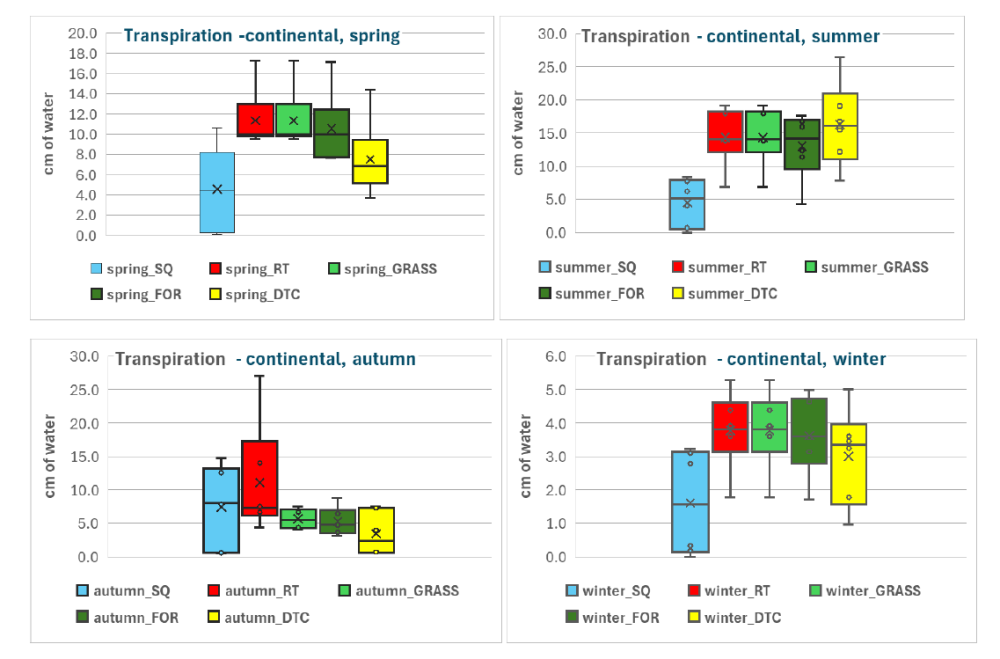
The SWAP model considers a relatively small amount of water stored in the vegetation, and thus assumes that transpiration equals the plant water uptake by roots. Transpiration is one of the largest and most important elements of the water balance, as it can also be used as a yield indicator. Conventional tillage showed the lowest transpiration for all the seasons, with autumn being the only exception (Fig. 7). The vegetation could transpire more water from reduced tillage systems all around the year. Grassland and forest could not transpire more water than the arable crops in reduced tillage and DTC scenario, probably because their water demand could not be fulfilled from the soil water storage. The higher plant water uptake from reduced tillage and DTC scenarios could probably be explained by increased soil water retention capacity due to improved soil structure and increased suction power of the root system, respectively.
Figure 7. Seasonal variation of transpiration (historical climate, years 2015-2021) in the continental region (CS12) for conventional management (SQ) and after implementing different NSWRMs. RT - reduced tillage, GRASS - shifting from arable land to grassland, FOR - afforestation and DTC - drought-tolerant crops
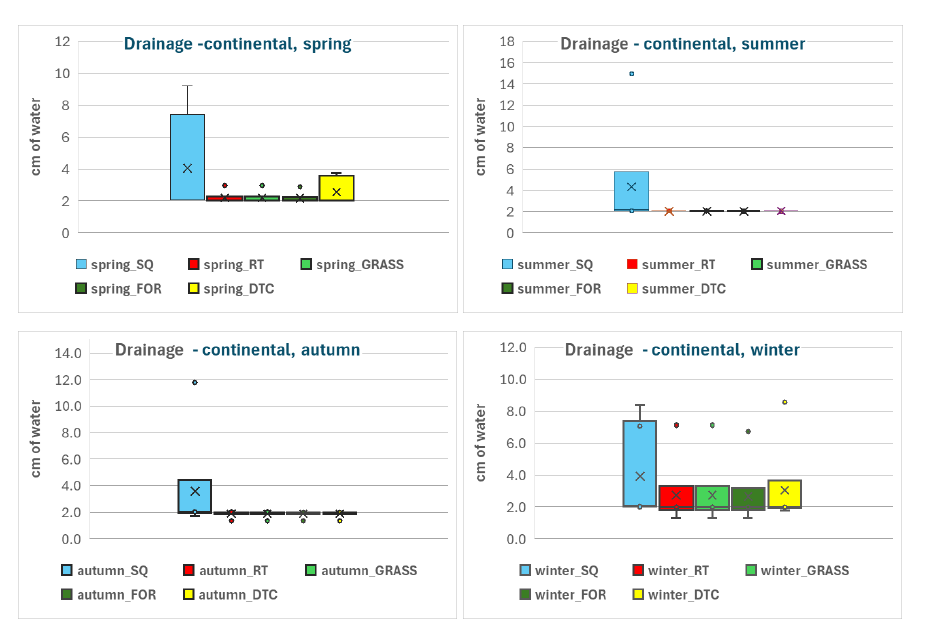
Drainage outflow is highly impacted by extreme weather events., therefore, it is difficult to interpret on an annual or seasonal time scale. Indeed, the SWAP simulation results (Fig. 8) showed a strong reduction of drainage outflow across all the NSWRMs compared to the baseline scenario (conventional tillage). Our results suggest that the NSWRMs involved in this study could contribute to reduced leaching and drainage, creating more favourable soil water conditions for the vegetation.
Figure 8. Seasonal variation of drainage outflow (historical climate, years 2015-2021) in the continental region (CS12) for conventional management (SQ) and after implementing different NSWRMs. RT- reduced tillage, GRASS - shifting from arable land to grassland, FOR - afforestation and DTC - drought-tolerant crops
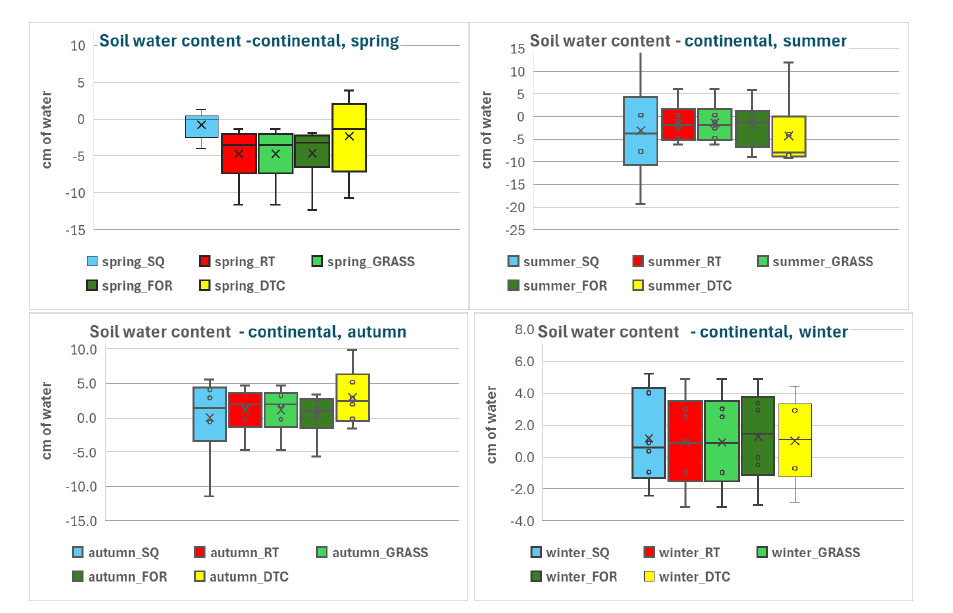
No significant differences in soil water content were found on a seasonal basis across all the scenarios (Fig.9). A slight decrease in soil water storage was simulated during spring and summer, while a slight increase was found for the autumn and winter seasons. This is consistent with long-term observations stating that the soil layers are filled up with water during the colder seasons and dry out during the vegetation period.
Figure 9. Seasonal variation of changes in soil water content (historical climate, years 2015-2021) in the continental region (CS12) for conventional management (SQ) and after implementing different NSWRMs. LT - reduced tillage, GRASS - shifting from arable land to grassland, FOR - afforestation and DTC - drought-tolerant crops
2. Assessment of NSWRM effectiveness at field scale for future climate conditions
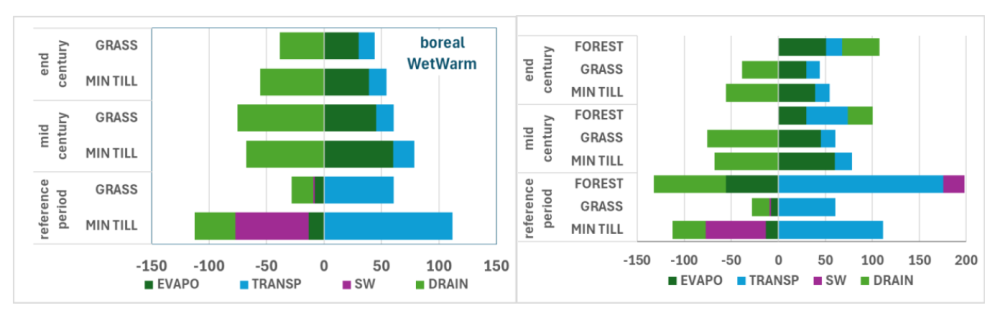
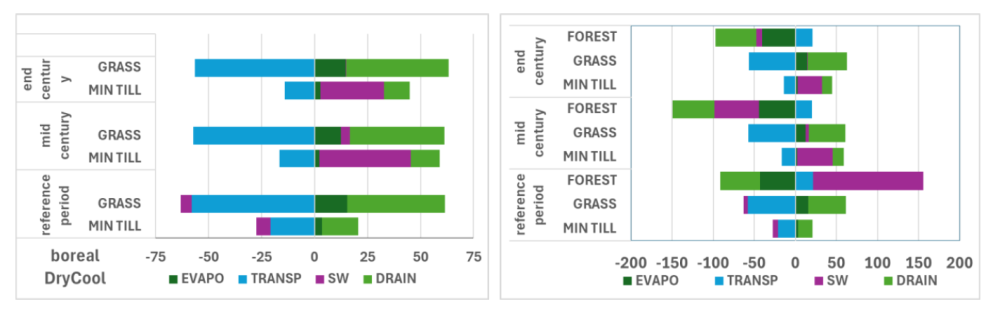
This sub-chapter assesses the impact of different measures on soil water balance elements under future climate conditions. Figures 10-12, 13-15 and 16-18 illustrate the relative changes in water balance elements as compared to current soil and crop management for the boreal, continental and Pannonian biogeographical regions, respectively. For each region, three future climate types are studied: wet and warm, dry and warm, and dry and cool (Table 2).
The effect of the selected NSWRMs on water balance elements shows a similar pattern across the three climate types for the continental and Pannonian regions. However, this is not the case for the boreal biogeographical region. In the boreal region, each climate type has its own specific pattern. The SWAP modelling results indicate that wet and warm future conditions (Fig. 10) would result in an increase of transpiration and evaporation, while decreasing drainage outflow.
Fig. 10. Impact of different NSWRMs on soil water balance elements as compared to the status quo (in %) at current and future climate conditions in the boreal region for the wet&warm climate scenario. MIN TILL - reduced tillage; EVAPO - evaporation from soil surface; TRANSP - transpiration or plant water uptake; SW - changes in soil water content; DRAIN - tile drain outflow.
For a wet and cool scenario (Fig. 11), the evaporation would be impacted the most, increasing significantly compared to the current levels. This climate type would result in a decrease in soil water storage and drainage under minimum tillage and afforestation scenarios. The dry and cool scenario would have, most probably, the least favourable impact with a high reduction in transpiration.
Fig. 11 Impact of different SWRMs on changes in soil water balance elements as compared to the status quo (in %) at current and future climate conditions in the boreal region for the wet&cool climate scenario. MIN TILL - reduced tillage; EVAPO - evaporation from soil surface; TRANSP - transpiration or plant water uptake; SW - changes in soil water content; DRAIN - tile drain outflow.
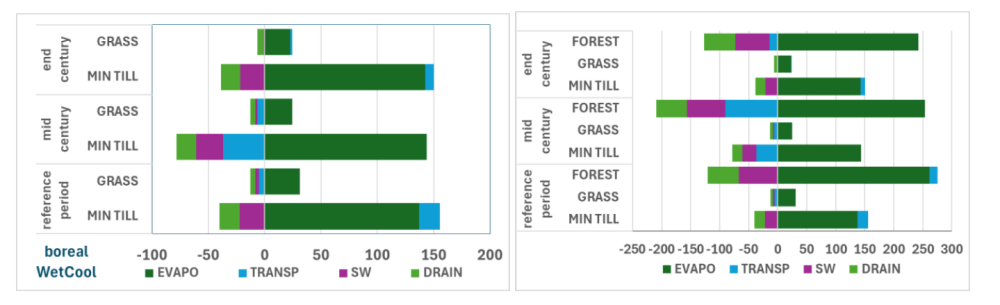
Fig. 12 Impact of different SWRMs on changes in soil water balance elements as compared to the status quo (in %) at current and future climate conditions in the boreal region for the dry&cool climate scenario. MIN TILL - reduced tillage; EVAPO - evaporation from soil surface; TRANSP - transpiration or plant water uptake; SW - changes in soil water content; DRAIN - tile drain outflow.
In the continental region, management measures (NO TILL and DTC) have minor impact of below 5% on interception, evaporation, transpiration and percolation compared to the land use change scenario (grassland) for all the climate types. The modelling results indicate that zero tillage increases soil water storage, independently from the climate type. This impact, however, is less expressed under future climate conditions. Grassland increases transpiration and reduces percolation, and this impact is getting stronger with time. Grassland also seems to increase runoff to a large extent; indeed, the status quo value for runoff was around zero (but not zero), therefore any few mm increase in runoff results in a huge relative impact.
Fig. 13 Impact of different NSWRMs on soil water balance elements as compared to the status quo (in %) at current and future climate conditions in the continental region for the wet&warm climate scenario. DTC - drought tolerant crops; No till - zero tillage; INTERCEPT - interception; EVAPO - evaporation from soil surface; TRANSP - transpiration or plant water uptake; SW - changes in soil water content; PERCO - percolation.
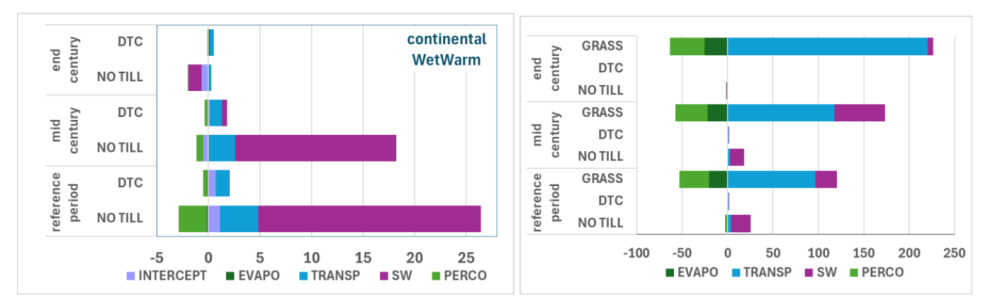
Fig. 14 Impact of different NSWRMs on soil water balance elements as compared to the status quo (in %) at current and future climate conditions in the continental region for the wet&cool climate scenario. DTC - drought tolerant crops; No till - zero tillage; RUNOFF - surface runoff; EVAPO - evaporation from soil surface; TRANSP - transpiration or plant water uptake; SW - changes in soil water content; PERCO - percolation.
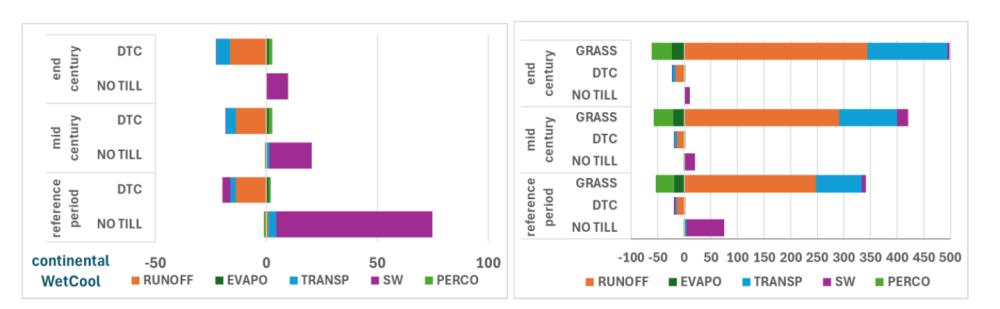
Fig. 15 Impact of different NSWRMs on soil water balance elements as compared to the status quo (in %) at current and future climate conditions in the continental region for the dry&cool climate scenario. DTC - drought tolerant crops; No till - zero tillage; RUNOFF - surface runoff; EVAPO - evaporation from soil surface; TRANSP - transpiration or plant water uptake; SW - changes in soil water content; PERCO - percolation.
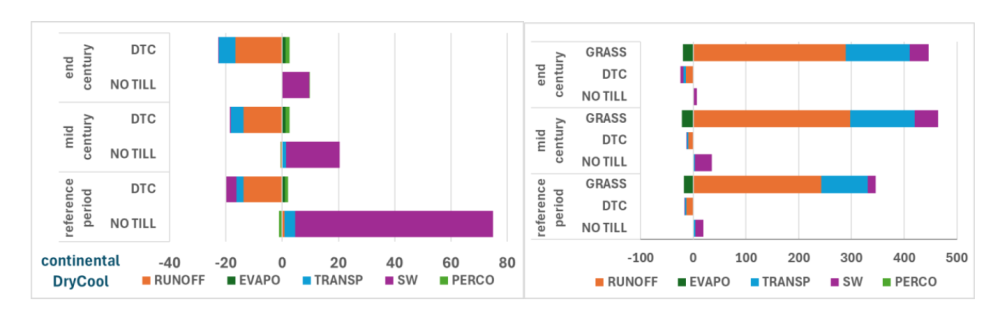
Fig. 16 Impact of different NSWRMs on soil water balance elements as compared to the status quo (in %) at current and future climate conditions in the Pannonian region for the wet&warm climate scenario. DTC - drought tolerant crops; No till - zero tillage; INTERCEPT - interception; EVAPO - evaporation from soil surface; TRANSP - transpiration or plant water uptake; SW - changes in soil water content; PERCO - percolation.
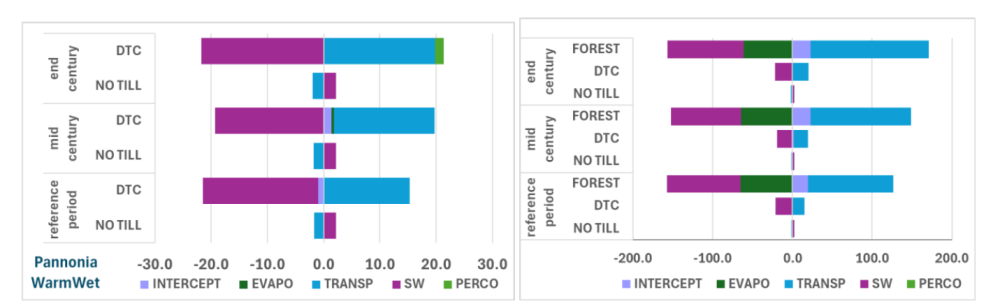
Fig. 17 Impact of different NSWRMs on soil water balance elements as compared to the status quo (in %) at current and future climate conditions in the Pannonian region for the wet&cool climate scenario. DTC - drought tolerant crops; No till - zero tillage; INTERCEPT - interception; EVAPO - evaporation from soil surface; TRANSP - transpiration or plant water uptake; SW - changes in soil water content; PERCO - percolation.
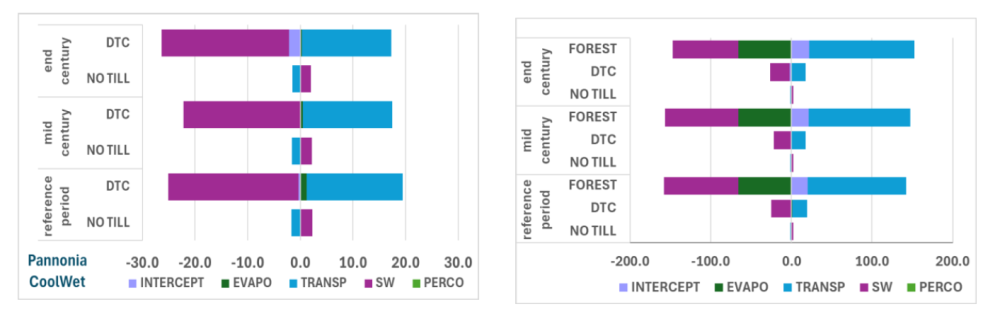
Fig. 18 Impact of different NSWRMs on soil water balance elements as compared to the status quo (in %) at current and future climate conditions in the Pannonian region for the dry&cool climate scenario. DTC - drought tolerant crops; No till - zero tillage; INTERCEPT - interception; EVAPO - evaporation from soil surface; TRANSP - transpiration or plant water uptake; SW - changes in soil water content; PERCO - percolation.
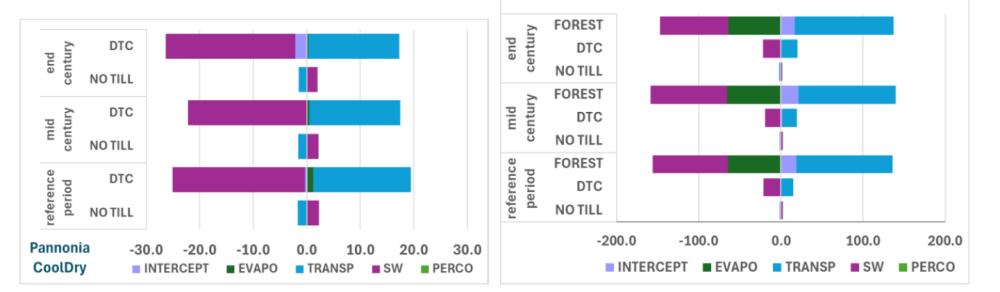
For the Pannonian region, a strong reduction in soil water content and a large increase in transpiration were predicted. Zero tillage, drought tolerant crops and afforestation showed minor, moderate and huge effects on water balance elements, and this impact does not seem to change by the mid- or end of the century.
The combined climate and NSWRMs scenarios show a very diverse pattern, especially for the boreal region. Their interpretation, however, is not trivial, as there are no reference values with which to objectively evaluate the SWAP modelling results. Overall, the land use change measures seem to have a larger and positive impact on the water balance elements than the management measures. Among the management measures, reduced tillage is the most promising alternative in the future.