Last update
2026
Summary
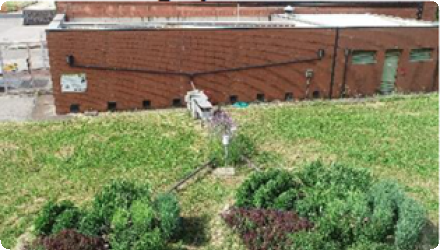
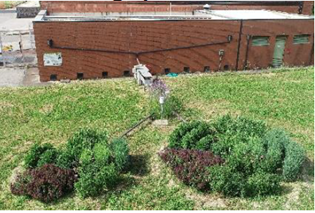
The Agripolis case study is located within the Agripolis Campus of the University of Padua and represents an experimental nature-based solution focused on stormwater management through bioretention systems. The intervention was initially developed between 2010 and 2011 as part of a University research project and was subsequently integrated into several national and European research initiatives, including the PRIN project “Green for Water” and the Horizon Europe project SPONGESCAPES. It includes bioritention measures and a raingarden. The system combines bioretention measures and a raingarden designed to intercept runoff from nearby roofs, temporarily store stormwater, reduce peak flows and enhance infiltration. Beyond its hydrological function, the site has evolved into a living laboratory where researchers have tested vegetation dynamics, maintenance requirements and monitoring approaches over more than a decade.
Position
Latitude
45.3438889
Longitude
11.955833333333333
Biogeographical Region
Continental
Project
SpongeScapes
Installation date
2010-2011
Implementation Status
Transboundary
0
Photo gallery


Location of the project
The Agripolis site (see also related case studies "Municipality of Santorso sites, Italy" and "Timonchio site, Italy") is located near the Venetian Pre-Alps, crossed by the Leogra and the Timonchio rivers and artificial channels. These waterways have played an essential role in the historical development of manufacturing processes and industrialisation, and are still used today for irrigation and runoff control. The history of the region has had a significant influence on the landscape (mix of agricultural, industrial and residential areas).
Project's objectives
The main objective of these case studies is to analyse the impacts of the widespread adoption of the sponge measures in such a heterogeneous, anthropised environment. The co-benefits and trade-offs associated with these interventions will also be analysed, taking into account their economic implications for local stakeholders.
Involved Partners
| Authority type | Authority name | Role | Comments |
|---|---|---|---|
Project area
0.0002 km²
Area specifications
In 2011, two experimental rain gardens, with a circular area of about 10% and 20% of the drainage area, have been realized at the campus of Agripolis (University of Padova) to study their functionality in the climatic context of the Venetian Plane. This case is linked with case 9 to provide additional detailed process information (especially from the vegetation dynamics point of view) useful in the stakeholders' involvement (providing information about a correct design of a rain garden) and in the modeling actions.
Financing authorities
Policy context
The sponge measures include various types of natural water retention measures, such as rain gardens, bioretention, grassed swales, pervious pavement or infiltration trenches. In addition, the water retention basin built in a rural area (municipality of Schio) allows water to be stored for irrigation, reducing drought damage to two neighbouring farms and enabling farmers to produce more profitable crops. It also offers ancillary benefits in terms of biodiversity and new recreational services. The implementation of these small, simple but effective solutions has solved some hydraulic problems and prevented flooding in residential and agricultural areas.
Community involvment
No
Design consultation activity
| Activity stage | Name | Key issues | Comments |
|---|---|---|---|
Policy target
| Target purpose |
|---|
Policy pressure
| Pressure directive | Relevant pressure |
|---|---|
Policy impact
| Impact directive | Relevant impact |
|---|---|
Requirement directive
| Requirement directive | Specification |
|---|---|
Contractual arrangements
0
| Arrangement type | Responsibility | Role | Name | Comments |
|---|---|---|---|---|
Part of wider plan
0
Wider plan type
| Wider plan type | Wider plan focus | Name | Comments |
|---|---|---|---|
Data recorded: 2015-present (rainfall, water levels and flows).
Water & Environmental Management:
The project actively mitigates stormwater risks by storing up to 4 m³ of runoff and delaying the peak flow to less than 1 hour under the worst weather conditions. It also shows qualitative evidence of improving groundwater recharge and has successfully created 30 m² of new terrestrial habitat. It contributes to CO2 absorption through planting.
Social & Community Amenity:
The site serves as a local amenity, directly benefiting and impacting approximately 500 campus employees within walking distance.
Education & Scientific Research:
The installation heavily supports academic outreach and science. It hosts educational visits for 12 university students (UNIPD) and 60 primary school students annually, and its data has already contributed to 4 scientific publications.
The project actively mitigates stormwater risks by storing up to 4 m³ of runoff and delaying the peak flow to less than 1 hour under the worst weather conditions. It also shows qualitative evidence of improving groundwater recharge and has successfully created 30 m² of new terrestrial habitat. It contributes to CO2 absorption through planting.
Social & Community Amenity:
The site serves as a local amenity, directly benefiting and impacting approximately 500 campus employees within walking distance.
Education & Scientific Research:
The installation heavily supports academic outreach and science. It hosts educational visits for 12 university students (UNIPD) and 60 primary school students annually, and its data has already contributed to 4 scientific publications.
The primary benefit of the Agripolis Raingarden is its role as an educational and research infrastructure supporting knowledge generation and innovation in sustainable urban water management. Located within the University of Padua campus, the rain garden serves as a living laboratory where university students, researchers and primary school pupils can directly observe, monitor and assess the performance of nature-based solutions under real-world conditions. The site has supported numerous undergraduate and postgraduate theses, scientific publications, monitoring campaigns and demonstration activities, contributing to the advancement of knowledge. In addition, it provides hands-on learning opportunities for university students as well as outreach activities involving primary school pupils and local stakeholders, helping to raise awareness of nature-based solutions and their role in enhancing urban resilience. Through its long-term monitoring programme and educational function, the Agripolis Raingarden has become a reference example for sustainable urban drainage systems in Italy.
The Agripolis Raingarden generates a range of additional environmental and operational co-benefits.
From a water management perspective, the raingarden contributes to stormwater retention and runoff regulation in an urban environment. The system covers approximately 30 m² and receives runoff from around 220 m² of roof surfaces, while contributing to runoff buffering within an urbanised downstream area of approximately 6,000 m² along the secondary hydraulic network. The system stores up to 4 m³ of water and reduces runoff peaks, helping to alleviate pressure on the downstream drainage network during intense rainfall events. Monitoring activities indicate that runoff peak delays can reach almost one hour under adverse conditions. The intervention therefore contributes to local flood prevention and demonstrates how small-scale green infrastructure can support urban climate adaptation.
Ecologically, the intervention contributes to habitat creation, biodiversity enhancement and increased infiltration capacity. Furthermore, operational experience has shown that maintenance requirements can remain relatively low when plant species are carefully selected, demonstrating the practicality and long-term viability of nature-based stormwater solutions.
The Agripolis Raingarden generates a range of additional environmental and operational co-benefits.
From a water management perspective, the raingarden contributes to stormwater retention and runoff regulation in an urban environment. The system covers approximately 30 m² and receives runoff from around 220 m² of roof surfaces, while contributing to runoff buffering within an urbanised downstream area of approximately 6,000 m² along the secondary hydraulic network. The system stores up to 4 m³ of water and reduces runoff peaks, helping to alleviate pressure on the downstream drainage network during intense rainfall events. Monitoring activities indicate that runoff peak delays can reach almost one hour under adverse conditions. The intervention therefore contributes to local flood prevention and demonstrates how small-scale green infrastructure can support urban climate adaptation.
Ecologically, the intervention contributes to habitat creation, biodiversity enhancement and increased infiltration capacity. Furthermore, operational experience has shown that maintenance requirements can remain relatively low when plant species are carefully selected, demonstrating the practicality and long-term viability of nature-based stormwater solutions.
Success factor(s)
| Success factor type | Success factor role | Comments | Order |
|---|---|---|---|
|
Attitude of relevant stakeholders
|
main factor
|
A key success factor was the integration of research, education and practical implementation within a single site. The long-term commitment of the University of Padua ensured continuous monitoring and adaptation of the system, allowing the raingarden to evolve over time while maintaining its hydrological performance.
|
Driver
| Driver type | Driver role | Comments | Order |
|---|---|---|---|
|
Past flooding events
|
main driver
|
In Veneto, Italy, floods, landslides, and erosion have significantly affected the region. Municipalities face increased flood risks due to rising land consumption, more in northern Italy. Santorso and Marano Vicentino, in Vincenza's north, use sponge measures to counter pluvial flooding and improve rainwater management.
|
Transferability
Recommendations for Replication:
Future projects should invest substantial effort in the design phase, particularly in selecting vegetation adapted to local climatic and soil conditions. Integrating educational and research activities can significantly increase the long-term value of small-scale demonstration sites.
Policy Recommendations:
Long-term funding mechanisms should support monitoring, maintenance and research activities associated with nature-based solutions, allowing their performance to be assessed beyond the implementation phase.
Future projects should invest substantial effort in the design phase, particularly in selecting vegetation adapted to local climatic and soil conditions. Integrating educational and research activities can significantly increase the long-term value of small-scale demonstration sites.
Policy Recommendations:
Long-term funding mechanisms should support monitoring, maintenance and research activities associated with nature-based solutions, allowing their performance to be assessed beyond the implementation phase.
English