Ongoing

Summary
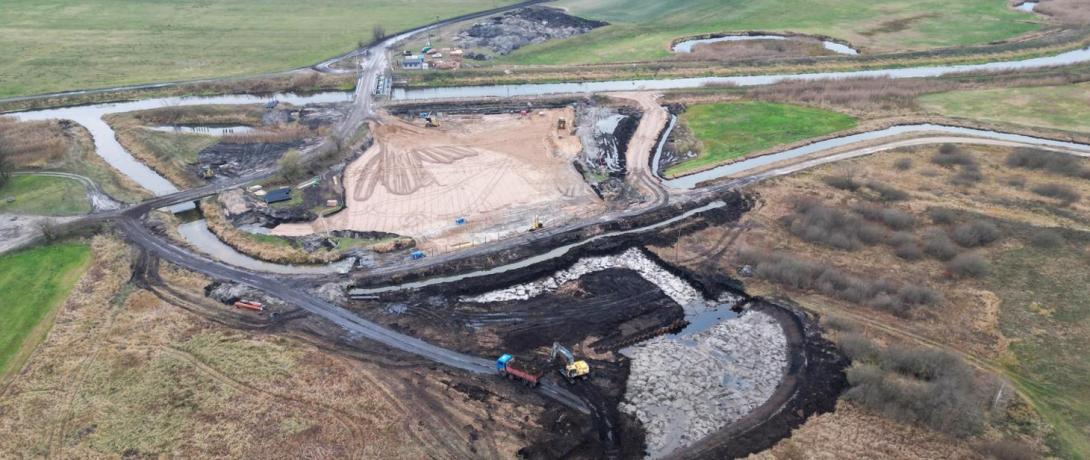
During recent years the construction of sediment capture ponds as a part of the drainage system has become a good practice measure in the forests managed by Latvian State Forests. Therefore, some of the environmental impacts of this measure have been monitored to justify its costs. The results indicate differences between monitoring sites set up on mineral or peatland soils as well as between different measured parameters. Additionally, it seems that the effectiveness of the measure depends on the skills and quality of the work carried out by professionals constructing the ponds.

Since 2012, several studies led by the Latvian State Forest Research Institute "Silava" have evaluated the water quality outcomes at multiple sites. Results show that sediment capture ponds are generally more effective at reducing total suspended solids (TSS) than at retaining nutrients such as nitrogen or phosphorus. Performance varies between sites and years, but TSS reductions of over 60% have been recorded in some cases. However, nutrient retention has been inconsistent and often negligible.

Recent demonstrations under the LIFE GoodWater IP project have tested alternative designs, including ponds with woodchip filters or peak flow control features. These trials further confirmed that pond shape, design, and local hydrological conditions greatly influence performance. Overall, sediment ponds remain a key component of water protection in Latvian forest drainage systems, but may need to be complemented with additional structures or adapted designs to maximise effectiveness.
Last update
2025
Summary
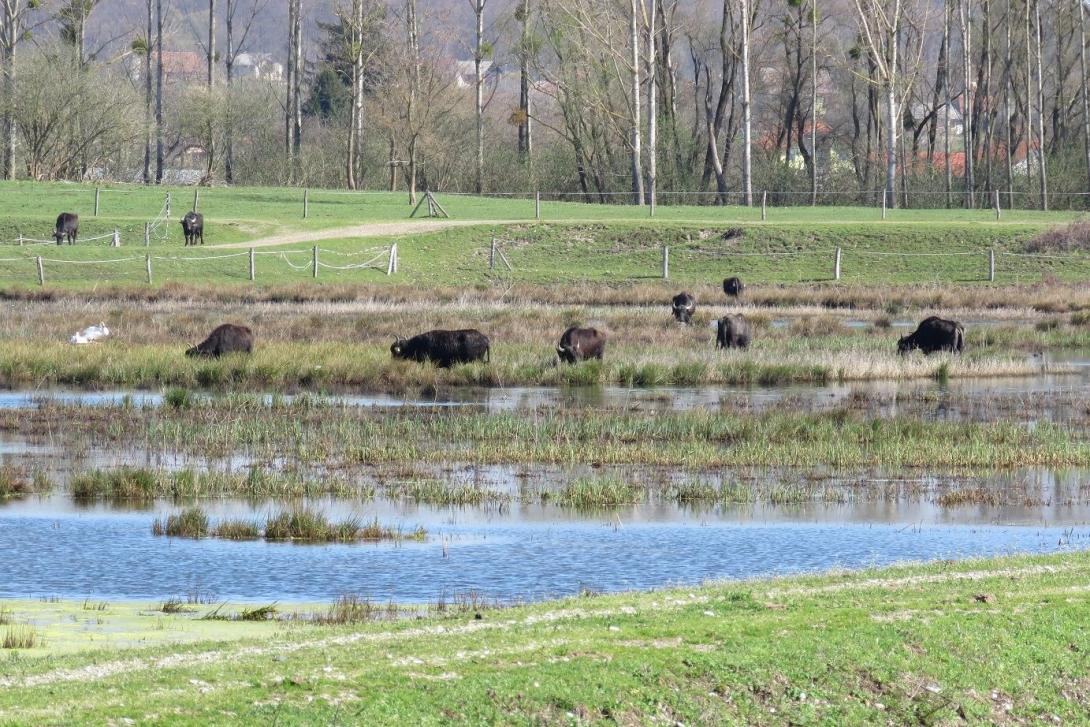
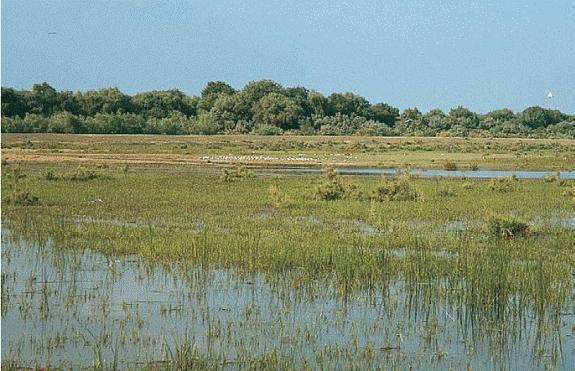
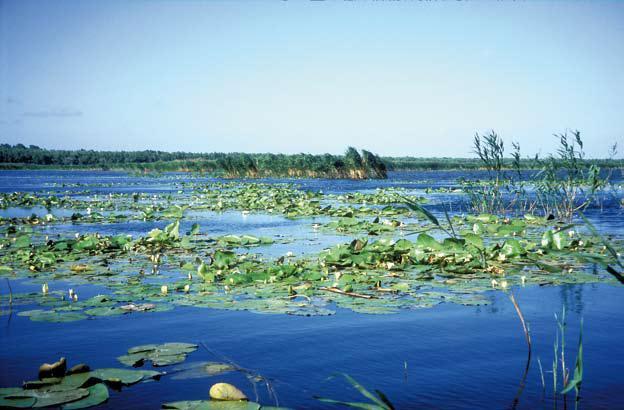
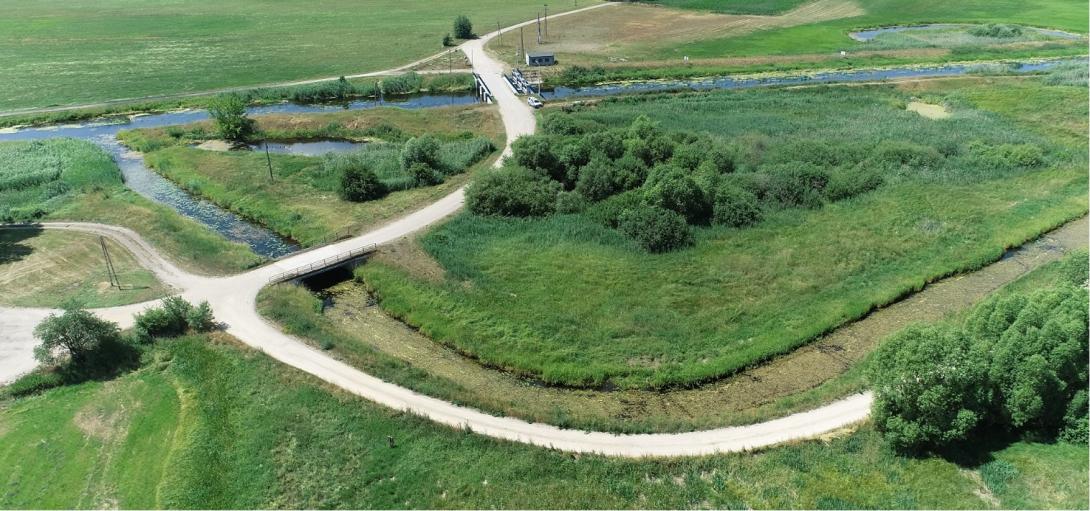
The Sutlansko Lake area is a wetland with a high biological diversity. The Vonarje reservoir was initially built in the early 1980s for drinking water supply, irrigation and flood protection along the transboundary Sutla/Sotla River between Croatia and Slovenia. The reservoir was later drained due to difficulties in managing its water quality and sedimentation. Since then, it has operated as a dry retention basin for flood protection. At the bottom of the reservoir, wetland ecosystems gradually developed. For this reason, the area of the reservoir on the Slovene side has been designated as a Natura 2000 site.

In recent years, the reservoir infrastructure was modernised through the FRISCO 2.1 project (2017–2019), funded by the Interreg V-A Slovenia–Croatia programme. The project aimed to reduce cross-border flood risks by reinforcing and upgrading the Vonarje dam and associated hydro-mechanical and electrical systems. The works were completed in 2019, enhancing the safety and functionality of the flood retention structure and improving its operational reliability.

The retention basin continues to serve as a key flood protection measure in the rural transboundary basin, offering temporary water storage during flood events while supporting ecological functions. Hydrological and sediment modelling have shown that the structure plays an important role in managing downstream sediment and nutrient flows, despite ongoing pressures from agricultural and point-source pollution.
Last update
2025
Summary
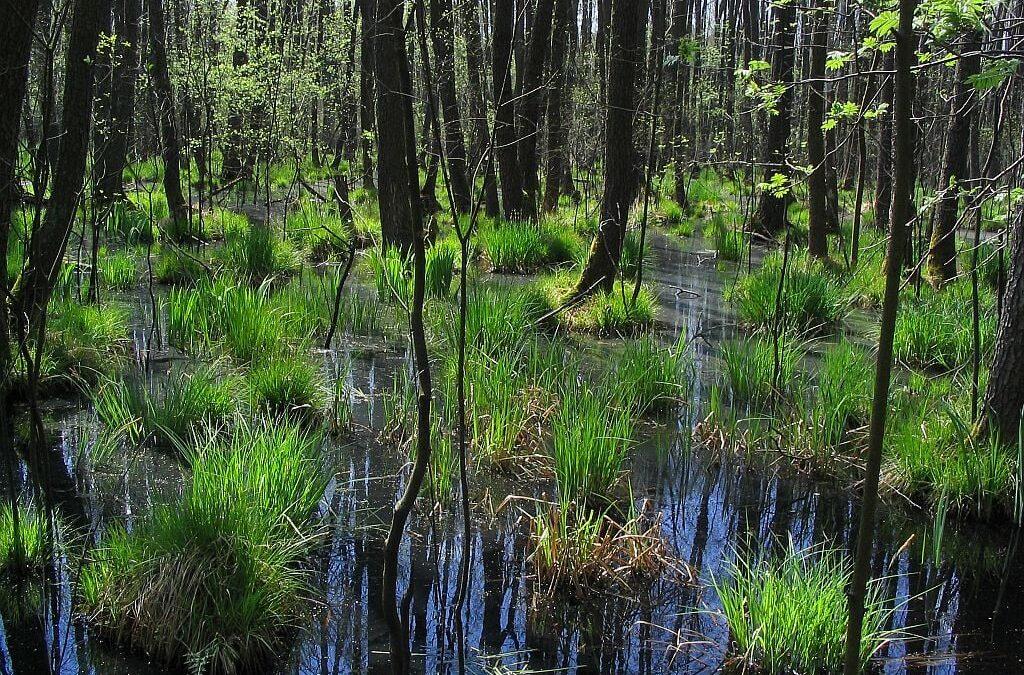
Three measures were implemented in the Őrség National Park to rehabilitate habitats, all with water retention benefits. (1) Ponds were created in forests to collect run-off from forestry roads, providing safe breeding grounds for reptiles instead of temporary roadside puddles. (2) Shelterbelts, groves and wetlands were re-vegetated on agricultural land where such landscape elements had been removed about 50 years earlier. (3) Closures were built in drainage channels to allow seasonal flooding of alder (Alnus) forests and wet meadows, enhancing habitat quality and ecological connectivity along the Csörnöc stream.

Since then, restoration efforts have expanded. The Park Directorate and partners have secured significant new funding (2025) to restore wetlands, hay meadows and riparian zones. The ongoing “Living Landscape” project (2024–2026), led by the Barn Owl Foundation with the park’s involvement, is restoring a diverse landscape mosaic along the Hungarian Green Belt. Actions include creating new wetlands and ponds, re-establishing hedgerows and tree lines, and improving landscape connectivity. Earlier, agri-environment initiatives (e.g. 2021 “Dream contract” approach) promoted small-scale, multifunctional farming and micro-habitat creation, reinforcing both biodiversity and water retention in the park’s cultural landscape.
Last update
2025
Summary
The case study site is located upstream of a captage area, where aqueducts abstract water for Venice, Vicenza and other towns: there is thus a demand for increased groundwater recharge and water purification. In addition, Bosco Limite provides a wide range of good and services, such as groundwater recharge, CO2 fixation, biodiversity safeguard, production of high quality wood and biomass for energetic purposes, and recreational-touristic services. The measure was implemented in an area previously used for intensive agriculture, and activities with high economic returns. Therefore, the main challenge of the project was to find alternative, competitive sources of income for landowners who made their land available for reforestation. The establishment of PES schemes for a variety of services (water provision, carbon sequestration, biodiversity and environmental education) was key for the success of the project.
Last update
2013
Summary
In the framework of a research programme, no tillage field trials have been installed in lower Austria. They showed a significant reduction of runoff, as well as a reduced loss of nutrients. In addition, reduced or no tillage leads to less loss of soil, and an increased content of organic carbon in the soil.
Last update
2025
Summary
Urban constructions carried out by JVProjektvh which include the removal or sinking of existing curbs, lowering or adjustment of the surface, transfer of storm water from the area of street inlets to decentralized devices, taking apart gutters and street inlets within green areas.
It is still included in urbanism today, and mimicked in other cities.
Last update
2025
Summary
Managed Aquifer Recharge (MAR) in Los Arenales, Spain, aims to address severe groundwater overexploitation through the seasonal diversion of surplus flows from the Cega and Voltoya rivers into infiltration basins and channels. Since the early 2000s, three MAR systems (El Carracillo, Santiuste, Pedrajas–Alcazarén) have helped reverse declining groundwater trends - replacing average losses of −1.4 m/year with rises of +0.3 m/year - while also improving water quality through soil filtration, notably reducing nitrates.

The systems are low-energy and gravity-fed, co-managed by the Duero River Basin Authority (CHD) and local irrigation communities. Monitoring shows benefits for aquifer recovery, flood buffering, wetland restoration (e.g. La Iglesia Lake), and energy savings (~22% reduction in pumping), with positive socio-economic outcomes including improved irrigation security and reduced rural depopulation.

Recent adjustments have been made to optimise recharge periods and flow thresholds from the Cega River, ensuring ecological flows are maintained. During droughts, stored water from wet years allows irrigation to continue, even if aquifer levels temporarily decline. These are recovered in subsequent wetter periods. The recharge system is well accepted by users, and flood events are managed by redirecting excess water back to the Pirón River, minimising basin transfer effects.
Last update
2025
Summary
Since 2003 the city of Vienna supports financially the implementation of green roofs with 8-25 € per m². The maximum subsidy can be 2200 €. Until 2010 16000 m² roof were transformed and 150 000 € invested.
Since then in Vienna, there has been plenty of new programs and strategies for funding green roofs and facades, also de-sealing measures and framework has changed as well. Of course, greening roofs is part of the sponge city program. Therefore, in Vienna new buildings and in case of renovation and extensions, roofs of more than 12 m² are to be designed as flat roofs and intensive green according to the standard”. The obligation of green buildings in the zoning- and building plans (binding!) is regulated by Vienna Building Regulation code §5.(1+4) k), amendment 2024. Further relevant for the retention in the Vienna Building Regulation code §79.(6) amendment 2024, that areas to be landscaped (Gardens) must remain unsealed (at least 2/3) and have ground-based greenery. And Vienna Building Regulation § 99 (1): Rainwater must be drained away or fed into the natural water cycle or used in another way. Exceptions: no suitable natural conditions or economically or technically disproportionate effort.

Some of the most important strategic frameworks:
• Urban Heat Islands Strategy Vienna
• Climate Guide "Vienna is climate neutral by 2040"
• Vienna Climate Law: be passed in spring 2025. The aim of the law is to make the city climate-neutral by 2040 and is based on three central pillars: climate protection, climate adaptation, and the circular economy.
Last update
2025
Summary
The fluvial and ecosystem restoration of the Arga and Aragón River systems combines multiple measures to reconnect rivers with their floodplains and improve habitat quality. Initially developed under the LIFE+ Territorio Visón project, the intervention focused on the lower Arga and lower-to-middle Aragón Rivers, key tributaries of the Ebro River in Navarra (NE Spain). Actions included removing dykes, restoring meanders and oxbows, rewetting floodplains, replanting native riparian vegetation, and promoting habitat heterogeneity.

Between 2016 and 2021, two implementation phases were completed, with over €7 million invested. Monitoring reports documented positive impacts on flood mitigation, biodiversity, and hydromorphological processes. A third phase is planned under Spain’s 2022–2030 National River Restoration Strategy, with an additional €3 million allocated.

The project is recognised as a model for large-scale river reconnection in agricultural landscapes. Follow-up studies assess vegetation recovery (active vs passive restoration), aquatic fauna return, and groundwater recharge. Coordination involves the Government of Navarra, Confederación Hidrográfica del Ebro, Fundación Biodiversidad, and WWF Spain.
Last update
2025
Summary
The Slowing the Flow at Pickering project (2009–2015) set out to reduce flood peaks in Pickering, North Yorkshire, by harnessing natural processes across the Pickering Beck catchment. Key measures - four low-level earth bunds, over 160 leaky woody dams, moorland and forest drain‐blocking, riparian and farm woodland planting, sediment traps and no‐burn buffer zones - were installed to slow runoff, boost infiltration and store water temporarily.

Launched after costly floods in 1999-2007, the scheme offered a cheaper, landscape-scale alternative to hard defences. In 2015’s Boxing Day storm, none of the dozens of at-risk properties flooded, demonstrating the network’s effectiveness under extreme rainfall.

After the official end of the project in 2015, the site remained monitored. More recently, beavers have been introduced into a fenced adjacent catchment to work alongside leaky dams-early observations suggest they enhance dam stability and create richer wetland habitats. All measures remain in place, with ongoing monitoring and targeted maintenance ensuring sustained performance.

The site still has not been affected by a storm event of sufficient intensity to demonstrate the expected effectiveness of the measures to their full extent.
Last update
2025