Completed

Summary
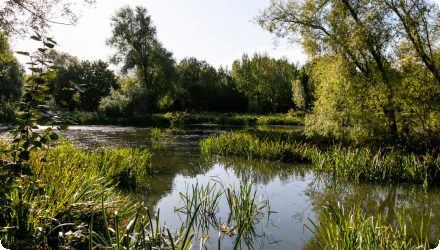
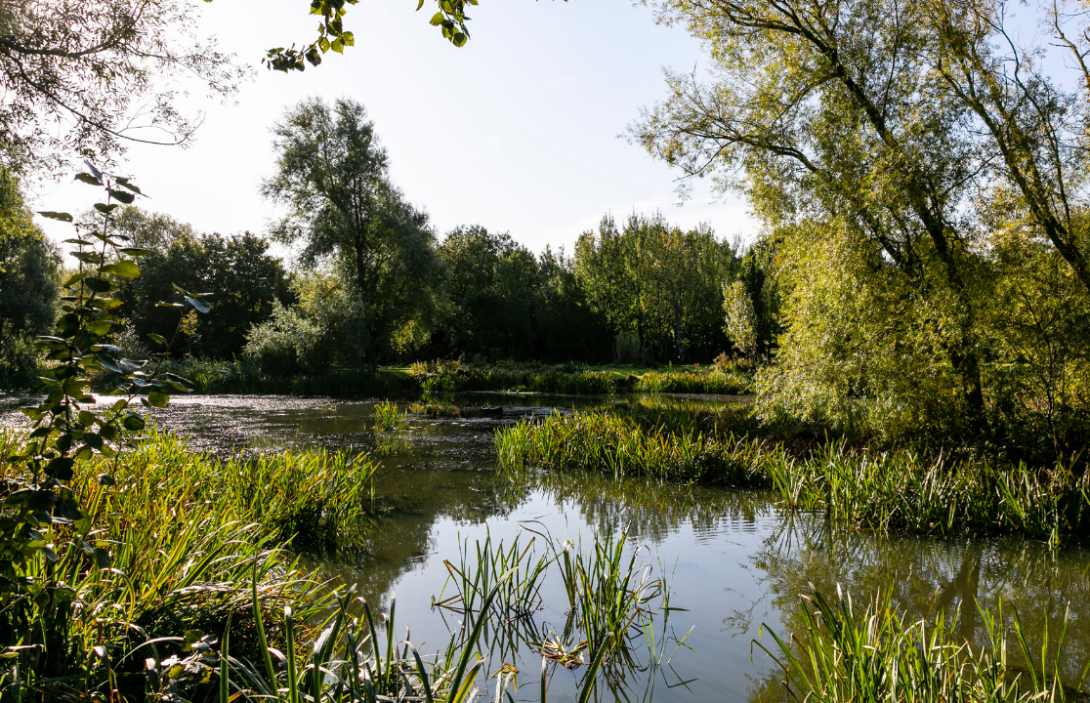
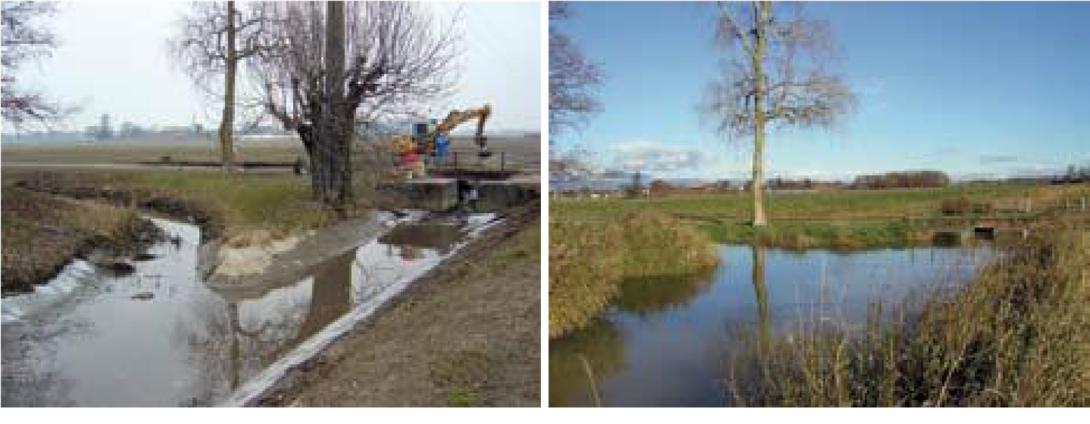
Located in eastern Geneva canton, the Seymaz renaturation replaces concrete channelization with a softer, wider river corridor and recreates marshland, under the canton’s long-running programme to improve ecological and landscape quality and reduce flood risk by managing peak flows. Governance has relied on the “Charte Seymaz” negotiation forum and a management group to coordinate local arrangements; land tenure and agricultural impacts were key constraints that required dialogue and compensation for farmers.

Since 2020 the canton has consolidated and showcased results (book + short film). In 2024–25 a new phase at Bel-Air (Vandœuvres–Thônex–Chêne-Bourg) removed illegal bank fill, narrowed the low-flow channel, installed terraces, root wads/blocks and fish shelters, and stabilized banks with bioengineering, while reorganising heavy recreational use along the riverside path. Client: Office cantonal de l’eau; engineering: Karakas & Français SA and EcoEng SA; works: SCRASA SA and SITEL Environnement-Paysage. Six months on, beaver activity is already structuring flows and habitat. Maintenance of the Haute-Seymaz wetlands and channel has been handled by SITEL since 2019 with local association oversight; mowing/faucardage is adapted to hydrological conditions. Coordination around Bel-Air also required short Greenway bridge closures in March 2024.
Last update
2025
Summary
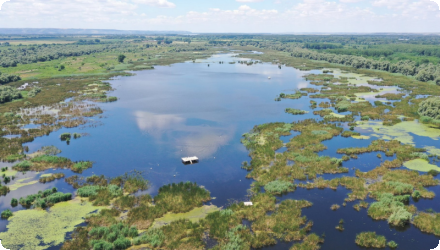
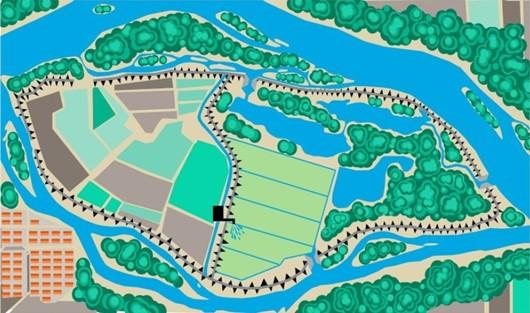
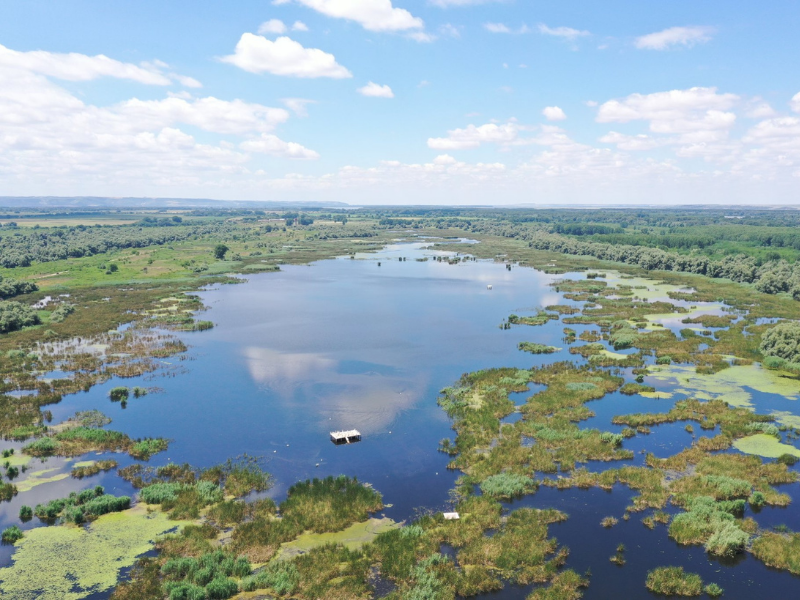
Restoration of two wetlands along the Danube River within Persina Nature Park, through engineering works including sluices, channels, dykes and access roads, enabling controlled flooding, water flow to former wetlands, nutrient retention, and recovery of biodiversity and fish populations. Baseline data on water, birds, fish, mammals, reptiles and vegetation were collected for monitoring.

Implemented 2002–2008 by the Bulgarian Ministry of Environment and Water, with main funding from the Global Environment Facility (GEF) via the World Bank, the project also covered the Kalimok-Brashlen and Belene Islands Complex. Works improved hydrological connectivity and reduced pollution, supported by WWF Bulgaria and local communities.

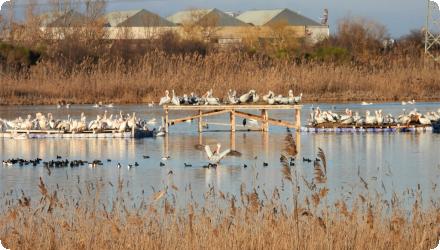
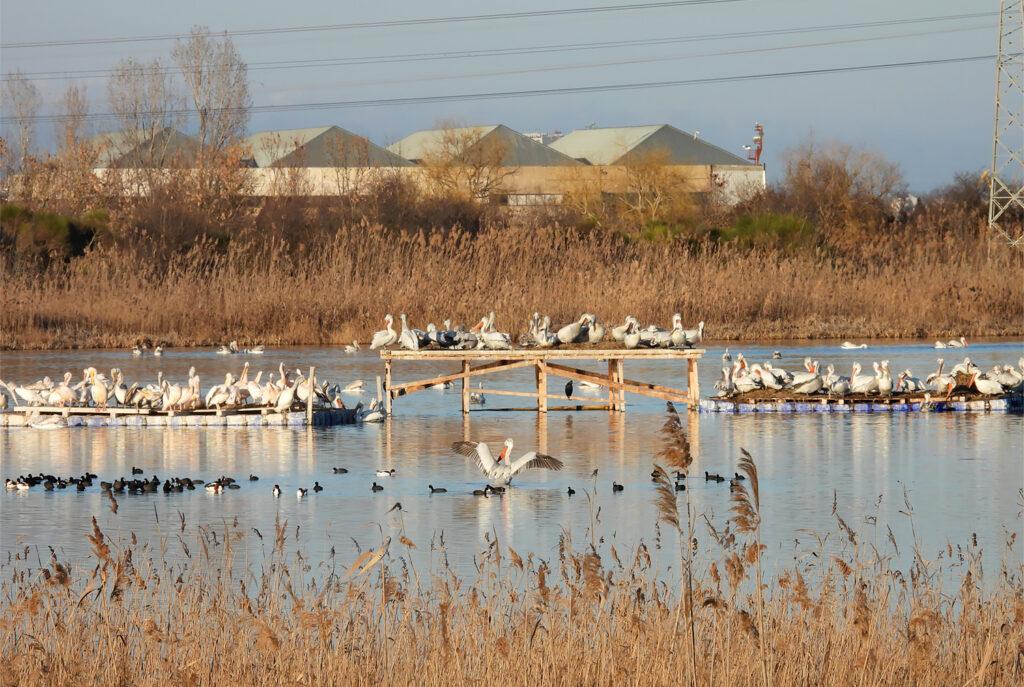
Subsequent initiatives have continued restoration and management, including sluice maintenance, construction of a pelican nesting platform, and reintroduction of the white water lily. In 2025, the Persina4Nature project, under the DANUBEPARKS network, was launched to promote citizen science for wetland conservation and monitoring, further enhancing ecological and community engagement outcomes.
Last update
2025
Summary
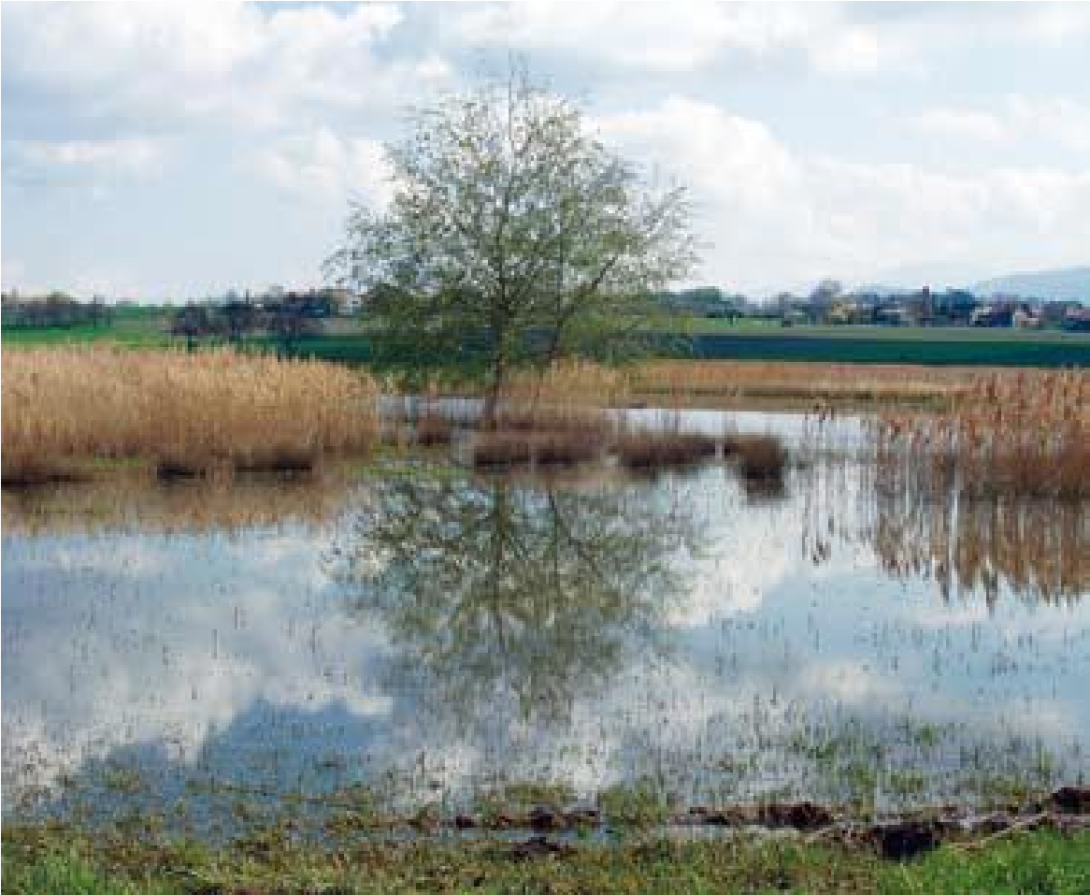
The short term project objectives were to create 250 ha of wetland by raising the water level of the embanked area with a regulating water outlet structure, creation of a variety of habitats -from dry land to spots with deep water- by digging and opening up of old river meanders that had been filled up.
The project is a good experience in the field of ecological restoration, involving purchase of land, participatory planning and co-operation with other organizations, including NGO’s.
The project also had long term objectives related to the creation of a network of wetlands, integration and nature and water policies, the implementation of European directives and the strengthening environmental NGOs and education. The project was implemented by a Romanian regional water authority with the support of Dutch partners.
The Ciobarciu project was evaluated at the end of the project by the project team and by a Romanian University, who interviewed 55 inhabitants of villages where the (previous) owners lived. After a period of five years, the project was evaluated again.
Last update
2025
Summary
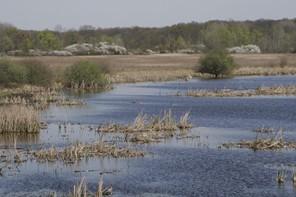
Oroklini Lake lies near Larnaca within Oroklini village. The wetland was modified in the mid-1940s to promote desiccation for health reasons. NWRM actions aimed to retain water and restore habitats for two key breeding species (Black-winged Stilt, Spur-winged Lapwing) and wider biodiversity, including small hydraulic works in the upper basin.
In 2012–2014 the LIFE “Oroklini” project restored and managed the site (water-level management, nesting islets, fencing and visitor facilities), and it was later recognised as a Best LIFE project (2018).
Since 2014, After-LIFE management continues: monthly waterbird counts and nesting surveys, predator monitoring, reed control, and operation of water-control structures to release excess water during floods; bird-collision “diverters” were also installed on power lines.
Recent science characterises Oroklini as a brackish lake (mean salinity ~7.4‰, ≤20‰) with occasional high phytoplankton abundance, influenced by catchment dominated by artificial and agricultural land uses, nformation valuable for water-level and vegetation management.
Under LIFE IP “Pandoteira” (2023–2029), measures relevant to Oroklini include access management to reduce disturbance, water-level plans, reed management and control of non-native predators.
A local issue flagged in late-2023 concerns an upstream runoff channel to the lake that has not been cleaned for decades, raising flood-risk and maintenance needs.
Last update
2025
Summary
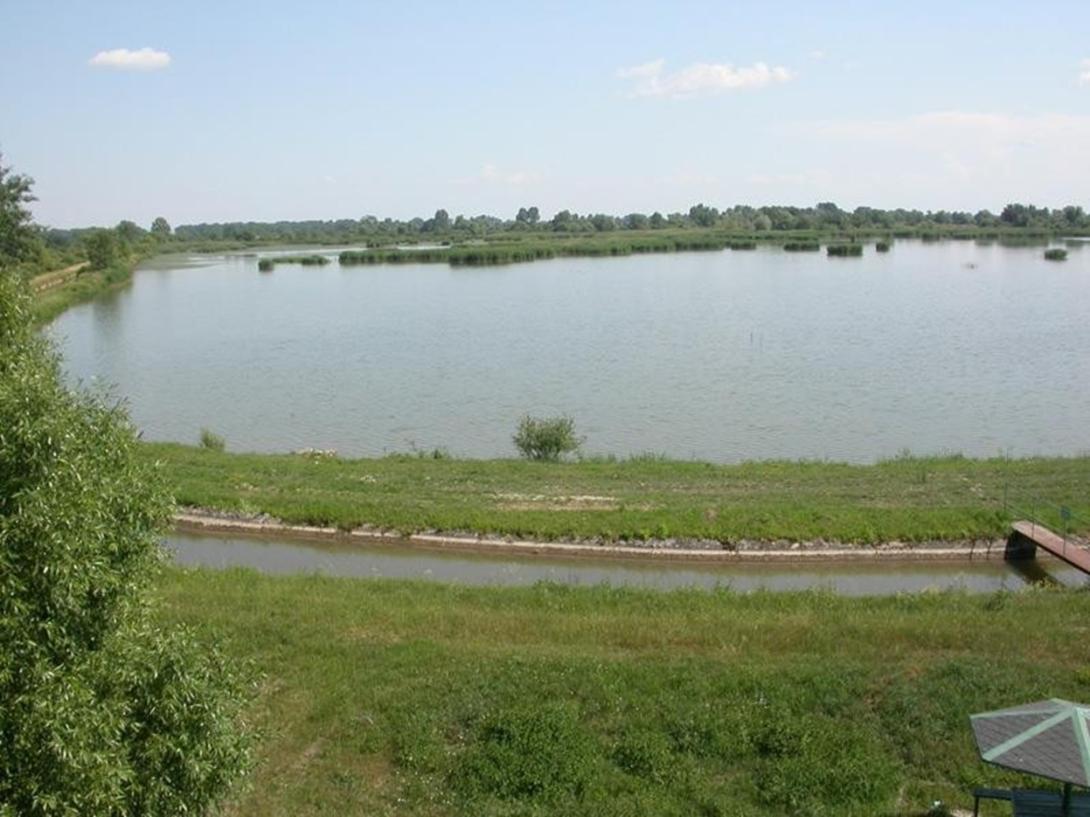
A rain garden was installed along the verges of a residential road in Nottingham, England. The purpose of the rain garden was to control the rate of runoff and water quality reaching the downstream watercourse (Day Brook).
A total of 21 linear rain gardens were constructed within the grass verge of Ribblesdale Road, to manage surface water run off within the catchment of Day Brook. Water contained within the gardens soaks away rather than entering the local surface water sewer which flows to the Day Brook. Construction was completed in May 2013.

The Nottingham rain gardens reduced surface water runoff by up to 30%. They help lower local flood risk, reduce combined sewer overflow, and improve water quality through filtration. Over 150 rain gardens were installed, enhancing biodiversity, creating attractive green space, and supporting pollinators. Maintenance costs are low and community feedback has been positive. The project also contributes to climate resilience and urban cooling.
Last update
2025
Summary
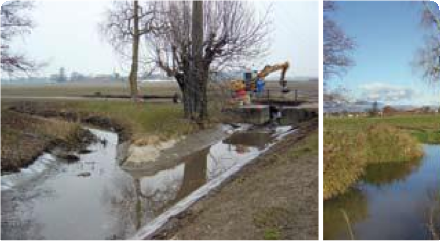
The WETLIFE project (2009–2012) in Amalva and Žuvintas mires sought to reverse negative changes by restoring hydrology (converting sluices to spillways, raising embankments, renovating the Amalva polder pump, blocking drainage) and by encouraging more sustainable peatland farming. It also aimed to raise awareness and provide a replicable model.
Since then, restoration has been expanded under LIFE WETLIFE 2 (2014–2018), which upgraded about 6.6 km of embankments, added spillways and a dam on the perimeter ditch, blocked underground drains and removed encroaching trees, with the goal of re-establishing “active raised bog” over ~775 ha in central and southern Amalva. Further rewetting (2019–2022, LIFE Peat Restore) targeted ~215 ha in southern Amalva with 28 retention structures across nine main ditches, four low berms with overflow crests, removal of woody growth and additional drain decommissioning.
Today the reserve operates long-term monitoring (2023–2033) of water levels and quality, while catchment management remains important due to pulsed discharges from the Simnas fishpond system that can affect Žuvintas Lake. Public access has been improved with a short boardwalk and viewing platform (2018), reinforcing outreach and stewardship.
Last update
2025
Summary
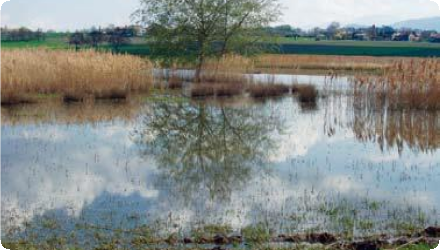
The Polish governmental agreement on water retention in small‑scale infrastructures was signed in 1995 to improve the structure of the water balance of small catchments by 2015. Regional authorities (voivodships) elaborated retention development programmes, largely completed by 1996. The plan focused on small water bodies - ponds - anticipating retention gains of approximately 860 million m³ across 4 789 reservoirs.
Since then, however, new initiatives and practices have emerged. The State Forests (Lasy Państwowe) have been implementing and consolidating small‑scale retention works in lowland forest ecosystems since the mid‑1990s, under EU‑funded programs. By 2014, this effort increased landscape storage from about 8.38 million m³ (2007) to roughly 31 million m³, enhancing biodiversity via wetland restoration and management.
In parallel, a growing number of micro‑retention (rainwater harvesting) schemes have been observed in rural and urban contexts: individual rainwater systems for households, small reservoirs, and green‑blue infrastructure, used to counter drought, reduce stormwater runoff, and support local water availability.
However, the national “My Water” subsidy programme (2020–2024), which supported residential micro‑retention installations, is not being continued in 2025. Instead, many municipalities now offer their own incentives and grants - for example in Goleszów, Gostyń, Warsaw, and Lubliniec - supporting rainwater retention systems with varying subsidy levels.
Last update
2025
Summary
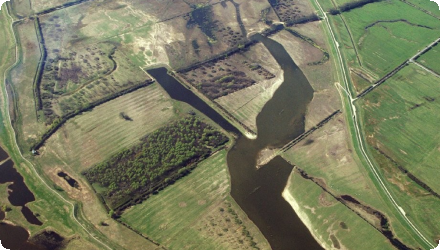
This scheme is part of the long-term SigmaPlan in Flanders, designed to increase flood storage in the Scheldt catchment while restoring natural habitats. On the Grote Nete, the project reconnects the river with its floodplain, previously cut off by dykes. In the middle reach, controlled flood storage areas (GOGs) are being developed, while in the upper and lower reaches free connections are restored, creating opportunities for wetlands, grasslands, and riparian forests.

Since 2015, planning has advanced through a spatial implementation plan (GRUP) and a subdivision into three sub-areas: Zammelsbroek, Tussen Hellebrug en Herenbossen, and Ter Borght–De Merode. Works are ongoing in Zammelsbroek and Hellebrug–Herenbossen, with dike modifications, creation of winter beds, reconnection of tributaries, and restoration of wetlands. The Ter Borght–De Merode section is progressing administratively, with environmental procedures under way. By 2024–2025, public information points and guided visits confirmed the transition to implementation on site.

The project is managed by De Vlaamse Waterweg nv and the Agency for Nature and Forest (ANB), within the broader valley programme “Het Grote Net(e)werk” led by the Province of Antwerp. This coalition aligns flood protection, water quality, and ecological objectives across about 900 ha along 30 km of river. Funding is supported by the SigmaPlan and the Flemish Blue Deal (2025–2029). Implementation requires addressing sediment and water quality constraints but is expected to deliver multiple benefits: improved flood safety, reconnected habitats, and increased resilience of the Grote Nete valley.
Last update
2025
Summary
The Nature Conservation Agency of the Czech Republic (AOPK ČR) restored the Černý potok (Black Brook) in the Černá louka Nature Reserve (Ore Mountains, near Adolfov). Early trials began in 2001–2003; the main works in 2009–2010 (OP Environment/ERDF) went beyond in-channel fixes: shallow, meandering channels were newly excavated and reconnected to remnants of the historical course or led across alluvial meadows to reduce depth/volume, slow runoff and re-wet the peat meadows. Designed by Terén Design and built by EPS-Servis, the project reshaped ~2.5 km within the reserve and delivered c. 1,820 m of new channels, ~0.963 ha of ponds/wetland and an ~8 ha meander belt.
Post-restoration monitoring by UJEP found only very small lateral movement (≤10 cm), no significant incision, and that after 1980s straightening had shortened length by ~52% the restored reach in 2011 was ~43% longer than the straightened channel. AOPK notes continued monitoring and documented fish passage, incl. brown trout spawning. Media coverage during the 2019 drought reported the area stayed wet and ponds held water. In 2022, ČSOP with private partners extended restoration to a small tributary just outside the reserve.
Last update
2025
Summary
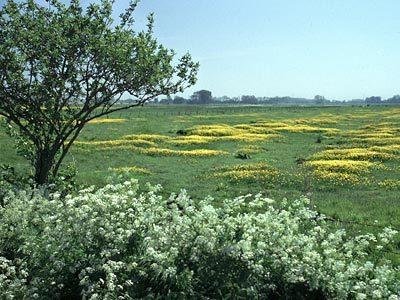
The measure was implemented in 2013 in Matsalu National Park (Natura 2000, Ramsar), at a former coastal meadow beside the large Salmi complex. Old, non-functioning field ditches were closed and scraped to restore wetland hydrology and breeding/feeding habitat for waders and amphibians. Grazing continued as before, with better access to drinking water for cattle.
Since then, the site has been managed as part of the wider Keemu–Salmi coastal meadow system (~360 ha) within a park that maintains ~3,000 ha of coastal meadows, among the largest in Europe. National guidance and the 2021–2027 Action Plan for semi-natural grasslands reinforce long-term maintenance (grazing/mowing, shrub control) and allow restoration actions such as closing drainage to keep meadows wet.
For fauna, Salmi–Keemu is a priority area for the natterjack toad; the species plan recommends sustaining sufficient grazing to keep short-sward habitat and preserving shallow, temporary pools created by micro-relief. In response to very high nest predation on coastal meadows, a pilot predator-control programme (2021–2024) was introduced at Keemu and Salmi to improve wader breeding outcomes.
Overall, the 2013 hydrological works are now embedded in park- and nation-wide management that keeps the meadows open and wet while targeting key bird and amphibian conservation needs.
The project was a rather small-scale restoration effort, which was originally intended to be expanded, but for various reasons this did not take place. No monitoring activities have been carried out to assess the effectiveness of the restoration.
Last update
2025