Opportunity map (OM) for water retention is a spatial representation of the potential for different types of Sponge Measures/NWRMs to be implemented in a particular area. It can be used to identify areas where water retention measures could be effective. For example, in terms of general enhancement of water retention capacity, reducing flood risk, negative effects of drought, ....
water
The sponge functions of a landscape refer to its ability to soak up, store and slowly release water.
It is possible to distinguish 3 sponge functions:
1. Intercept rainfall where it falls and stimulate infiltration into the soil;
2. Slow down the runoffthat has formed on the surface, is drained from groundwater, or is accumulated in streams;
3. Temporarily store excess water in the soil, groundwater or surface water bodies.
Sponge functions of a territory play the role of regulator of water. They lye at the heart of a complex system of interconnected physical processes, binding all actors and sectors together (see illustration scheme). The parameters within these sponge loops are numerous. We have become champions at monitoring them separately in every sector, while clearly seeing that they are intrinsically linked. If we organize ourselves to positively activate sponge loops, we unlock a chain reaction of benefits in favour of water availability, quality, safety, food production and biodiversity, all at once.
Sponge functions are context-specific and must be evaluated for a myriad of different hydrometeorological events, ranging from annual floods and droughts to more extreme events. The greater the sponge functions in the landscape, the more rainwater can be stored and/or used by vegetation, and surface runoff slowed, thus reducing or avoiding flooding downstream. However, it is important to note that sponge functions are not unlimited. Once full, a sponge can no longer store water to reduce the impact of floods, and once empty, it can no longer provide water in the event of a drought, yet for more frequently occurring events, this approach will contribute to the reduction of impacts both in space and time.
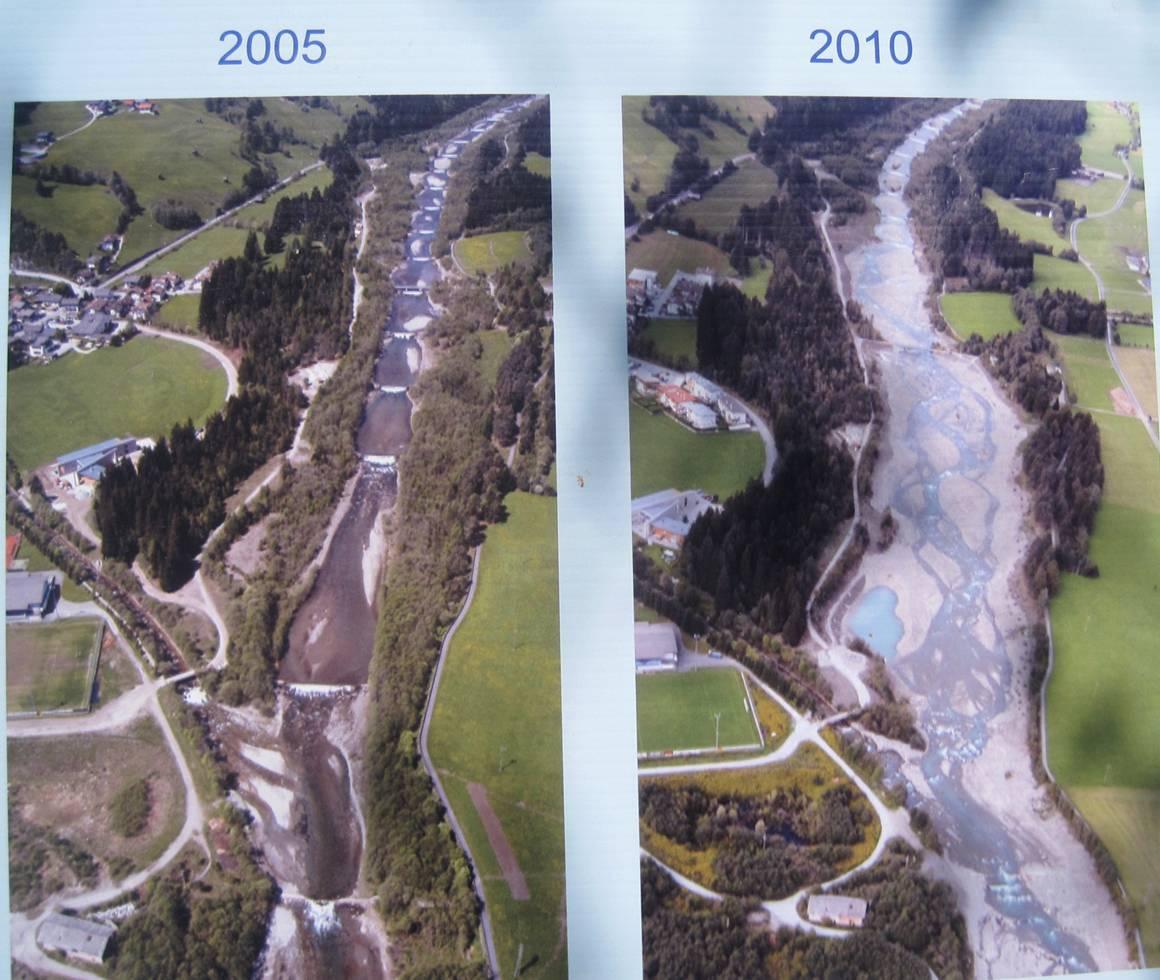
River restoration is the set of actions that reinstate natural hydrological and geomorphic processes and reconnect a river with its floodplain and groundwater so ecosystems can self-organise. Process-based principles guide design toward causes rather than symptoms, matching actions to a site’s potential, acting at the right spatial scale and defining expected dynamics. In Europe, WFD implementation and the Biodiversity Strategy operationalise this through measures that improve continuity for water, sediment and biota, re-establish ecological flows, and recover hydromorphology. Toolkits developed by REFORM, ECRR and partners translate these principles into practice and monitoring. Outcomes typically include improved habitat diversity, water quality co-benefits, floodplain storage and resilience to extremes, when measures are sequenced within a catchment-scale plan.

Source: ECRR - What is (ecological) river restoration ?
Action plan and roadmap that combines individual sponge measures into an overarching strategy, promoting a broader basin approach to soil and water management.
Measures and strategies that improve the sponge functioning of landscapes often consist of local sponge measures combining Nature-based Solutions and more technical measures following a ‘green where we can, grey where we must’ approach.
Nature-based solutions aim to help societies address a variety of environmental, social and economic challenges in sustainable ways.
They are actions which are inspired by, supported by or copied from nature.
Some involve using and enhancing existing natural solutions to challenges, while others are exploring more novel solutions, for example mimicking how non-human organisms and communities cope with environmental extremes.
Nature-based solutions use the features and complex system processes of nature, such as its ability to store carbon and regulate water flow, in order to achieve desired outcomes, such as reduced disaster risk, improved human well-being and socially inclusive green growth. Maintaining and enhancing natural capital, therefore, is of crucial importance, as it forms the basis for implementing solutions. These nature-based solutions ideally are energy and resource-efficient, and resilient to change, but to be successful they must be adapted to local conditions.
Water retention covers a wide set of mechanisms (see synthesis document n°1) the effect of which are to increase the capture of water by aquifers, soil, and aquatic and water dependent ecosystems.
More precisely it refers to capabilities of catchments (including wetlands, rivers and floodplains but also other land areas) to hold or retain as much water as possible during periods of abundant or even excessive precipitation, so that water is available for use during dry periods and runoff peaks are minimized.