Last update
2025
Summary
This study assessed saturated hydraulic conductivity (Ksat), surface runoff (SR) and soil erosion (SL) under rainfed conditions, at plot scale, over two years, under four different management practices: total soil cover with netting (SP), mechanical tillage (MT) and mulching with plant residues at doses of 3.5-10³ and 17.5-10³ kg ha-¹ of dry matter (NTR350 and NTR1750), in an olive grove in Calabria (Southern Italy). Overall, the results quantified the impact of mulching with pruning residues, applied at different doses, providing useful guidelines to control and mitigate the hydrological response of clay and sloping soils in Mediterranean olive groves, analysing the environmental benefits and associated economics.
Hypothesis – that not working the soil and mulching with pruning residues can significantly reduce runoff and water erosion and improve soil properties compared to conventional tillage – has been confirmed.
Hypothesis – that not working the soil and mulching with pruning residues can significantly reduce runoff and water erosion and improve soil properties compared to conventional tillage – has been confirmed.
Position
Latitude
38.2671
Longitude
16.1872
Project
NWRM
Installation date
2015
Implementation Status
Contact
Università degli Studi Mediterranea di Reggio Calabria
Transboundary
0
Photo gallery
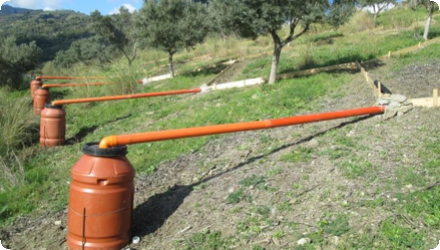
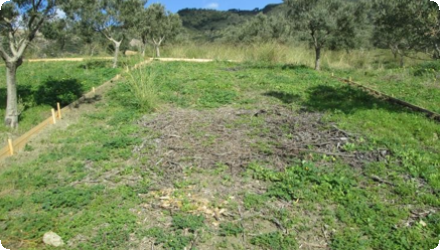
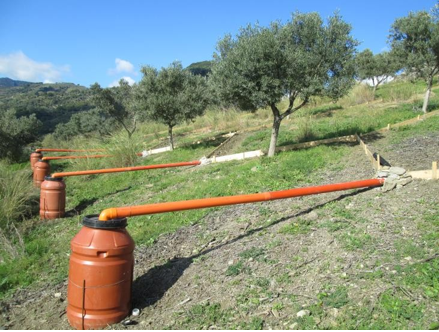
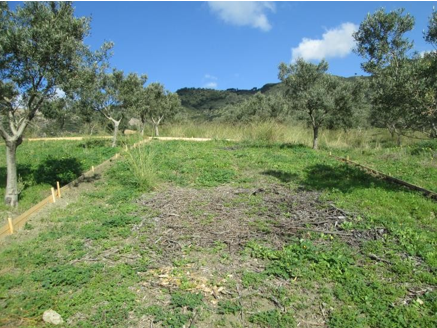
Location of the project
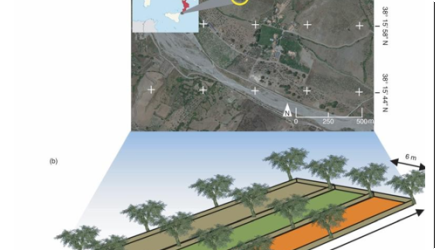
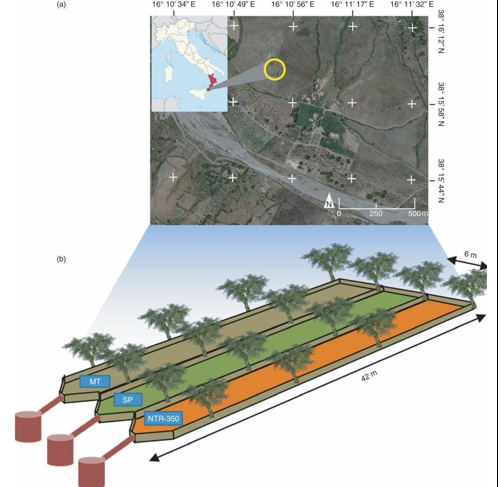
The experimental site was located in an olive grove close to Locri
NUTS Code
ITF6 - Calabria
Project's objectives
The study aimed to mitigate erosion and improve infiltration using low-cost, low-impact mulching. It was not designed to handle specific return-period storm events but rather frequent Mediterranean short-duration storms.
Involved Partners
| Authority type | Authority name | Role | Comments |
|---|---|---|---|
Climate zone
warm temperate dry
Temperature
min 11°C max 28°C
Precipitation
1350 mm
Annual rainfall range
1200 - 1500 mm
Runoff
25 mm
Elevation range
114 m
Slope range
20%
Soil type
Cambisol
Vegetation class
Spontaneous grass cover the soil of the olive grove, olives trees
Water bodies: Ecological Status
Bad
Water bodies: Chemical Status
Good
Water quality status
Arid zone, lack of water
Project scale
Micro
Performance timescale
1 - 4 years
Project area
252 m²
Lifespan
Renewable annually during pruning and processing
The project tested and compared four soil management techniques:
• SP (full cover with netting)
• MT (mechanical tillage)
• NTR350 (mulch at 3.5 t/ha)
• NTR1750 (mulch at 17.5 t/ha)
Key sponge measures included the use of locally available olive pruning residues as mulch. Soil infiltration was enhanced and runoff reduced, especially under NTR1750.
• SP (full cover with netting)
• MT (mechanical tillage)
• NTR350 (mulch at 3.5 t/ha)
• NTR1750 (mulch at 17.5 t/ha)
Key sponge measures included the use of locally available olive pruning residues as mulch. Soil infiltration was enhanced and runoff reduced, especially under NTR1750.
Biophysical limitations:
• Slope and high clay content were constraints
• Favourable conditions: available mulch, structured experimental plot, consistent rainfall patterns
Favourable conditions: Sufficient pruning residues and simple plot access
• Slope and high clay content were constraints
• Favourable conditions: available mulch, structured experimental plot, consistent rainfall patterns
Favourable conditions: Sufficient pruning residues and simple plot access
Total cost
€ 100,000
Costs total information
Approximately €20,000 for direct field costs
Financing authorities
Compensations
0
Policy context
In Mediterranean areas, olive trees are often cultivated on steep hillsides. These areas are particularly prone to high rates of runoff and soil loss due to the inherent climatic conditions, characterised by intense and infrequent rainfall that is often violent and destructive.
When olive growing is practised on soils with a high clay content, runoff and erosion rates can become unsustainable.
To reduce erosion and improve the water retention capacity and physical properties of soils in olive groves, less impactful agricultural practices such as cover crops or mulching with pruning residues can be successful.
These alternative management methods are inspired by the paradigm of conservation agriculture, a system of principles and practices that can integrate sustainability into the agricultural production system to protect soil, water quality and biological resources.
water quality and biological resources.
When olive growing is practised on soils with a high clay content, runoff and erosion rates can become unsustainable.
To reduce erosion and improve the water retention capacity and physical properties of soils in olive groves, less impactful agricultural practices such as cover crops or mulching with pruning residues can be successful.
These alternative management methods are inspired by the paradigm of conservation agriculture, a system of principles and practices that can integrate sustainability into the agricultural production system to protect soil, water quality and biological resources.
water quality and biological resources.
Land ownership
Land owned by an agricultural enterprise
Community involvment
No
Design consultation activity
| Activity stage | Name | Key issues | Comments |
|---|
Policy target
| Target purpose |
|---|
Target Remarks
Extend this practice to regional level with the help of regional economic contributions to farmers
Policy pressure
| Pressure directive | Relevant pressure |
|---|
Policy impact
| Impact directive | Relevant impact |
|---|---|
Requirement directive
| Requirement directive | Specification |
|---|
Requirement directive remarks
Directive 2000/60/EC - Nature restoration law
Contractual arrangements
0
| Arrangement type | Responsibility | Role | Name | Comments |
|---|
Part of wider plan
0
Wider plan type
| Wider plan type | Wider plan focus | Name | Comments |
|---|
Precipitation measured at Antonimina station (1 km from site)
Runoff and soil loss measured directly post-rainfall
Saturated hydraulic conductivity measured with double-ring infiltrometer
Lab analysis of soil and water samples
Runoff and soil loss measured directly post-rainfall
Saturated hydraulic conductivity measured with double-ring infiltrometer
Lab analysis of soil and water samples
Maintenance
No maintenance required
The impacts were assessed using direct measurements of runoff and erosion and modelled using SCS-CN and Horton models, as well as two models from the USLE family (MUSLE and USLE-M).
Local supply of pruning residues
Low-tech implementation
Low-tech implementation
Information on retained water
A clear reduction in runoff and soil loss was observed in mulching practices compared to mechanical tillage (MT), with a decrease of 20 to 32% in the runoff coefficient.
Enhanced soil moisture retention.
Enhanced soil moisture retention.
Information on Water quality overall improvements
The use of pruning residues as mulch in moderate quantities, combined with temporary cover crops, appears to be the best strategy for protecting clay soils in olive groves located on slopes and subject to water scarcity : 75 to 80% in soil erosion (SL), with more pronounced reductions in the NTR1750 treatment.
This practice has significantly improved water infiltration and soil organic matter (OM) content. The average organic matter content of the soil was:
• 2.01% for NTR1750,
• 1.69% for NTR350,
• 1.34% for SP,
• 0.82% for MT.
This practice has significantly improved water infiltration and soil organic matter (OM) content. The average organic matter content of the soil was:
• 2.01% for NTR1750,
• 1.69% for NTR350,
• 1.34% for SP,
• 0.82% for MT.
Higher vegetation cover in mulched plots vs. mechanical tillage. Vegetation cover was highest under SP (33%) and lowest under MT (12%) and mulching treatments (22–25%).
Key lessons
The soil management practices (SMPs) tested - particularly the one with the lowest dose - can be suggested to local farmers as a sustainable cropping model, capable of promoting soil conservation without compromising expected production yields.
However, one question remains open: the evaluation of the maximum slope length beyond which pruning residues retain their efficacy against
erosion, before being swept away by concentrated runoff downstream.
Future studies may answer this question, preferably conducted on clay olive groves with different slope profiles and with varying mulching doses and frequencies, in order to identify the optimal doses, using only the pruning residues produced within the olive grove, without resorting to external sources.
However, one question remains open: the evaluation of the maximum slope length beyond which pruning residues retain their efficacy against
erosion, before being swept away by concentrated runoff downstream.
Future studies may answer this question, preferably conducted on clay olive groves with different slope profiles and with varying mulching doses and frequencies, in order to identify the optimal doses, using only the pruning residues produced within the olive grove, without resorting to external sources.
Success factor(s)
| Success factor type | Success factor role | Comments | Order |
|---|---|---|---|
|
Other
|
main factor
|
Availability of pruning and mowing residues from the grass layer |
Driver
| Driver type | Driver role | Comments | Order |
|---|---|---|---|
|
Other
|
main driver
|
Climate change in terms of increasing rainfall magnitude
|
Transferability
Applicable to Mediterranean olive groves with similar soils
Requires slope-length adaptation to avoid runoff concentration
Requires slope-length adaptation to avoid runoff concentration
Cost effectiveness
An appropriate best management practices (BMPs) model could be proposed to olive growers to support soil conservation, offering an alternative or a complement to cover crop based strategies.
English
Olives and Extra Virgin Olive Oil Produced in Calabria'.