Last update
2025
Summary
Ambrosia Forest in Villars-sur-Var is a Terre de Liens farm converting 3.7 ha of abandoned vineyard terraces into a regenerative fruit landscape. In 2024, farmers Morgane and Xavier began a sponge strategy to slow, spread and sink stormwater. Works include one pond, 253 m of contour swales in a keyline layout, new hedgerows and a multistrata syntropic plot with permanent mulches and green manures. Goals are to reduce erosion on steep clay soils, rebuild soil life and create productive habitat.
The project received 50,000 euros from the Festival de Cannes environmental call with Fondation Terre de Liens. Volunteers and schools support planting days with partners such as Des Enfants et des Arbres.
Site diagnosis showed compacted soils and fast runoff from terraces. During the October 2024 floods the swales and pond captured flows and no rilling was observed on treated plots. Maintenance includes post storm checks and mulch renewal. Microbial monitoring is planned.
Expected outcomes are higher infiltration, improved structure, more biodiversity and resilient fruit production. The approach is low tech and transferable to Mediterranean mountain farms with terraces when design follows local contours and storm sizing.
The project received 50,000 euros from the Festival de Cannes environmental call with Fondation Terre de Liens. Volunteers and schools support planting days with partners such as Des Enfants et des Arbres.
Site diagnosis showed compacted soils and fast runoff from terraces. During the October 2024 floods the swales and pond captured flows and no rilling was observed on treated plots. Maintenance includes post storm checks and mulch renewal. Microbial monitoring is planned.
Expected outcomes are higher infiltration, improved structure, more biodiversity and resilient fruit production. The approach is low tech and transferable to Mediterranean mountain farms with terraces when design follows local contours and storm sizing.
Position
Latitude
43.99
Longitude
7.08
Project
NWRM
Installation date
2024-2026
Implementation Status
Transboundary
0
Photo gallery
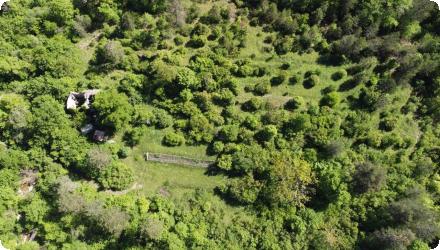
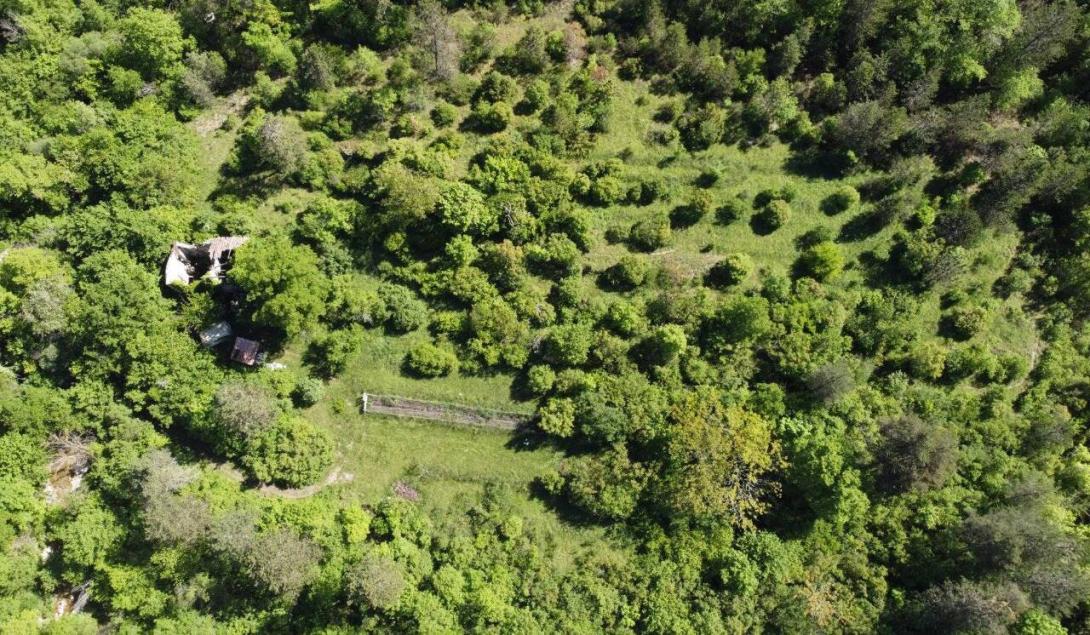
Location of the project
Villars‑sur‑Var, Alpes‑Maritimes, Provence‑Alpes‑Côte d’Azur. Former vineyard terraces above the Var valley.
NUTS Code
FR82 - Provence-Alpes-Côte d'Azur
Project's objectives
, spread and sink rainfall on steep former vineyards Reduce rilling and erosion during intense storms Rebuild soil structure and microbial activity Create perennial food production and local biodiversity habitat Demonstrate regenerative, community‑supported farming in mountain context
Involved Partners
| Authority type | Authority name | Role | Comments |
|---|---|---|---|
Climate zone
warm temperate dry
Temperature
12.4 °C
Precipitation
916
Annual rainfall range
900 - 1200 mm
Elevation range
315 - 349 m
Slope range
Terraced slopes. Locally steep between benches
Vegetation class
Mosaic of young shrubland and scattered trees transitioning to multi‑strata agroforestry. Existing fruit trees, conifers upslope, new hedgerows
Water bodies: Ecological Status
High
Water bodies: Chemical Status
Good
Water quality status
No surface water on site. Bordering small stream. Main issue was surface erosion and sediment transport during heavy rainfall on compacted soils.
Project scale
Micro
Project scale specification
Single farm unit on 3.7 ha, abandoned terraces under conversion
Project area
3.7 ha
Lifespan
Long term continuous management
2021 land secured. Observation and design 2023–2024. Earthworks and first plantings 2024. Further plantings and soil regeneration 2024–2026.
Keyline‑inspired design to organise contour swales and water distribution Swales and a pond to retain and infiltrate stormwater Syntropic agroforestry with close interplanting of fruit trees and support species Permanent mulching with woodchips and straw. BRF from on‑site prunings Green manures and compost tea for microbiome jump‑start Fencing near forest margins to avoid wildlife damage Use of microclimate and existing dry‑stone terraces.
One pond and 253 m of contour swales. Hedgerow planting. Syntropic agroforestry with permanent mulches and green manures. Keyline-inspired layout.
Keyline‑inspired design to organise contour swales and water distribution Swales and a pond to retain and infiltrate stormwater Syntropic agroforestry with close interplanting of fruit trees and support species Permanent mulching with woodchips and straw. BRF from on‑site prunings Green manures and compost tea for microbiome jump‑start Fencing near forest margins to avoid wildlife damage Use of microclimate and existing dry‑stone terraces.
One pond and 253 m of contour swales. Hedgerow planting. Syntropic agroforestry with permanent mulches and green manures. Keyline-inspired layout.
Western exposure with long light hours of moderate intensity Cold‑air drainage from NE crest. Ridgeline with dry and wet lines. Four accumulation points identified Compacted clay soils with low to medium humus. Initial low fungal activity Steep terraced topography prone to surface runoff in extreme events Bordering small stream. No internal water source before works.
Total cost
unknown
Costs total information
Land aquisition. Earthworks for swales and pond. Mulch and hedgerow material. Fencing and access upgrades. Ongoing plant purchases and maintenance.
Financing authorities
Type of funding
Private funds
Comments
50,000 € in partnership with Fondation Terre de Liens
Compensations
0
Policy context
Local regenerative agriculture producing fruits and biodiversity while improving water retention on mountain terraces Addresses soil erosion and flood resilience under Mediterranean storms
Land ownership
Land held by Terre de Liens and leased to farm operators under a long‑term arrangement
Community involvment
Yes
Design consultation activity
| Activity stage | Name | Key issues | Comments |
|---|---|---|---|
|
Implementation phase
|
Field days and planting events with volunteers and schools
|
||
|
Implementation phase
|
Workshops with agroforestry experts
|
||
|
Other
|
Ongoing educational activities with local partners
|
Target Remarks
Slow runoff, increase infiltration and soil water storage Restore soil life and structure for perennial crops Provide local food and education benefits
Policy pressure
| Pressure directive | Relevant pressure |
|---|---|
Pressures remarks
Heavy autumn storms. Historic soil compaction and erosion on abandoned vines and terraces
Policy impact
| Impact directive | Relevant impact |
|---|---|
Contractual arrangements
1
| Arrangement type | Responsibility | Role | Name | Comments |
|---|---|---|---|---|
|
Contractual agreement
|
Foundation support agreement for the funded works
|
Formal lease between Terre de Liens and operators.
|
Part of wider plan
0
Visual monitoring of keyline layout performance during storms Soil microbiology monitoring planned. Baseline tests done for bacteria, protozoa, fungi presence
Maintenance
Swale and pond inspection after heavy rain. Hedgerow and tree care. Mulch renewal. Frequency variable with season and plant age
Qualitative observation during storm events Planned microbial analyses. Photo‑points and field notes
Strengthened local food supply. Community engagement through events and education. Visibility via Cannes programme
Hydrological effects
During October 2024 floods the swales and pond filled. No rilling observed on treated plots. Evident slowing and spreading of runoff
Information on Water quality overall improvements
Mulches and green manures initiated soil cover and protection. Early signs of improved structure expected. Quantification pending
Hedgerows and multi‑strata plantings increase habitat. Pollinator mixes on swale berms. Quantification pending
Other biophysical impacts changes
Expected microclimate buffering. Anticipated carbon sequestration in soils and woody biomass
Key lessons
On steep Mediterranean terraces, contour swales and a small pond can rapidly reduce visible erosion Syntropic agroforestry and permanent cover are compatible with fruit production goals Early microbial support and heavy mulching are critical on compacted clays
Success factor(s)
| Success factor type | Success factor role | Comments | Order |
|---|---|---|---|
|
Financing possibilities
|
secondary factor
|
Availability of Terre de Liens support and Cannes environmental programme |
|
|
Existing staff and consultant knowledge
|
main factor
|
Technical support from agroforestry practitioners. Low‑tech, locally available materials |
|
|
Attitude of relevant stakeholders
|
main factor
|
Volunteer mobilisation |
Driver
| Driver type | Driver role | Comments | Order |
|---|---|---|---|
|
Past flooding events
|
main driver
|
Past heavy rains causing erosion.
|
Transferability
Approach is transferable to other Mediterranean mountain farms with terraces and compacted soils. Requires site‑specific keyline mapping and careful storm‑event sizing of swales and ponds
Cost effectiveness
Too early to conclude. Capital costs moderate for site scale. Benefits visible qualitatively after first storms
Source(s)
English