Last update
2025
Summary
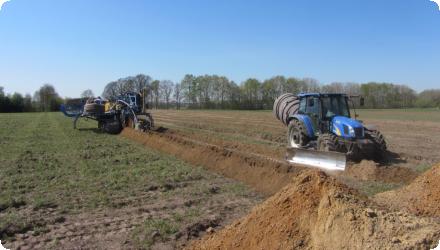
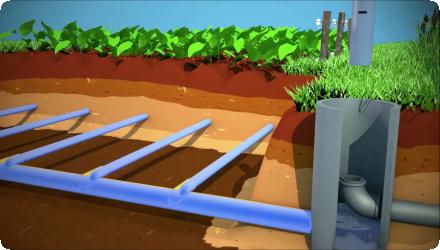
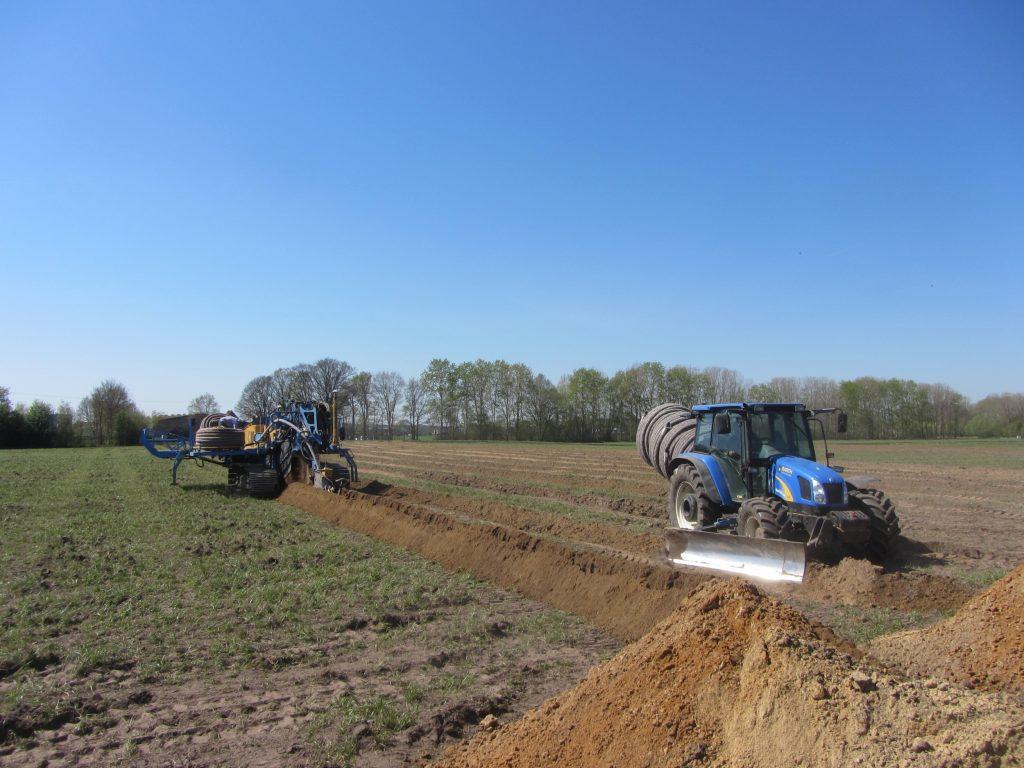
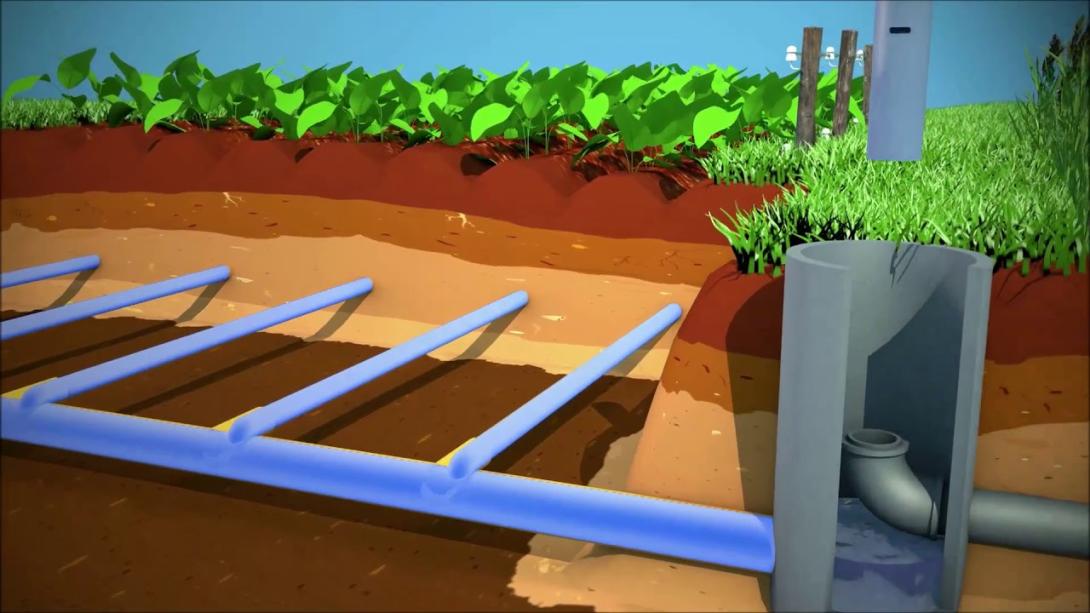
This case study documents applied research in Flanders that tested and scaled controlled drainage and simple adjustable weirs on arable land. The LEADER Drainage Plus pilot (2016 to 2019) converted nine parcels totalling 35 ha from conventional systems to level-controlled drainage, installing control pits and combining on-farm demonstrations with monitoring and modelling led with the Belgian Soil Service. The goal was to retain winter water in the root zone, reduce downstream peaks, and improve yields in a region facing summer drought and wetter winters. The project showed that, on suitable flat and permeable fields, controlled drainage increased crop growth, with income gains from about €100 up to several hundred euro per hectare depending on crop and year, and it triggered wider farmer uptake.
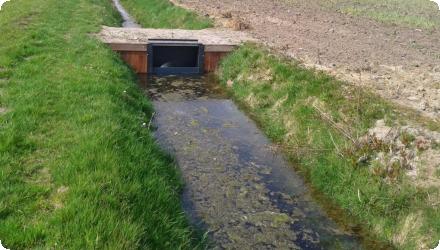
Follow-up regional work expanded monitoring and practical guidance (Van Landbouw tot Waterbouw) and OP-PEIL is mapping where conversion is technically and economically viable; weirs were promoted as fast, no-land-take devices to hold ditch water with siting criteria. Field rules of thumb were consolidated: a 10 cm groundwater rise can add roughly 30 to 35 mm evapotranspiration and about 1 t/ha dry matter; maize water stress can be postponed up to two weeks; indicative local storage is about 500 m³ per hectare. Barriers included permit complexity for each weir, costs and the legacy preference for fast evacuation. Typical costs reported are about €2,000 per hectare when reusing drains, about €4,500 per hectare for full renewal, and about €4,500 per weir. A major outcome was policy change: Flanders created a subsidy for controlled drainage (75 percent support up to €2,000 per hectare) and 100 percent subsidy for weirs with limited budgets, directly linked to the early pilots. Today the pilot is finished, follow-ups delivered monitoring and guidance, and conversions continue where site conditions and farmer motivation align.
Follow-up regional work expanded monitoring and practical guidance (Van Landbouw tot Waterbouw) and OP-PEIL is mapping where conversion is technically and economically viable; weirs were promoted as fast, no-land-take devices to hold ditch water with siting criteria. Field rules of thumb were consolidated: a 10 cm groundwater rise can add roughly 30 to 35 mm evapotranspiration and about 1 t/ha dry matter; maize water stress can be postponed up to two weeks; indicative local storage is about 500 m³ per hectare. Barriers included permit complexity for each weir, costs and the legacy preference for fast evacuation. Typical costs reported are about €2,000 per hectare when reusing drains, about €4,500 per hectare for full renewal, and about €4,500 per weir. A major outcome was policy change: Flanders created a subsidy for controlled drainage (75 percent support up to €2,000 per hectare) and 100 percent subsidy for weirs with limited budgets, directly linked to the early pilots. Today the pilot is finished, follow-ups delivered monitoring and guidance, and conversions continue where site conditions and farmer motivation align.
Position
Latitude
51.2
Longitude
5.5
Installation date
2016-2022
Implementation Status
Transboundary
0
Photo gallery
Location of the project
Various pilot sites in Flanders, Belgium.
Project's objectives
Retain winter water locally for crop use in summer
Reduce drought stress and downstream peak flows
Improve yields and farm income
Demonstrate feasibility and build farmer awareness
Reduce drought stress and downstream peak flows
Improve yields and farm income
Demonstrate feasibility and build farmer awareness
Involved Partners
| Authority type | Authority name | Role | Comments |
|---|---|---|---|
Climate zone
cool temperate moist
Temperature
10.5 °C
Annual rainfall range
900 - 1200 mm
Elevation range
20-100 m
Slope range
Flat fields < 0.5 %
Groundwater level
Depends on site, often around 80 cm
Vegetation class
Arable crops and grassland on pilot parcels.
Water quality status
Nitrate often high in ditches and control pits at monitored parcels; phosphate occasionally detected.
Project scale
Meso
Project scale specification
Multi-site pilots across farms totaling 35 ha within a regional LEADER area, an dup to 82 ha with the most recent project.
Project area
82 ha
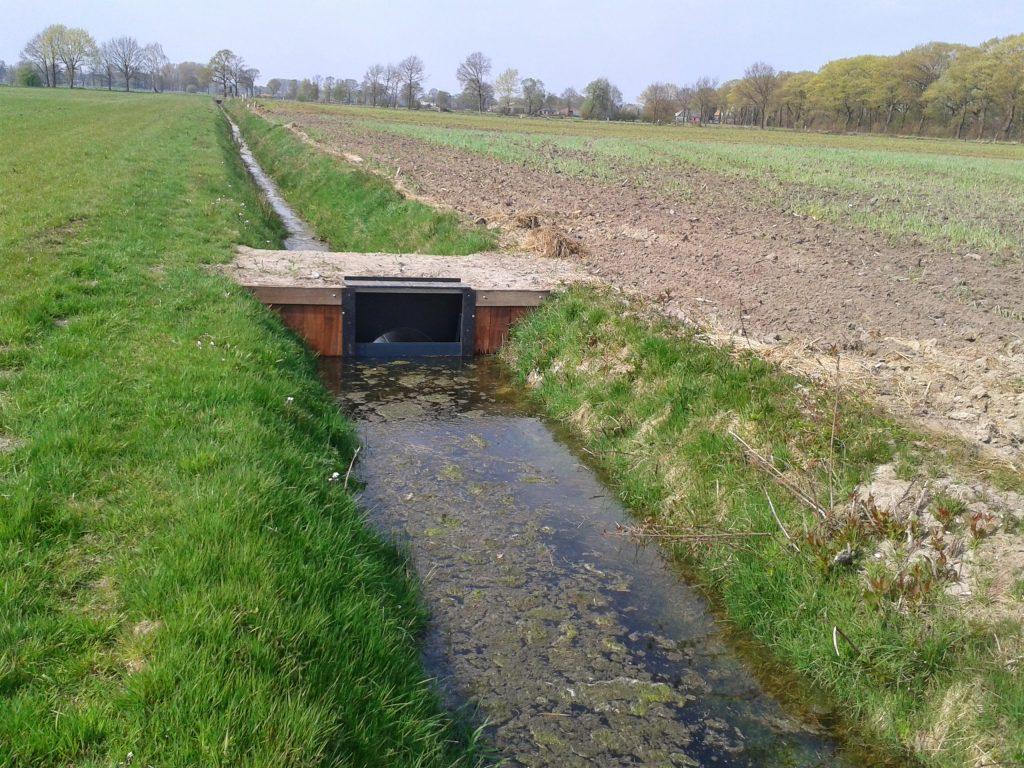
Install water control structures at drainage outlets to set outflow level and switch between full, partial, or no drainage depending on crop needs. For weirs, install adjustable boards or orifice-weirs in ditches to hold back water without land take.
Design capacity description
Storage of about 500 m³ per hectare
Flat fields, suitable soil permeability, and adequate receiving ditch capacity
Existing drains in good condition and not too old
Drain gradient limits and small ground-level differences per drain run
Accessible locations for weirs, typically at least 300 m spacing between weirs
Existing drains in good condition and not too old
Drain gradient limits and small ground-level differences per drain run
Accessible locations for weirs, typically at least 300 m spacing between weirs
Total cost
157,649 €
Costs total information
Conversion costs depend on reusability of existing drains
Approx. 2,000 €/ha when existing system can be reused
Approx. 4,500 €/ha when full renewal is needed
Indicative cost per weir around 4,500 €
Flanders subsidy reported for conversions: 75 percent support up to 2,000 €/ha, developed following Drainage Plus experience
Weirs: 100 percent subsidy reported, but budget amounts limited
Approx. 2,000 €/ha when existing system can be reused
Approx. 4,500 €/ha when full renewal is needed
Indicative cost per weir around 4,500 €
Flanders subsidy reported for conversions: 75 percent support up to 2,000 €/ha, developed following Drainage Plus experience
Weirs: 100 percent subsidy reported, but budget amounts limited
Financing authorities
Type of funding
EU-funds: Cohesion and regional development funds
Comments
via LEADER/CLLD
51,236 €
51,236 €
Type of funding
National funds
Comments
51,236 €
Type of funding
Private funds
Comments
25,177 €
Type of funding
Other
Comments
30,000 €
Compensations
0
Policy context
Flanders faces both drought and flood stress. Water availability per capita is low, with limited large rivers and high population density and activity; climate change is shifting rainfall toward drier summers and wetter winters, so retaining winter water locally is needed. Historically, the region engineered deep, fast-evacuating drainage networks, and some farmers still prefer to “get rid of water fast,” which conflicts with retention goals. Administrative hurdles persist: drain permits in agricultural zones are seen as overly complex, and each weir requires a permit. The pilots demonstrated benefits and built an evidence base that informed farmers and policymakers, contributing to creation of the Flanders subsidy for controlled drainage.
Land ownership
Private farmland. Participation voluntary, with an agreement with the association.
Community involvment
No
Design consultation activity
| Activity stage | Name | Key issues | Comments |
|---|---|---|---|
|
Other
|
Field demonstrations on farms
|
Policy target
| Target purpose |
|---|
Target Remarks
Reduce drought stress by retaining winter water for crop use
Lower downstream peak flows and pressure on drainage networks
Improve yields and resilience at farm scale
Lower downstream peak flows and pressure on drainage networks
Improve yields and resilience at farm scale
Policy pressure
| Pressure directive | Relevant pressure |
|---|---|
Pressures remarks
Increasing summer drought and higher winter rainfall in Flanders; high water demand and dense human activity.
Policy impact
| Impact directive | Relevant impact |
|---|---|
Requirement directive
| Requirement directive | Specification |
|---|
Contractual arrangements
1
| Arrangement type | Responsibility | Role | Name | Comments |
|---|---|---|---|---|
|
Contractual agreement
|
Farmer : gives monitoring rights to the association and takes care of maintenance needs
Association : handles the complex paperwork and finances the works |
Part of wider plan
0
Wider plan type
| Wider plan type | Wider plan focus | Name | Comments |
|---|
Drainage Plus: water levels recorded twice per month on four converted parcels, analysed with modelling
Follow-up project: continuous groundwater logging with divers at eight locations from Nov 2019 to Apr 2021; twice-yearly water quality sampling; extended simulations 2007–2021 of groundwater, drought stress, and plant-available water with a water balance model
Follow-up project: continuous groundwater logging with divers at eight locations from Nov 2019 to Apr 2021; twice-yearly water quality sampling; extended simulations 2007–2021 of groundwater, drought stress, and plant-available water with a water balance model
Maintenance
Controlled drainage requires keeping control pits free of sediment; flushing is less easy if dirt accumulates Weirs need regular cleaning and clear marking to avoid damage from machinery; sediment removal as needed
Site measurements of groundwater and temperature
Modelling of groundwater levels for undrained, conventional, and controlled scenarios
Water balance model producing drought stress index and plant-available water
Conversion of evapotranspiration changes to biomass and to financial value using published water productivity relationships and crop prices
Modelling of groundwater levels for undrained, conventional, and controlled scenarios
Water balance model producing drought stress index and plant-available water
Conversion of evapotranspiration changes to biomass and to financial value using published water productivity relationships and crop prices
Yield and revenue gains when applied correctly. Drainage Plus synthesis and follow-up modelling show average gains around 100–several hundred €/ha depending on crop and year. Example modelled results: average 121.9 €/ha for grassland at a monitored site; potatoes averaging 325.9 €/ha, up to nearly 1,500 €/ha in very dry 2020. Awareness and uptake among farmers increased across Flanders.
Information on retained water
Level-controlled drainage increased plant water availability and crop evapotranspiration in dry periods
Reported rule of thumb from interviews: +10 cm groundwater can yield 30–35 mm extra evapotranspiration and higher biomass
Storage effect indicative: about 500 m³ per hectare retained locally
In maize, farmers reported up to two extra weeks without water stress
Local water retention and drought mitigation at field scale
Potential reduction of downstream peak flows
Reported rule of thumb from interviews: +10 cm groundwater can yield 30–35 mm extra evapotranspiration and higher biomass
Storage effect indicative: about 500 m³ per hectare retained locally
In maize, farmers reported up to two extra weeks without water stress
Local water retention and drought mitigation at field scale
Potential reduction of downstream peak flows
Information on Water quality overall improvements
At monitored sites, nitrate frequently high; phosphate occasionally detected, with values reported in 2021 campaigns at Bree and Pelt sites as examples
Overall effect of measures on water quality not quantified
Overall effect of measures on water quality not quantified
Key lessons
Controlled drainage and simple weirs work, but only where fields are flat, soils permeable and drains are in good condition; pre-site visits are essential because the technique is not universally applicable. Operational discipline and maintenance of control pits and weirs matter. Permit procedures for drains and for each weir are a barrier and need simplification. Demonstrations, monitoring and modelling convinced farmers and policymakers, leading to uptake beyond the pilot area. Costs can be significant, yet gains are highest in dry years, so economics depend on climate.
Success factor(s)
| Success factor type | Success factor role | Comments | Order |
|---|---|---|---|
|
Conducted assessments (incl. economic)
|
main factor
|
Pre-site assessments and field visits |
|
|
Communication activities
|
main factor
|
On-farm demonstrations and communication |
|
|
Conducted assessments (incl. economic)
|
secondary factor
|
Technical support from drainage company and BDB monitoring/modelling |
Driver
| Driver type | Driver role | Comments | Order |
|---|---|---|---|
|
Past flooding events
|
main driver
|
Climate pressures of summer drought and winter surpluses
|
|
|
Availability of subsidies
|
main driver
|
Availability of subsidies following Drainage Plus
|
|
|
Organisation committed to it
|
secondary driver
|
Motivated farmers and local willingness to pilot
|
Transferability
Transferable where fields are flat, soils have adequate permeability, drains are in good condition, and access for structures is available
Opportunity mapping and guidance under OP-PEIL to identify suitable areas in Flanders
Opportunity mapping and guidance under OP-PEIL to identify suitable areas in Flanders
Cost effectiveness
Reported average gains from modelling and synthesis range roughly 100 to 300+ €/ha per year, higher in very dry years
English
project promoter, coordination, farmer engagement, administration, communication