Last update
2025
Summary
The case is in the Padrťské rybníky area on the Klabava stream, inside the Brdy Protected Landscape Area, Czechia. The site is part of the Natura 2000 EVL “Padrťsko”, designated for species including stone crayfish. Brdy PLA was established on 1 January 2016.
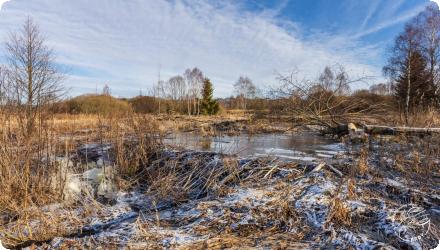
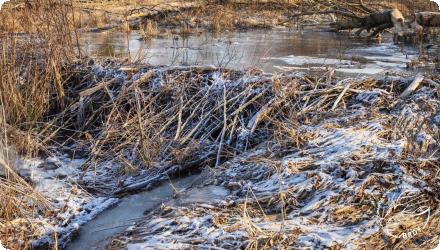
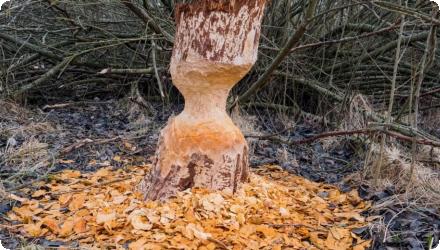
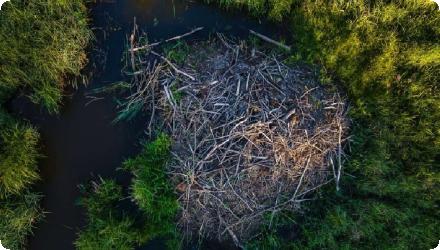
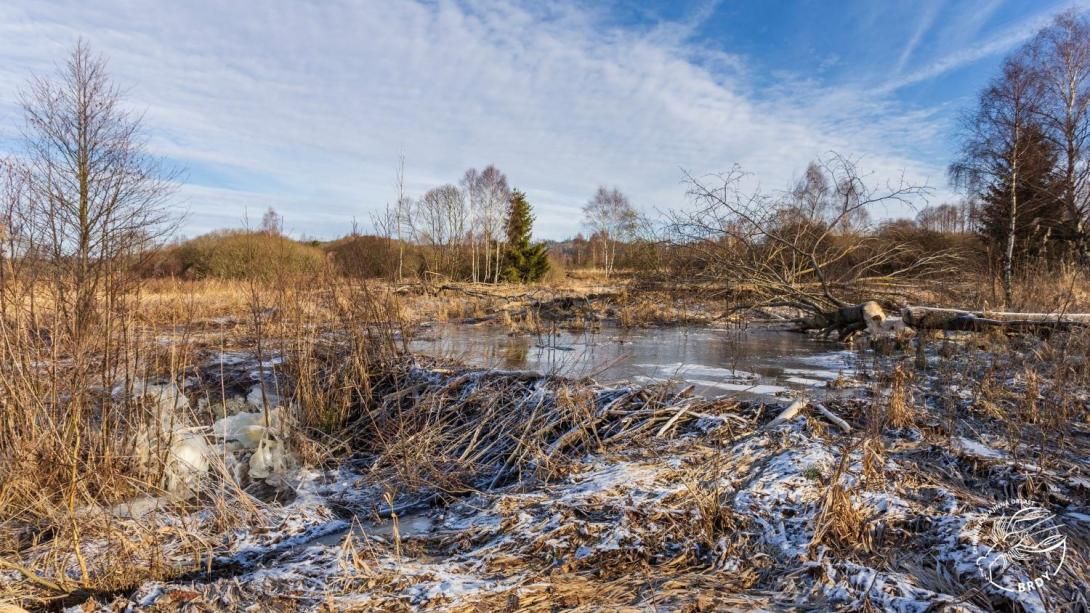
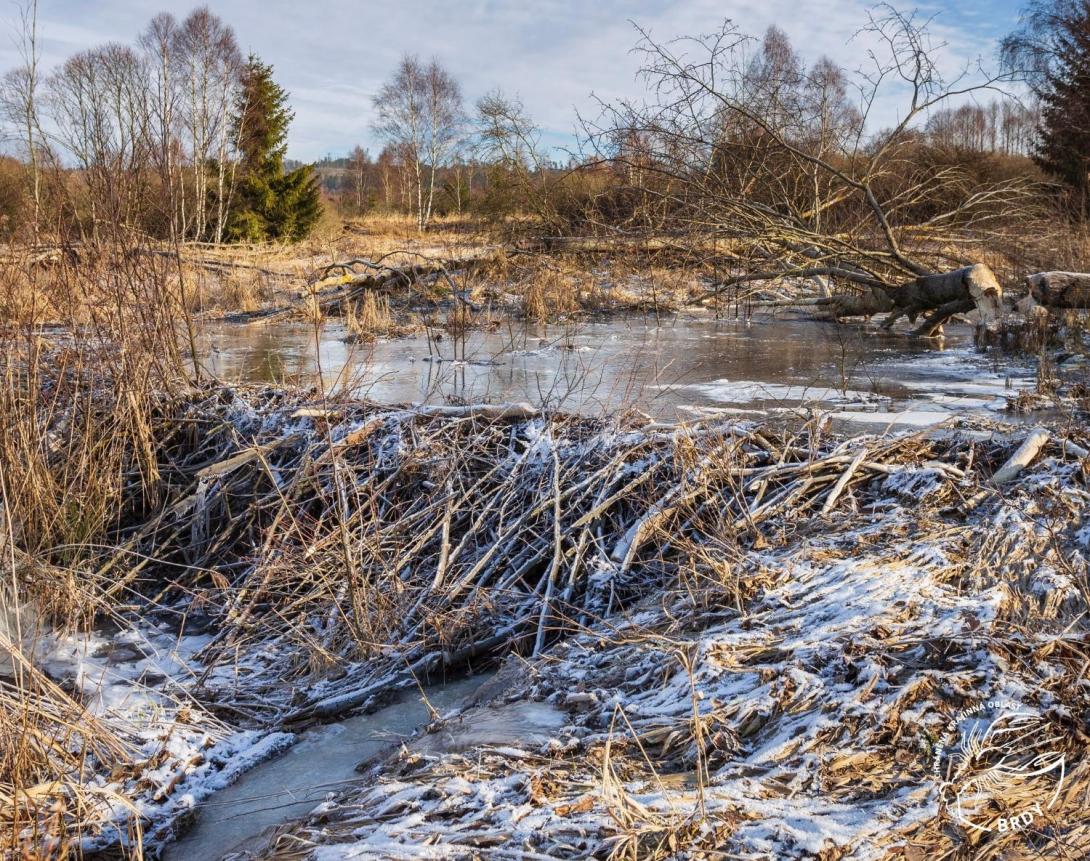
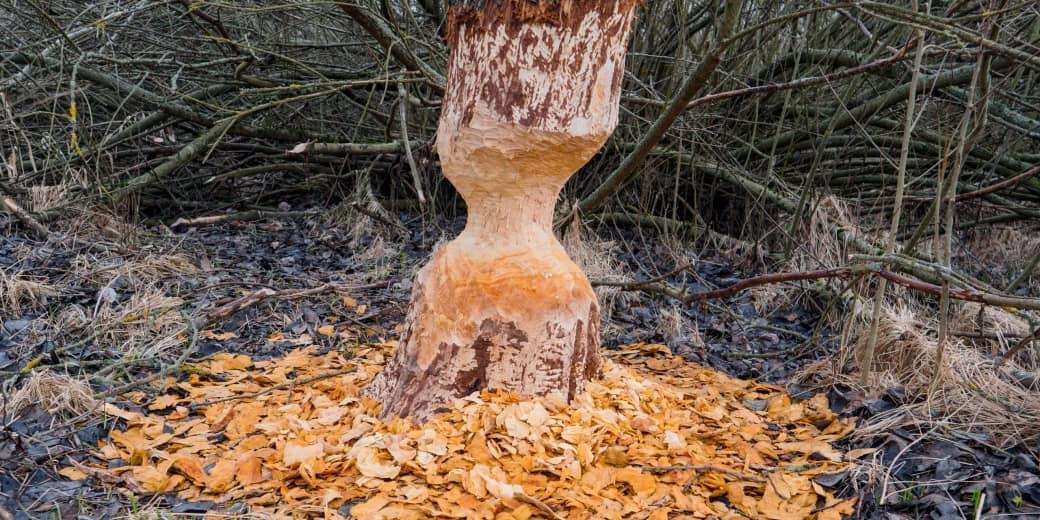
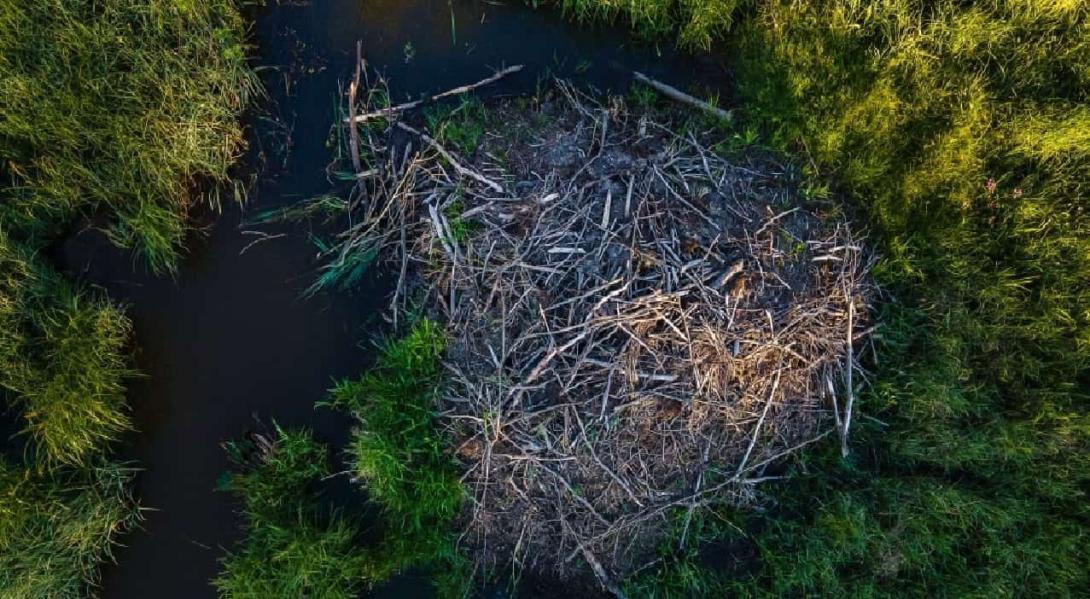
Beavers settled here around 2020. From 2021 they started building a cascade of dams below Dolejší Padrťský rybník, extending works again in 2024. Their activity restored wetland hydromorphology on a previously straightened reach and reconnected historical traces in the floodplain. A human-led revitalisation prepared for the same area became unnecessary. The state avoided roughly CZK 30 million.
Hydrological effects observed on site: clear water retention with attenuation of peak flows due to the pond cascade, and rewetting of the floodplain. Water retention enables sedimentation of fine particles, especially during pond drawdown, and shifts physico-chemical conditions, increasing nutrient status and pH. Biodiversity benefits include habitat gains for stone crayfish and ideal breeding conditions for common toads and frogs. Management reports regular site visits but no targeted beaver monitoring scheme. The setting is non-conflict, in a former military area without settlements or economic use.
After these outcomes, the site received exceptional international media exposure, widely reported as an emblematic example of nature-led wetland restoration and cost savings.
Beavers settled here around 2020. From 2021 they started building a cascade of dams below Dolejší Padrťský rybník, extending works again in 2024. Their activity restored wetland hydromorphology on a previously straightened reach and reconnected historical traces in the floodplain. A human-led revitalisation prepared for the same area became unnecessary. The state avoided roughly CZK 30 million.
Hydrological effects observed on site: clear water retention with attenuation of peak flows due to the pond cascade, and rewetting of the floodplain. Water retention enables sedimentation of fine particles, especially during pond drawdown, and shifts physico-chemical conditions, increasing nutrient status and pH. Biodiversity benefits include habitat gains for stone crayfish and ideal breeding conditions for common toads and frogs. Management reports regular site visits but no targeted beaver monitoring scheme. The setting is non-conflict, in a former military area without settlements or economic use.
After these outcomes, the site received exceptional international media exposure, widely reported as an emblematic example of nature-led wetland restoration and cost savings.
Position
Latitude
49.7
Longitude
13.8
Installation date
2025
Implementation Status
Contact
Nature Conservation Agency of the Czech Republic (AOPK ČR)
Transboundary
0
Photo gallery
Location of the project
Padrťské rybníky area, along the Klabava stream below Dolejší Padrťský rybník, inside CHKO Brdy
Project's objectives
Restore wetland hydromorphology on a straightened stream.
Retain water and attenuate peaks.
Trap fine sediment during pond drawdown.
Improve water physico-chemistry and nutrient status.
Support habitats for stone crayfish and amphibians.
Retain water and attenuate peaks.
Trap fine sediment during pond drawdown.
Improve water physico-chemistry and nutrient status.
Support habitats for stone crayfish and amphibians.
Involved Partners
| Authority type | Authority name | Role | Comments |
|---|---|---|---|
Climate zone
cool temperate moist
Temperature
8.2 °C
Precipitation
565
Annual rainfall range
300 - 600 mm
Elevation range
600 m
Soil type
Cambisol
Vegetation class
Wetlands and meadows around Padrťské ponds; habitat for stone crayfish (Austropotamobius torrentium).
Water bodies: Ecological Status
Moderate
Water bodies: Chemical Status
Good
Water quality status
Sediment-laden and chemically distinct water pulses during pond draining noted as relevant; beaver wetland promotes sedimentation and changes in physico-chemistry.
Project scale
Micro
Performance timescale
Immediate
Nature-led river and floodplain restoration by beavers. Water retention and peak-flow attenuation. Sediment and nutrient retention including N and P reduction. Reconnection of historical channel traces.
Previously modified and straightened channel. Former military area without settlements or active economic land use.
Total cost
unknown
Costs total information
Avoided public cost of about CZK 30 million because planned human works became unnecessary.
Compensations
0
Policy context
CHKO Brdy was designated by Government Regulation 292/2015, effective 1 January 2016. The site lies within the Natura 2000 EVL “Padrťsko” (CZ0214042), designated 3 Nov 2009, including habitats and stone crayfish. Beaver management in Czechia is coordinated by AOPK ČR under the national beaver care program; general measures by regions apply countrywide. For CHKO Brdy, no OOP is issued given local conditions. PAF 2021–2027 frames Natura 2000 financing needs nationally.
Land ownership
CHKO Brdy
Community involvment
No
Design consultation activity
| Activity stage | Name | Key issues | Comments |
|---|---|---|---|
Target Remarks
Re-wet floodplain and improve stream morphology. Retain water and sediment. Improve water quality parameters. Support protected species such as stone crayfish.
Policy pressure
| Pressure directive | Relevant pressure |
|---|---|
Pressures remarks
Straightened channel and impacts linked to pond drainage pulses.
Contractual arrangements
0
Part of wider plan
0
No targeted beaver monitoring program. Regular site visits track beaver activity and the extent of waterlogged area.
Qualitative monitoring through regular inspections.
Positive public communication value. Non-conflict setting.
Information on retained water
Wetland is very effective in holding back water. Water returns to original habitats and historical channel traces. Peak flows are reduced by the cascade of beaver ponds.
Information on Water quality overall improvements
Retention enables sedimentation of fine particles, especially during pond draining. Changes physico-chemical composition and increases nutrient status and pH. Beaver wetlands act like root-zone filters and can reduce nitrogen and phosphorus.
Benefits for stone crayfish, the EVL’s protection target. Ideal breeding habitat for Bufo bufo and Rana temporaria. Dead wood adds habitat complexity.
Key lessons
Prioritise non-conflict landscapes when demonstrating beaver-led restoration; at Padrťské rybníky the former military area has no settlements or economic use, so benefits emerged without damage claims or social pushback. Nature’s works matched the aims of a planned human revitalisation and made it unnecessary, avoiding roughly CZK 30 million, which shows that when conditions fit, a nature-led option can be the most cost-effective path. Hydrologically, the beaver wetland holds back water, attenuates peaks and reconnects historical traces; it also traps fine sediments during pond drawdowns and shifts physico-chemistry, increasing nutrient status and pH. These changes support stone crayfish and create ideal breeding habitat for toads and frogs, reinforcing Natura 2000 conservation targets. Keep monitoring pragmatic and regular when a dedicated scheme is not proportionate, focusing on activity signs and the extent of waterlogged area. Align with the national beaver management framework and regional OOP rules; in CHKO Brdy an OOP is not issued, underlining the need for site-specific governance. Finally, invest in clear, factual communication; proactive PR around tangible water and biodiversity gains proved decisive for acceptance and replication potential.
Success factor(s)
| Success factor type | Success factor role | Comments | Order |
|---|---|---|---|
|
Attitude of relevant stakeholders
|
main factor
|
Non-conflict location in a former military area with no settlements or economic use. |
|
|
Communication activities
|
main factor
|
Effective public communication by AOPK |
Driver
| Driver type | Driver role | Comments | Order |
|---|---|---|---|
|
Other
|
main driver
|
Natural beaver recolonisation since the 1970s and supportive national management framework.
|
Flexibility adaptability
Focus on non-conflict sites and proactive communication to showcase beaver benefits for water regimes and biodiversity.
Cost effectiveness
High, due to avoided capital expenditure of ~CZK 30 million.
Source(s)
English