Last update
2025
Summary
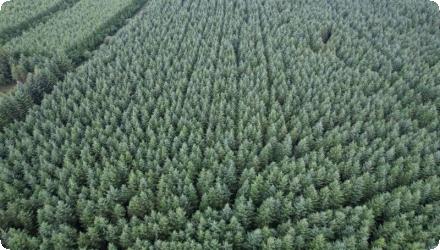
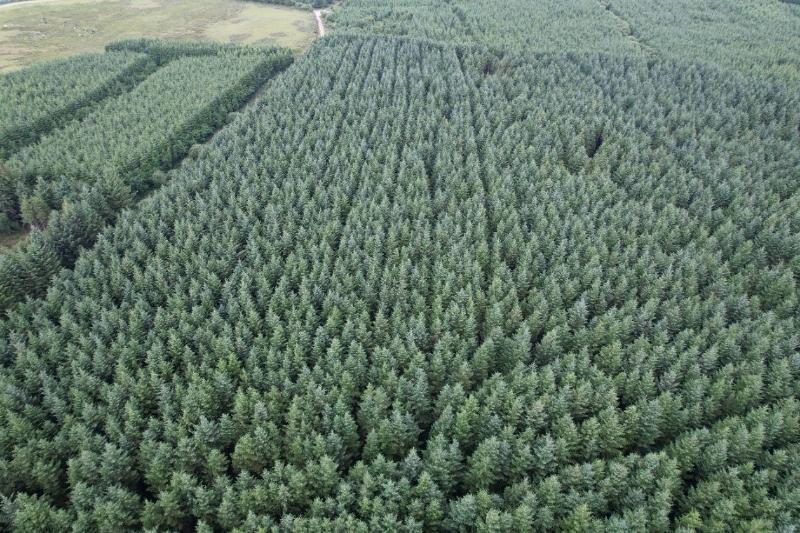
Ireland is testing a practical pathway to move even-aged Sitka spruce away from clearfell toward Continuous Cover Forestry. ContinuFOR is a four-year collaboration led by UCD with Teagasc and Maynooth University, designed to quantify the synergies and trade-offs of this shift for timber, biodiversity, carbon and resilience. It builds on a decade of Irish work and is funded by the Department of Agriculture, Food and the Marine.
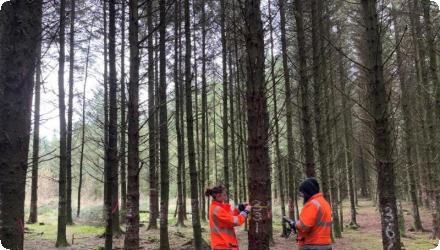
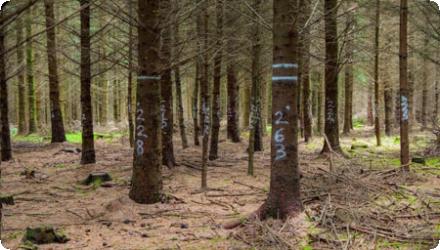
The project uses two long-term trial forests at Ballycullen, County Wicklow, and Fossy Hill, County Laois. These sites were first established under the LISS project, then advanced in the replicated TranSSFor experiment. Each site was divided into blocks and 50 × 50 m plots where three thinning pathways were randomly assigned and compared. The reference is Low thinning. Two transformation options are tested: Crown thinning that selects and releases quality “Q-trees”, and Graduated Density Thinning that opens the canopy more strongly near racks to create heterogeneous structure and regeneration opportunities.
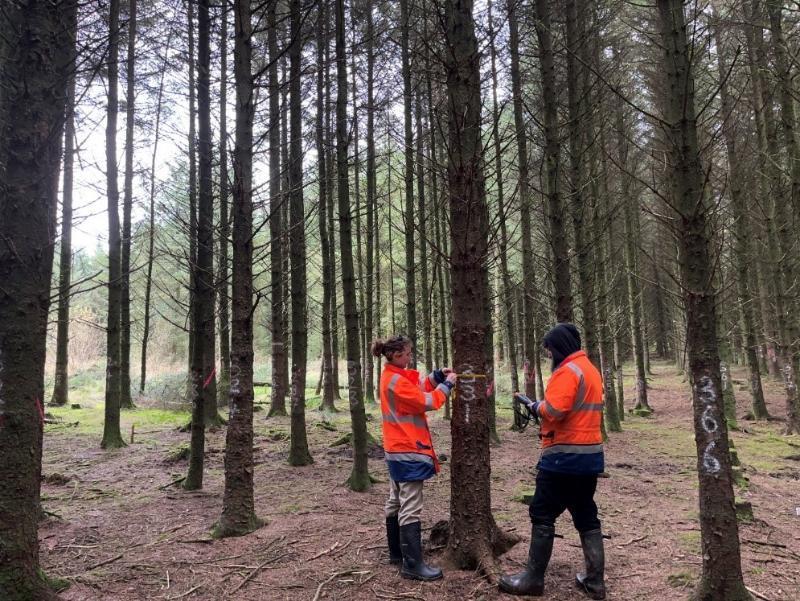
By 2023 both sites had reached a fourth thinning, using marked extraction racks, mechanised harvesting and repeated measurements to track growth, stability, wood quality and regeneration. Field updates confirm the partnership with FERS Ltd for modelling and the continuing emphasis on knowledge transfer.
ContinuFOR operates within a national policy context that now provides practical support to owners who choose CCF. Under the Woodland Improvement Scheme 2023–2027, Element 3 offers fixed per-hectare grants for three CCF interventions and a Payment for Ecosystem Services premium when a CCF management plan is followed. The scheme acts as the scaling pathway from research plots to wider adoption.
Practice examples such as the Dunranhill case in County Wicklow illustrate how regular small harvests, careful timing and protection of regeneration can deliver transformation while maintaining cover. These lessons feed back into the project’s guidance and outreach.
The project uses two long-term trial forests at Ballycullen, County Wicklow, and Fossy Hill, County Laois. These sites were first established under the LISS project, then advanced in the replicated TranSSFor experiment. Each site was divided into blocks and 50 × 50 m plots where three thinning pathways were randomly assigned and compared. The reference is Low thinning. Two transformation options are tested: Crown thinning that selects and releases quality “Q-trees”, and Graduated Density Thinning that opens the canopy more strongly near racks to create heterogeneous structure and regeneration opportunities.
By 2023 both sites had reached a fourth thinning, using marked extraction racks, mechanised harvesting and repeated measurements to track growth, stability, wood quality and regeneration. Field updates confirm the partnership with FERS Ltd for modelling and the continuing emphasis on knowledge transfer.
ContinuFOR operates within a national policy context that now provides practical support to owners who choose CCF. Under the Woodland Improvement Scheme 2023–2027, Element 3 offers fixed per-hectare grants for three CCF interventions and a Payment for Ecosystem Services premium when a CCF management plan is followed. The scheme acts as the scaling pathway from research plots to wider adoption.
Practice examples such as the Dunranhill case in County Wicklow illustrate how regular small harvests, careful timing and protection of regeneration can deliver transformation while maintaining cover. These lessons feed back into the project’s guidance and outreach.
Photo gallery
Location of the project
Ireland. Core experimental forests: Ballycullen (Ashford, County Wicklow) and Fossy Hill (County Laois).
NUTS Code
IE01 - Border, Midland and Western
Project's objectives
Estimate current and potential area suitable for CCF in Ireland
Identify drivers and barriers to adoption
Test thinning pathways for early-stage transformation
Quantify consequences for timber, biodiversity, resilience and carbon
Calibrate growth models for CCF and transfer knowledge to end users
Identify drivers and barriers to adoption
Test thinning pathways for early-stage transformation
Quantify consequences for timber, biodiversity, resilience and carbon
Calibrate growth models for CCF and transfer knowledge to end users
Involved Partners
| Authority type | Authority name | Role | Comments |
|---|---|---|---|
Climate zone
warm temperate moist
Temperature
9.8 °C
Annual rainfall range
900 - 1200 mm
Elevation range
317 m
Vegetation class
Conifer plantation, Sitka spruce (research plots under CCF transformation).
Water bodies: Ecological Status
Good
Water bodies: Chemical Status
Unknown
Project scale
Micro
Project scale specification
Micro-scale experimental plots within a national research programme. Two Sitka spruce stands in Co. Wicklow and Co. Laois, each testing three thinning pathways for CCF transformation.
Project area
18 plots of 50 × 50 m each across two sites, totalling 4.5 ha of instrumented plots (3 blocks × 3 treatments per site; 2 sites).
Lifespan
Open-ended continuous management. Full transition to a stable irregular structure is a long-term, multi-decade objective.
Maintain permanent forest cover while restructuring stands via three thinning regimes: Low thinning, Crown thinning and Graduated Density Thinning. Select and release quality “Q-trees,” remove competitors, and create small gaps to encourage natural regeneration; underplant where regeneration is insufficient. Interventions scheduled at 3–5 year intervals; GDT applies a stronger opening near machine racks to diversify structure.
Most suitable on sheltered, free-draining sites; high deer pressure and wind-exposed, waterlogged soils reduce feasibility. In the trials, Ballycullen sits on deep, well-drained brown earths at ~250 m with negligible windblow to date, while Fossy Hill is on poorly drained gley at ~300 m where wind and waterlogging have been issues; early thinning is important.
Total cost
Not publicly disclosed.
Costs total information
Research thinning operations on established plots and machine harvesting on pre-made racks. Field marking and Q-tree banding. Non-destructive wood property testing on logs and stems (Hitman HM220, TreeSonic). Sampling and laboratory analysis for wood density. Remeasurement, regeneration and canopy surveys. Knowledge-transfer outputs. For operational roll-out by owners outside the research, WIS Element 3 pays fixed per-hectare grants and a PES premium during a 12-year CCF conversion.
Financing authorities
Type of funding
National funds
Comments
Primary funder of ContinuFOR research
Type of funding
National funds
Comments
Share Fixed grant €1,200/ha per intervention for three interventions. PES premium €150/ha/year for 7 years. Max 20 ha per application in any 12-month period. Supports CCF conversion over 12 years with an approved CCF Transformation Management Plan. 100 percent Exchequer funded scheme.
Type of funding
Private funds
Comments
Hosting of sites and in-kind operational access for research plots. Acknowledged as woodland owners and partners across LISS/TranSSFor/ContinuFOR sites.
Compensations
1
Compensations annual information
For owners carrying out CCF under WIS Element 3, a Payment for Ecosystem Services premium applies as described : Payment for Ecosystem Services premium under WIS Element 3 €150/ha/year for 7 years, payable alongside CCF grant instalments when conditions are met.
Policy context
Primary policy area Forestry policy and sustainable forest management (Ireland’s Forest Strategy 2023–2030; Forestry Programme 2023–2027) .
Contributing policy areas Water policy under the EU Water Framework Directive via Ireland’s River Basin Management Plan 2022–2027; biodiversity and climate mitigation/adaptation.
European directives addressed Water Framework Directive 2000/60/EC through RBMP measures; Habitats and Birds Directives through Appropriate Assessment in licensing.
Contributing policy areas Water policy under the EU Water Framework Directive via Ireland’s River Basin Management Plan 2022–2027; biodiversity and climate mitigation/adaptation.
European directives addressed Water Framework Directive 2000/60/EC through RBMP measures; Habitats and Birds Directives through Appropriate Assessment in licensing.
Land ownership
Research plots are hosted by Coillte and by private owners Sandra and Lasse Jorgensen (Ballycullen and Fossy Hill trial sites).
Community involvment
Yes
Design consultation activity
| Activity stage | Name | Key issues | Comments |
|---|---|---|---|
|
Other
|
Pro Silva Ireland Open Forest Day at Ballycullen, 27 April 2019
|
Early-stage transformation in Sitka spruce; thinning options and Q-tree marking demonstrated in the TranSSFor/ContinuFOR context.
|
|
|
Other
|
Teagasc knowledge transfer and field days linked to ContinuFOR
|
Sharing methods and results with stakeholders via field days, articles and workshops.
|
Policy target
| Target purpose |
|---|
Target Remarks
Provide evidence for transforming Sitka spruce to CCF while maintaining timber supply, enhancing biodiversity, resilience and carbon, and informing management models and guidance for Ireland.
Policy pressure
| Pressure directive | Relevant pressure |
|---|
Pressures remarks
Water quality pressures from forestry operations, notably siltation and nutrient runoff, identified in national guidance and RBMP context.
Societal pressure for alternatives to clearfell noted in Forest Strategy objectives.
Societal pressure for alternatives to clearfell noted in Forest Strategy objectives.
Policy impact
| Impact directive | Relevant impact |
|---|---|
Impact remarks
Evidence base for CCF to support RBMP water objectives and broader multifunctionality aims in the Forest Strategy. This focuses on keeping continuous cover, limiting large exposed areas, and aligning with water-protection guidelines.
Requirement directive
| Requirement directive | Specification |
|---|
Policy challenges requirements
Felling licence is required for thinning and other felling under the Forestry Act 2014.
Operations must comply with the Forestry Standards Manual and mandatory environmental guidelines, including Forestry and Water Quality guidance.
For owners using the national CCF support, a CCF Transformation (Conversion) Management Plan is required under the Woodland Improvement Scheme Element 3; PES premium conditions require ongoing management to that plan.
Operations must comply with the Forestry Standards Manual and mandatory environmental guidelines, including Forestry and Water Quality guidance.
For owners using the national CCF support, a CCF Transformation (Conversion) Management Plan is required under the Woodland Improvement Scheme Element 3; PES premium conditions require ongoing management to that plan.
Contractual arrangements
0
| Arrangement type | Responsibility | Role | Name | Comments |
|---|
Part of wider plan
1
Wider plan type
| Wider plan type | Wider plan focus | Name | Comments |
|---|---|---|---|
|
National
|
Forestry
|
Ireland’s Forest Strategy 2023–2030
|
Sets objectives for climate, biodiversity, water quality and wood production; supports close-to-nature approaches including CCF.
|
|
National
|
Water
|
River Basin Management Plan 2022–2027
|
National programme of measures to protect and restore water quality under the WFD; forestry measures included.
|
Permanent plot network with tree-level IDs, repeated DBH and subsample height measurements since LISS, continued through TranSSFor and ContinuFOR. Regeneration surveys and canopy openness recordings complement mensuration. Wood property monitoring uses acoustic time-of-flight (TreeSonic) and increment cores for basic density; resonance log grading on felled logs; harvester head data on volumes and products.
Maintenance
Planned thinning cycles every 3–4 years, with basal-area targets per site & treatment. Rack reuse, careful timing to avoid wet periods, and adaptive marking to keep gaps open on fast-growing sites. Active deer management including movable mini-exclosures.
Field mensuration for growth, stocking and basal area; H:D ratios as stability indicators; regeneration and ground-flora observations; canopy openness; harvester production data and assortment tables for product mix; acoustic and density tests for wood quality.
Early interventions sustain timber output while shifting assortments toward higher value classes under Crown and Graduated Density compared with Low thinning. At Ballycullen, totals over T1–T3 were approximately 32 percent sawlog and 40 percent pallet in Crown, versus 12 percent sawlog and 45 percent pallet in Low. In practice forests managed for CCF can deliver regular cut volumes per intervention; at Dunranhill the target has been about 50–80 m³ ha⁻¹ every 3–4 years. Knowledge-transfer days and field demos support uptake.
Local windthrow has occurred on the more exposed, poorly drained site, complicating interpretation of treatment effects; regeneration at the sheltered site has been limited to edges without further interventions. Deer browsing pressure requires ongoing protection.
Local windthrow has occurred on the more exposed, poorly drained site, complicating interpretation of treatment effects; regeneration at the sheltered site has been limited to edges without further interventions. Deer browsing pressure requires ongoing protection.
Information on retained water
No dedicated hydrology gauging on the ContinuFOR research plots to date. Operations reuse extraction racks and avoid the wettest periods to limit rutting and overland flow pathways.In Ireland, forests can contribute to reducing flood risk at catchment scale, but this is context dependent and not measured at the study sites.
Information on Water quality overall improvements
On-site safeguards include timing operations outside peak growing and wet periods and repeatedly using the same racks to minimise soil disturbance and sediment mobilisation. Mandatory Irish guidance emphasises preventing sediment entry to aquatic zones and adopting forestry and water quality best practice during harvesting.
Crown and Graduated Density thinning increase structural irregularity and light variability while maintaining stand stability, creating conditions for regeneration and habitat development.
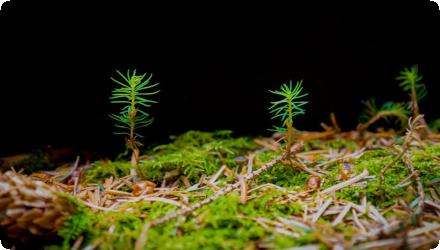
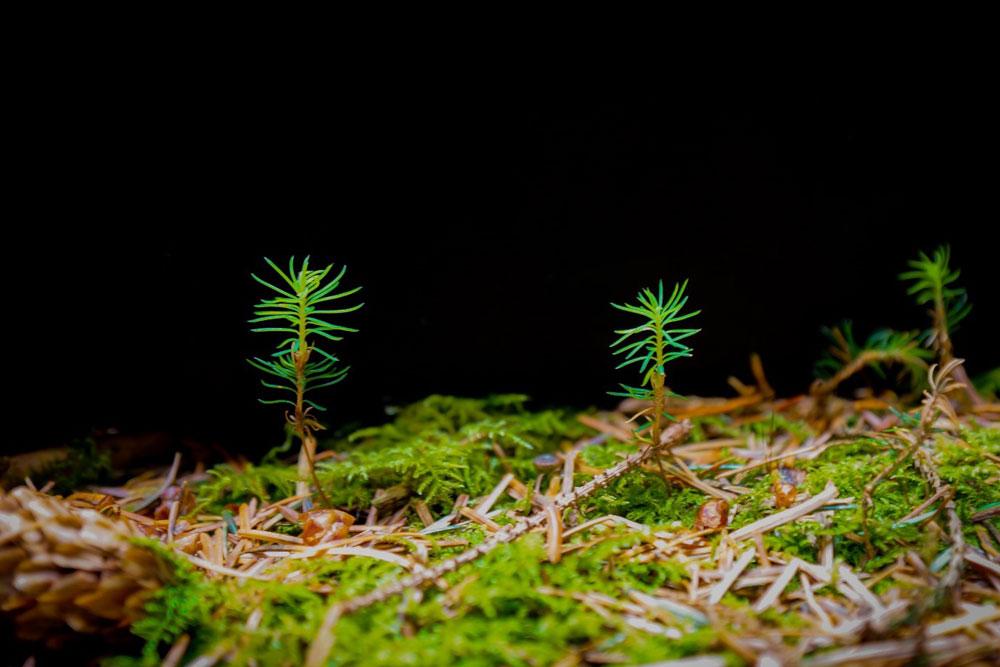
Natural regeneration patches of Sitka spruce established after successive thinnings; deer browsing required mini-exclosures to secure regeneration.
Seed inflow from adjacent mixed woodlands and enrichment planting are used to diversify species in demonstration areas.
Natural regeneration patches of Sitka spruce established after successive thinnings; deer browsing required mini-exclosures to secure regeneration.
Seed inflow from adjacent mixed woodlands and enrichment planting are used to diversify species in demonstration areas.
Information on Other biophysical impacts
Stand stability tracked through height to diameter ratios remains within a stable range under Crown and Graduated Density treatments. Wood property monitoring for stiffness and density is underway.
Key lessons
Early and regular thinning is critical in Sitka spruce CCF. At the research sites a fourth thinning opened the canopy and confirmed the need to intervene on a 3–5 year cycle to keep gaps from closing.
Site selection governs outcomes. Free-draining, sheltered brown earths at Ballycullen showed little windblow, while the gleyed, wetter Fossy Hill site experienced wind and waterlogging issues.
Time operations to avoid the wettest periods and reuse extraction racks to minimise rutting and sediment mobilisation. This was standard practice at the Dunranhill demonstration forest.
Regeneration typically appears after successive thinnings; deer browsing can stall it unless protected with mini-exclosures.
Where natural regeneration is low or species diversification is desired, underplanting under a controlled canopy is an effective complement.
Site selection governs outcomes. Free-draining, sheltered brown earths at Ballycullen showed little windblow, while the gleyed, wetter Fossy Hill site experienced wind and waterlogging issues.
Time operations to avoid the wettest periods and reuse extraction racks to minimise rutting and sediment mobilisation. This was standard practice at the Dunranhill demonstration forest.
Regeneration typically appears after successive thinnings; deer browsing can stall it unless protected with mini-exclosures.
Where natural regeneration is low or species diversification is desired, underplanting under a controlled canopy is an effective complement.
Success factor(s)
| Success factor type | Success factor role | Comments | Order |
|---|---|---|---|
|
Existing staff and consultant knowledge
|
main factor
|
Expert marking and Q-tree selection support consistent implementation across treatments. |
|
|
Conducted assessments (incl. economic)
|
main factor
|
Permanent plots, harvester product data and acoustic and density tests provide rapid feedback on wood properties and assortment mix. |
|
|
Public participation
|
secondary factor
|
Field days, articles and demos accelerate uptake and peer learning. |
Driver
| Driver type | Driver role | Comments | Order |
|---|---|---|---|
|
Availability of subsidies
|
main driver
|
National support under the Woodland Improvement Scheme Element 3 for CCF planning and operations.
|
|
|
Organisation committed to it
|
main driver
|
UCD, Teagasc and Maynooth launched ContinuFOR to quantify CCF synergies and trade-offs and guide practice.
|
|
|
Balancing different objectives
|
secondary driver
|
Policy aims to deliver timber alongside biodiversity, carbon and resilience benefits, motivating trials and demos.
|
Transferability
Strongest transfer potential on free-draining mineral soils, YC ≥14, sheltered topography and manageable threats. WIS criteria explicitly advise avoiding peats, wet gleys and elevations above 300 m due to wind risk. Operational safeguards such as rack reuse, timing outside wet seasons and careful gap management are broadly applicable to Irish planted spruce and similar North-West European contexts where regeneration is slow or diversification is targeted, underplanting trials provide a replicable pathway.
Cost effectiveness
Economic comparisons of CCF versus rotation forestry are methodologically challenging; results can be site and assumption dependent. Regular small harvests can sustain cash flow. At Dunranhill, interventions targeted about 50–80 m³ ha⁻¹ every 3–4 years.
English