Last update
2025
Summary
At Orup in Skåne, Sweden, SoilCare tested whether loosening a naturally compacted subsoil could improve rooting and yields. The site is a silty sand with high subsoil bulk density and roots seldom below 30 cm. The trial compared three treatments implemented once in autumn 2018: standard practice, subsoiling to the upper subsoil, and subsoiling with straw pellets injected into the 24 to 35 cm layer. A randomized block design with four replicates and 6 × 20 m plots was used. Winter wheat grew in 2019 and sugar beet in 2020. Measurements covered the volume of subsoil affected, root counts by depth, penetration resistance with a 2.5 MPa root-limiting threshold, bulk density and coarse fragments, soil C, N and pH in top- and subsoil, and yields.
Mechanical loosening created distinct subsoil rows. Only 38 to 45 percent of the upper subsoil volume was affected. Straw pellets settled at the bottom of loosened rows rather than mixing. Even so, rooting improved. Maximum rooting depth reached about 35 cm with subsoiling plus straw, compared to about 27 cm in the control. Penetration into the compacted layer increased from roughly 4 cm in the control to about 11 cm with loosening treatments. Despite better rooting, grain and beet yields did not differ significantly at whole-plot scale over two seasons. When results were adjusted for the fraction of subsoil actually affected by the strips, relative yields increased compared to the control.
Stakeholders judged the approach plausible and were interested in learning more, but highlighted barriers. Injecting large amounts of organic material is technically demanding and costly. Advisory capacity and subsidy flexibility matter for adoption. The short-term conclusion is pragmatic. Subsoiling, with or without straw pellets, improved rooting in a naturally compacted subsoil but did not deliver short-term yield gains. Longer-term, repeated treatments, alternative organic materials and multi-site testing are needed to understand agronomic and hydrological benefits.
Mechanical loosening created distinct subsoil rows. Only 38 to 45 percent of the upper subsoil volume was affected. Straw pellets settled at the bottom of loosened rows rather than mixing. Even so, rooting improved. Maximum rooting depth reached about 35 cm with subsoiling plus straw, compared to about 27 cm in the control. Penetration into the compacted layer increased from roughly 4 cm in the control to about 11 cm with loosening treatments. Despite better rooting, grain and beet yields did not differ significantly at whole-plot scale over two seasons. When results were adjusted for the fraction of subsoil actually affected by the strips, relative yields increased compared to the control.
Stakeholders judged the approach plausible and were interested in learning more, but highlighted barriers. Injecting large amounts of organic material is technically demanding and costly. Advisory capacity and subsidy flexibility matter for adoption. The short-term conclusion is pragmatic. Subsoiling, with or without straw pellets, improved rooting in a naturally compacted subsoil but did not deliver short-term yield gains. Longer-term, repeated treatments, alternative organic materials and multi-site testing are needed to understand agronomic and hydrological benefits.
Position
Latitude
55.8208
Longitude
13.5059
Installation date
2018
Implementation Status
Contact
SLU
Transboundary
0
Photo gallery
Location of the project
Orup experimental field site, Skåne County, southern Sweden.
NUTS Code
SE22 - Sydsverige
Project's objectives
Alleviate natural subsoil compaction
Increase rooting depth and reduce penetration resistance
Enable better water and nutrient uptake and potentially improve yields
Increase rooting depth and reduce penetration resistance
Enable better water and nutrient uptake and potentially improve yields
Involved Partners
| Authority type | Authority name | Role | Comments |
|---|---|---|---|
Climate zone
warm temperate moist
Temperature
8.1 °C
Precipitation
755 mm
Elevation range
113 m
Vegetation class
Arable land under rotations of barley, winter wheat, oilseed rape and sugar beet.
Water bodies: Ecological Status
Moderate
Water bodies: Chemical Status
Failing to achieve good
Project scale
Micro
Project scale specification
Micro-scale field trial.
Project area
Total trial area ≈ 1,440 m².
Area specifications
12 plots, each 6 × 20 m, four replicates across three treatments.
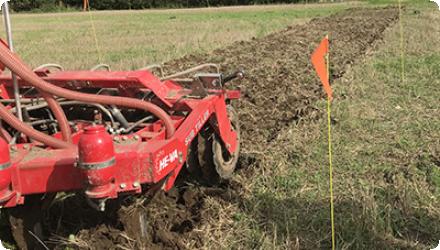
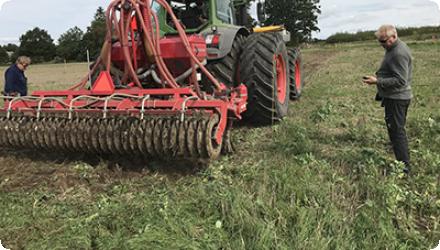
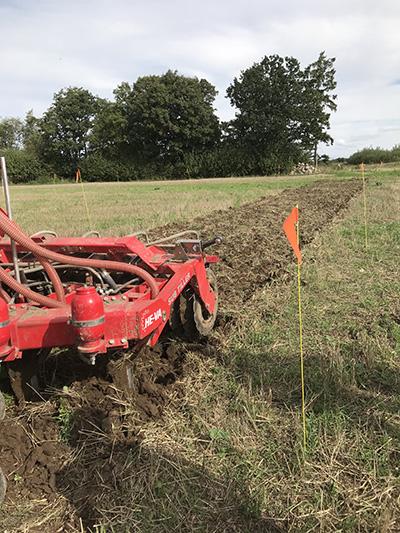
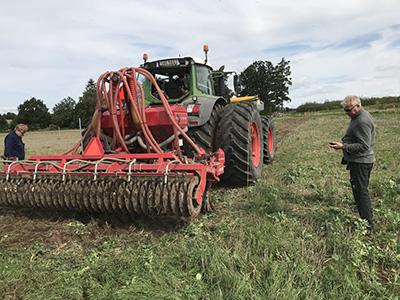
Mechanical loosening to 35 cm using adapted HE-VA sub-tiller. Straw pellets about 25 Mg ha⁻¹ injected behind tines into the 24–35 cm layer. Conventional ploughing to 25 cm for all plots. Penetration resistance critical threshold 2.5 MPa used for interpretation
Naturally compacted subsoil; roots rarely below 30 cm. Low clay (~10%) limits structural improvement by liming; organic matter inputs considered more promising. Rain-fed system.
Total cost
unknown
Financing authorities
Comments
Horizon 2020 (Research and Innovation). Grant Agreement 677407. SoilCare consortium project.
Compensations
0
Policy context
Part of the EU H2020 SoilCare project on soil-improving cropping systems.
Community involvment
No
Design consultation activity
| Activity stage | Name | Key issues | Comments |
|---|---|---|---|
|
Implementation phase
|
Implementation and results discussion with stakeholders
|
Unchanged yields, technical difficulty and cost of injecting large organic inputs, need for longer-term and multi-site testing, subsidy flexibility and advisory capacity.
|
Target Remarks
Mitigate subsoil compaction that restricts rooting and reduces yields.
Pressures remarks
Natural subsoil compaction at >25–30 cm depth.
Contractual arrangements
0
Part of wider plan
0
Wider plan type
| Wider plan type | Wider plan focus | Name | Comments |
|---|---|---|---|
|
Agriculture
|
SoilCare
|
Horizon Europe project on agricultural soils
|
Randomized block design, 3 treatments, 4 replicates, plot size 6 × 20 m. Measurements: volume of subsoil affected, root counts at depth, penetration resistance, bulk density and coarse fragments, C, N, pH in top- and subsoil, crop yields.
Field measurements as above, with interpretation against a 2.5 MPa root-limiting threshold. Findings align with broader SoilCare synthesis reporting subsoiling to 35 cm at the Swedish site.
Crop yields of cereals and sugar beet were not significantly affected overall in the short term. When adjusted for the fraction of subsoil actually affected by the strips, relative yields increased compared to the control.
Topsoil was forced into the subsoil forming distinct rows
Subsoil moved irregularly into topsoil
Straw pellets tended to settle at the bottom of the loosened rows rather than mix through the subsoil
Only 38–45% of the upper subsoil volume was actually affected by subsoiling passes
Subsoil moved irregularly into topsoil
Straw pellets tended to settle at the bottom of the loosened rows rather than mix through the subsoil
Only 38–45% of the upper subsoil volume was actually affected by subsoiling passes
Information on retained water
Reduced penetration resistance in subsoiling treatments; deeper root penetration (max rooting depth about 35 cm with subsoiling + straw, vs about 27 cm control). No direct infiltration or runoff data reported.
Information on Water quality overall improvements
Top- and subsoil C, N and pH were measured, but no significant water-quality outcomes reported.
Key lessons
Short-term mechanical subsoiling, with or without straw, improves rooting but did not significantly raise yields over two seasons. Longer-term, repeated treatments and tests on other soils and crops are needed.
Success factor(s)
| Success factor type | Success factor role | Comments | Order |
|---|---|---|---|
|
Attitude of relevant stakeholders
|
main factor
|
Functional advisory system and farmer interest in learning about subsoiling with organic amendments.
|
Driver
| Driver type | Driver role | Comments | Order |
|---|---|---|---|
|
Research need to address natural subsoil compaction limiting root growth and yield.
|
Flexibility adaptability
Method should be tested over longer time and at other sites; repeated subsoiling and alternative organic materials may change outcomes.
English