Last update
2026
Summary
The Jardin Forêt (Forest Garden) des Étangs, situated in the Provence Verte region, is a project launched by the Jardins de Reliance association, founded in 2012. This forest garden is an experimental initiative aimed at regenerating agricultural land by planting feeding trees, whilst respecting forest ecosystems. By mimicking natural processes, the garden seeks to address issues of soil degradation, water cycles and carbon, whilst promoting food security and environmental conservation.
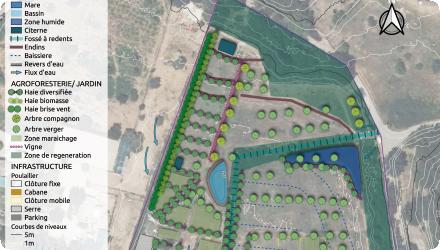
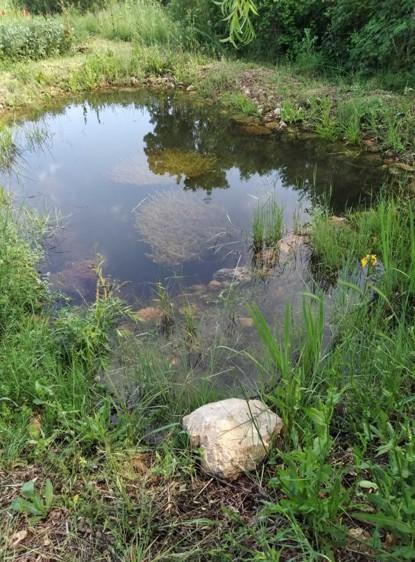
The Jardin Forêt des Étangs embodies a model of a resilient landscape, an invitation to understand living things and to contribute to the regeneration of the planet, within a nurturing and inspiring setting. Spanning 3 hectares, it is home to over 1,000 trees and perennials, as well as three hydrological features (an infiltration basin, a biodiversity pond and a keyline-designed pond). The Jardins de Reliance association partnered with PermaLab to jointly develop the hydrological study and design for the Jardin Forêt des Étangs in 2021.
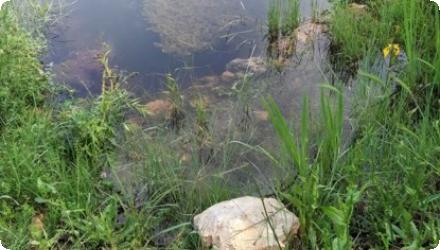
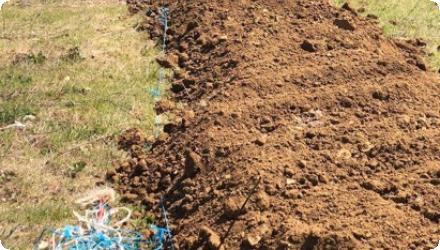
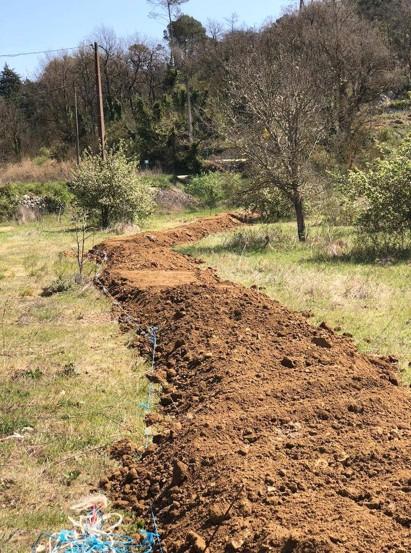
In spring 2022, the design came to life thanks to the PermaLab team and a few volunteers. They began digging an infiltration basin. Using the surplus soil from the basin, raised beds were formed along the contour lines higher up in the plot.Finally, a waterproofed biodiversity pond was created in the centre of the vegetable garden.
The association offers training courses, guided tours, talks and workshop sessions for people of all ages, to help them learn how to grow their own food whilst caring for the Earth. The project promotes a regenerative farming and permaculture approach, emphasising solar energy and the synergies between plants and animals. The aim is to provide innovative tools for communication and transformation – both personal and collective – to support the expansion of life and the regeneration of ecosystems.
The garden organises tours on the first Sunday of every month.
The Jardin Forêt des Étangs embodies a model of a resilient landscape, an invitation to understand living things and to contribute to the regeneration of the planet, within a nurturing and inspiring setting. Spanning 3 hectares, it is home to over 1,000 trees and perennials, as well as three hydrological features (an infiltration basin, a biodiversity pond and a keyline-designed pond). The Jardins de Reliance association partnered with PermaLab to jointly develop the hydrological study and design for the Jardin Forêt des Étangs in 2021.
In spring 2022, the design came to life thanks to the PermaLab team and a few volunteers. They began digging an infiltration basin. Using the surplus soil from the basin, raised beds were formed along the contour lines higher up in the plot.Finally, a waterproofed biodiversity pond was created in the centre of the vegetable garden.
The association offers training courses, guided tours, talks and workshop sessions for people of all ages, to help them learn how to grow their own food whilst caring for the Earth. The project promotes a regenerative farming and permaculture approach, emphasising solar energy and the synergies between plants and animals. The aim is to provide innovative tools for communication and transformation – both personal and collective – to support the expansion of life and the regeneration of ecosystems.
The garden organises tours on the first Sunday of every month.
Position
Latitude
43.413364
Longitude
5.937145
Biogeographical Region
Mediterranean
Project
NWRM
SpongeScapes
National Id
France
Installation date
2013
Implementation Status
Contact
Aurelia Diesnis <aurelia@permalab.fr> Guylaine Diesnis <gdiesnis@orange.fr>
Transboundary
0
Photo gallery
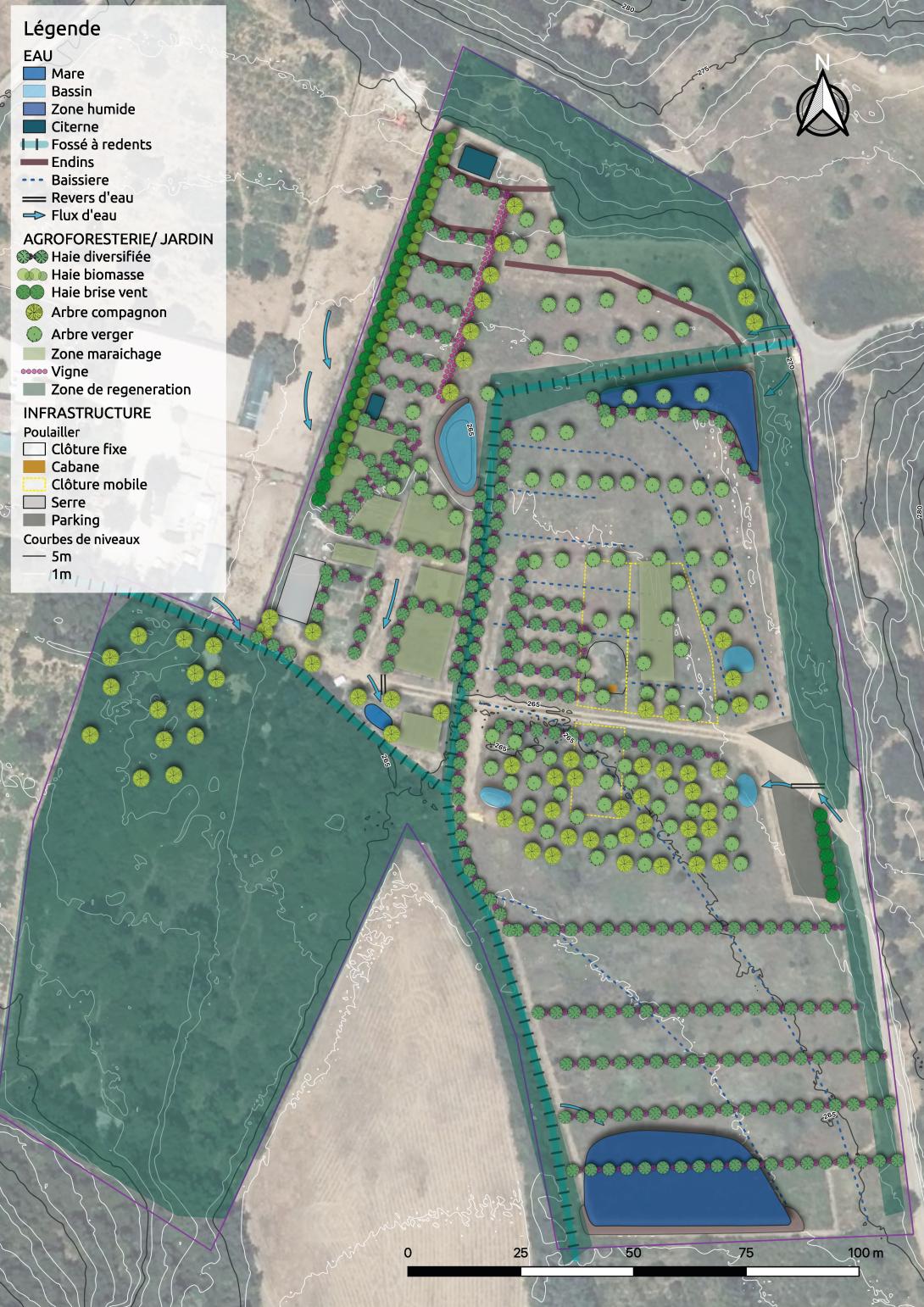
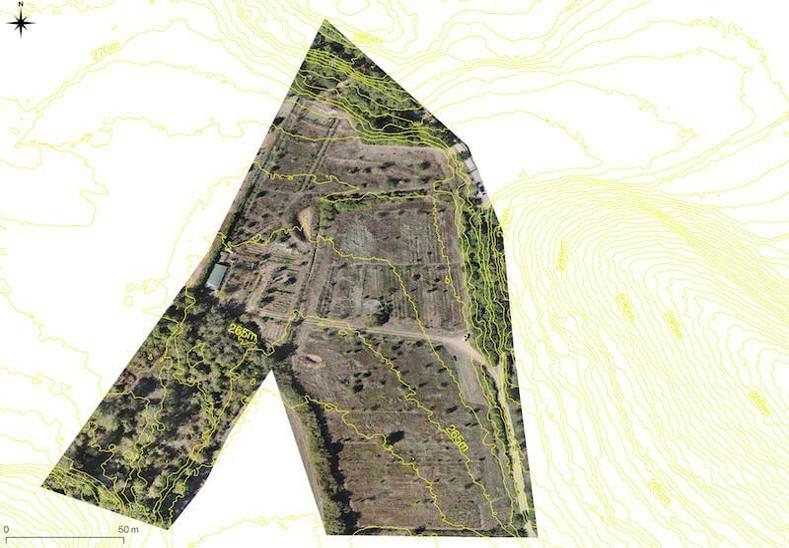
Location of the project
The Jardin Forêt is situated in Tourves, a French commune in the Provence-Alpes-Côte d'Azur region. The commune's climate is Mediterranean.
NUTS Code
FR82 - Provence-Alpes-Côte d'Azur
Project's objectives
The aim of this project is to be able to grow our own food on living soil – soil that has been regenerated through the implementation of various measures: “Nourish the soil, nourish people, nourish biodiversity.” It has also become a sanctuary for biodiversity. The measures put in place are also intended to regenerate the water cycles.
Involved Partners
| Authority type | Authority name | Role | Comments |
|---|---|---|---|
Temperature
13
Annual rainfall range
600 - 900 mm
Evapotranspiration
873 mm
Elevation range
300
Soil type
Fluvisol
Groundwater level
9
Project scale
Micro
Performance timescale
< 1 year
Project area
3 ha
Area specifications
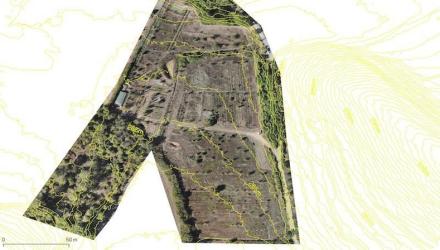
The region is characterised by plenty of sunshine and strong winds, with low rainfall in summer but very hot weather. The Tourves forest garden is situated at the bottom of the valley, which allows it to collect runoff water. Tourves is in an area that experiences very high temperatures in summer and, conversely, very low temperatures in winter.
The forest garden is constantly evolving; it is not static and allows for experimentation with a wide range of practices.
- To regenerate soils and water cycles, whilst promoting greater biodiversity.
- To cultivate a bountiful food garden to provide healthy and sustainable food for people.
- To empower individuals by equipping them with the knowledge needed to understand living systems and enable them to regenerate their land whilst producing their own food.
- To promote regenerative gardening in our indoor and outdoor gardens, creating nurturing spaces that are conducive to the flourishing of living beings.
- To help create a leading permaculture site that serves as a model and source of inspiration for other initiatives.
- To develop a regenerative, life-sustaining ecosystem, powered primarily by solar energy and the synergies between plants and animals, to ensure self-sustaining ecological systems.
- To reforest and protect agricultural land by creating a forest garden, thereby contributing to food security, environmental protection and the balance of water cycles.
- To experiment with and share innovative tools for communication and personal and collective transformation, in order to foster the expansion of life and encourage ecological awareness on a large scale.
- To cultivate a bountiful food garden to provide healthy and sustainable food for people.
- To empower individuals by equipping them with the knowledge needed to understand living systems and enable them to regenerate their land whilst producing their own food.
- To promote regenerative gardening in our indoor and outdoor gardens, creating nurturing spaces that are conducive to the flourishing of living beings.
- To help create a leading permaculture site that serves as a model and source of inspiration for other initiatives.
- To develop a regenerative, life-sustaining ecosystem, powered primarily by solar energy and the synergies between plants and animals, to ensure self-sustaining ecological systems.
- To reforest and protect agricultural land by creating a forest garden, thereby contributing to food security, environmental protection and the balance of water cycles.
- To experiment with and share innovative tools for communication and personal and collective transformation, in order to foster the expansion of life and encourage ecological awareness on a large scale.
Extreme climate: Very hot in summer (<+40°C), very cold in winter (<-10°C)
Total cost
7000
Costs total information
Mainly self-funded, with some crowdfunding: 7,000 euros
Financing authorities
Community involvment
No
Design consultation activity
| Activity stage | Name | Key issues | Comments |
|---|---|---|---|
Policy target
| Target purpose |
|---|
Policy pressure
| Pressure directive | Relevant pressure |
|---|---|
Policy impact
| Impact directive | Relevant impact |
|---|---|
Requirement directive
| Requirement directive | Specification |
|---|---|
Contractual arrangements
0
| Arrangement type | Responsibility | Role | Name | Comments |
|---|---|---|---|---|
Part of wider plan
0
Wider plan type
| Wider plan type | Wider plan focus | Name | Comments |
|---|---|---|---|
Calculation of catchment areas, flow rates and structural dimensions, visual observation: used for hydrological analysis and design; Biodiversity survey
Key lessons
This long-term project provides an opportunity to experiment with different practices and crops. It shows what works and what doesn’t. It is also a garden that helps educate a large number of people through training on regenerative soil management. Understanding the topography, planning water management, access routes and infrastructure before planting trees or laying out gardens.
Success factor(s)
| Success factor type | Success factor role | Comments | Order |
|---|---|---|---|
|
Public participation
|
The Jardin de Reliance association regularly organises workshops and tours open to the public.
|
Driver
| Driver type | Driver role | Comments | Order |
|---|---|---|---|
Source(s)
English