Last update
2026
Summary
Waterlandschap is a groundbreaking program bringing together 33 local coalitions across Flanders—uniting efforts to build a resilient and regenerative future. Each coalition is a collaboration of water managers, farmers’ associations, nature organizations, and local and provincial authorities, working hand in hand to tackle urgent water and land challenges. Backed by a robust €35 million investment, the program is focused on developing and implementing practical, scalable solutions that promote healthy agriculture, a sustainable water system and a robust and climate-resilient landscape. With initiatives reaching across 38% of Flanders’ open space, Waterlandschap is not just a program, it’s a movement to safeguard the region’s future, one collaboration at a time.
Photo gallery
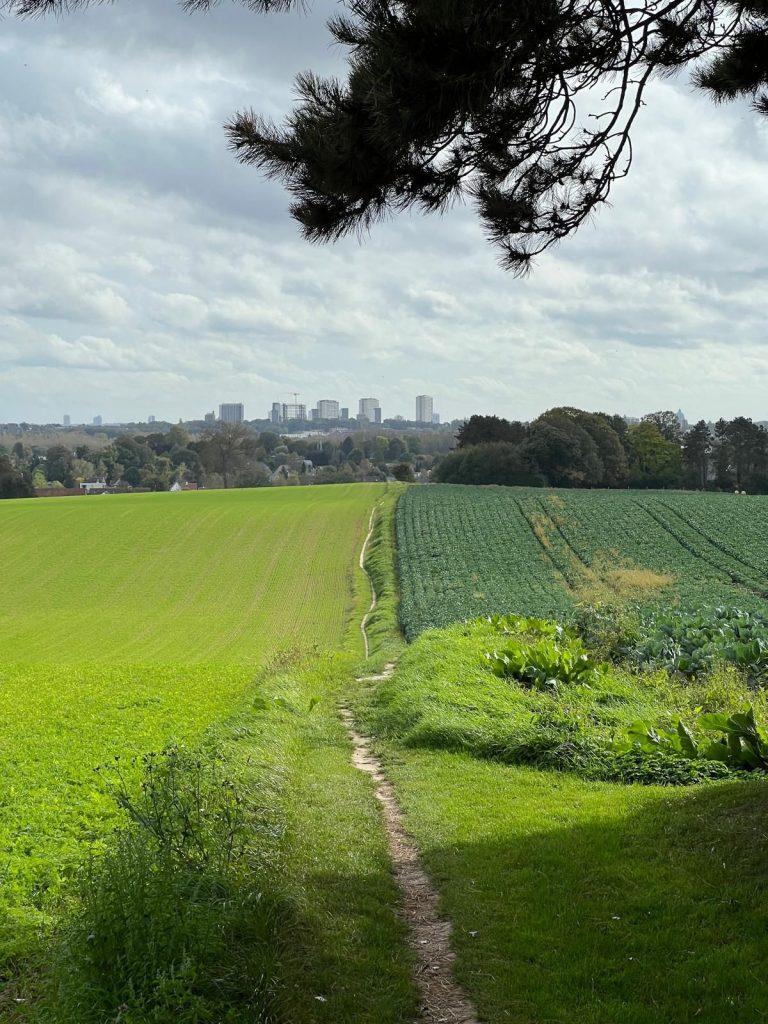
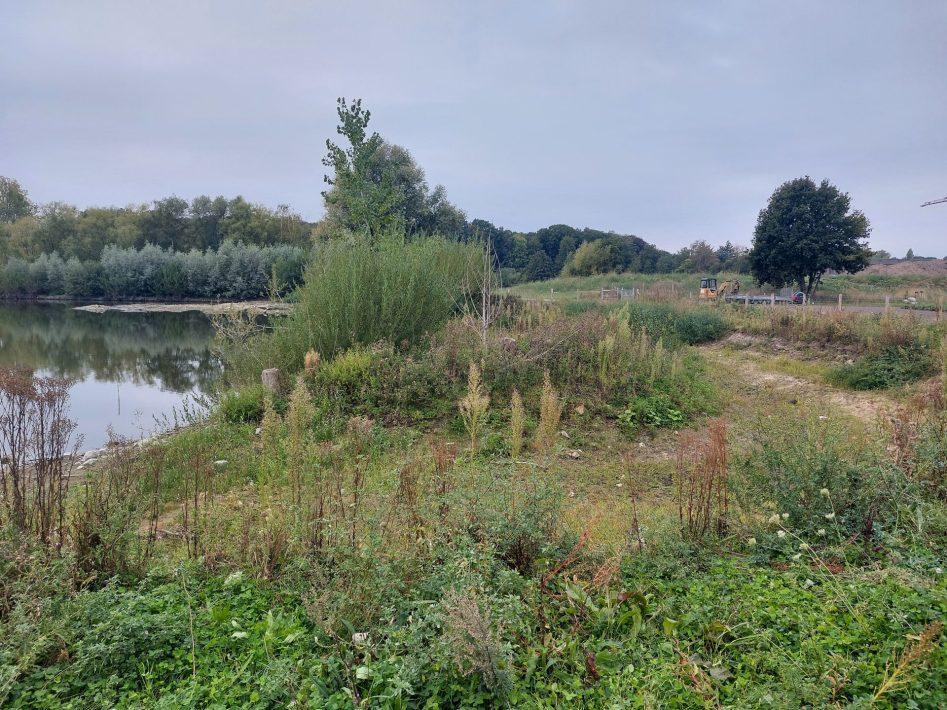
Location of the project
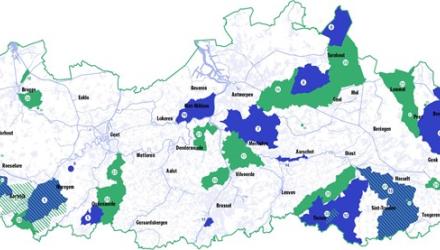
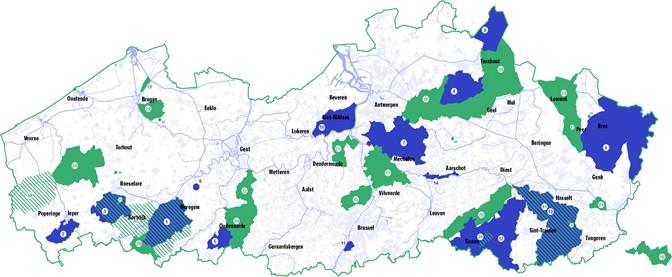
Rather than being confined to a single physical site or fixed border, the Water-Land-Schap initiative spans 29 distinct project zones across the region of Flanders, Belgium. Managed by the Flemish Land Agency (VLM), the program operates as a region-wide framework executed through two major rollouts: Water-Land-Schap 1.0 (comprising 14 initial zones) and Water-Land-Schap 2.0 (adding 15 additional zones).
Geographically, these project areas are distributed across all five Flemish provinces. They encompass key landscape features, including the Polders and the Ijzer Valley in West Flanders, the Dender Valley in East Flanders, the Kempen region in Antwerp, the Gete and Zenne valleys in Flemish Brabant, and the Herk and Mombeek river basins in Limburg.
Because the program targets real-world environmental challenges, the perimeter of each project zone is not defined by municipal limits, but by hydrological and agricultural boundaries. A single project perimeter typically follows a stream catchment, river valley, or polder network, intersecting with surrounding farmland. Consequently, individual project areas vary widely in size (ranging from a targeted 500 hectares up to several thousand contiguous hectare) creating a flexible, landscape-scale footprint designed around natural water flow rather than administrative borders.
Geographically, these project areas are distributed across all five Flemish provinces. They encompass key landscape features, including the Polders and the Ijzer Valley in West Flanders, the Dender Valley in East Flanders, the Kempen region in Antwerp, the Gete and Zenne valleys in Flemish Brabant, and the Herk and Mombeek river basins in Limburg.
Because the program targets real-world environmental challenges, the perimeter of each project zone is not defined by municipal limits, but by hydrological and agricultural boundaries. A single project perimeter typically follows a stream catchment, river valley, or polder network, intersecting with surrounding farmland. Consequently, individual project areas vary widely in size (ranging from a targeted 500 hectares up to several thousand contiguous hectare) creating a flexible, landscape-scale footprint designed around natural water flow rather than administrative borders.
Project's objectives
Scaling up sponge measures in Flanders is crucial to address the challenges of climate change impact (e.g. extreme rainfall and prolonged droughts), biodiversity loss, degraded water quality, and soil erosion. To address the challenges effectively, it is essential to build upon existing knowledge, evaluate the impact of implemented measures, and scale up their implementation. Within this project, our own experiences will be combined with insights from other European regions facing similar challenges and implementing comparable sponge measures.
Addressing the complexity and uncertainty of climate change and land use change and successfully integrating sponge measures requires a tailored approach involving multiple stakeholders. Local and regional stakeholders (including local and regional authorities), farmers, agricultural associations, water managers, nature associations will be actively involved in the process. Upstream areas will be our main focus for implementing a variety of sponge measures due to their high capacity for water retention. During the course of this project, we will develop the implementation plan for the sponge measures. The physical implementation of these measures will commence after the projects end. However, funding and responsibilities for the implementation will be secured within the project timeframe.
Addressing the complexity and uncertainty of climate change and land use change and successfully integrating sponge measures requires a tailored approach involving multiple stakeholders. Local and regional stakeholders (including local and regional authorities), farmers, agricultural associations, water managers, nature associations will be actively involved in the process. Upstream areas will be our main focus for implementing a variety of sponge measures due to their high capacity for water retention. During the course of this project, we will develop the implementation plan for the sponge measures. The physical implementation of these measures will commence after the projects end. However, funding and responsibilities for the implementation will be secured within the project timeframe.
Involved Partners
| Authority type | Authority name | Role | Comments |
|---|---|---|---|
Project scale
Large
Project scale specification
This large-scale, ongoing program currently impacts 370 503 hectares, covering a significant 38% of the open space in Flanders.
Financing authorities
Community involvment
No
Design consultation activity
| Activity stage | Name | Key issues | Comments |
|---|---|---|---|
Policy target
| Target purpose |
|---|
Policy pressure
| Pressure directive | Relevant pressure |
|---|---|
Policy impact
| Impact directive | Relevant impact |
|---|---|
Requirement directive
| Requirement directive | Specification |
|---|---|
Contractual arrangements
0
| Arrangement type | Responsibility | Role | Name | Comments |
|---|---|---|---|---|
Part of wider plan
0
Wider plan type
| Wider plan type | Wider plan focus | Name | Comments |
|---|---|---|---|
Success factor(s)
| Success factor type | Success factor role | Comments | Order |
|---|---|---|---|
Driver
| Driver type | Driver role | Comments | Order |
|---|---|---|---|
English