Last update
2026
Summary
The project aims to restore near 2,500 hectares of urban peatlands in the Lviv agglomeration that have been degraded by drainage, land reclamation, and urbanization. Peatlands perform an important ecological function—they regulate the water balance, accumulate carbon, and are home to dozens of rare plant and animal species.
Over the past decades, anthropogenic pressure has caused the groundwater level in the region to drop, leading to a loss of biodiversity and an increased risk of fires. The degradation of these areas also reduces the urban environment's ability to adapt to climate change.
To address these challenges, the project is implementing four main areas of activity:
- Comprehensive environmental assessment of peatlands (before and after implementation of measures) using IUCN methodology.
- Development of a strategic restoration plan and roadmap agreed with the communities of Lviv, Kulykivka, Novoyarychiv, and Murovany.
- Selective restoration work on 30 hectares — planting local plant species, moisturizing areas, and creating conditions for the natural reproduction of beavers as an indicator species.
- An educational and information campaign to raise awareness among local residents about the benefits of peatlands and the importance of nature-based solutions.
The project is being implemented in partnership with local universities, environmental organizations, community initiatives, and municipalities. The expected outcome is not only an improvement in the hydrological condition and biodiversity, but also the formation of a long-term model for managing urban ecosystems.
The restored peatlands of the Lviv agglomeration will serve as a pilot model for scaling up nature-based solutions in other regions of Ukraine, contributing to the implementation of the European Green Deal, the EU's Climate Change Adaptation Mission and Soil Deal for Europe, as well as the integration of environmental policy into post-war recovery strategies.
Over the past decades, anthropogenic pressure has caused the groundwater level in the region to drop, leading to a loss of biodiversity and an increased risk of fires. The degradation of these areas also reduces the urban environment's ability to adapt to climate change.
To address these challenges, the project is implementing four main areas of activity:
- Comprehensive environmental assessment of peatlands (before and after implementation of measures) using IUCN methodology.
- Development of a strategic restoration plan and roadmap agreed with the communities of Lviv, Kulykivka, Novoyarychiv, and Murovany.
- Selective restoration work on 30 hectares — planting local plant species, moisturizing areas, and creating conditions for the natural reproduction of beavers as an indicator species.
- An educational and information campaign to raise awareness among local residents about the benefits of peatlands and the importance of nature-based solutions.
The project is being implemented in partnership with local universities, environmental organizations, community initiatives, and municipalities. The expected outcome is not only an improvement in the hydrological condition and biodiversity, but also the formation of a long-term model for managing urban ecosystems.
The restored peatlands of the Lviv agglomeration will serve as a pilot model for scaling up nature-based solutions in other regions of Ukraine, contributing to the implementation of the European Green Deal, the EU's Climate Change Adaptation Mission and Soil Deal for Europe, as well as the integration of environmental policy into post-war recovery strategies.
Photo gallery
Location of the project
Lviv, Ukraine. Poltva River sub-basin, part of the Western Bug River basin (Vistula / Baltic Sea basin)
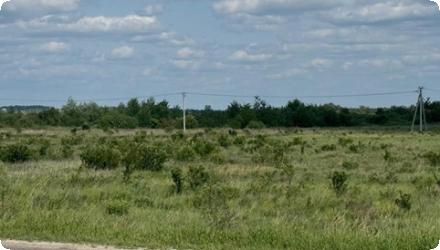
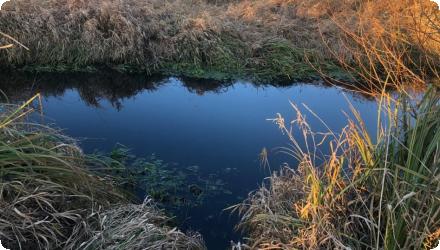
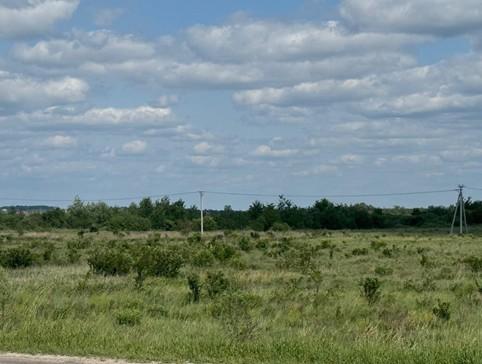
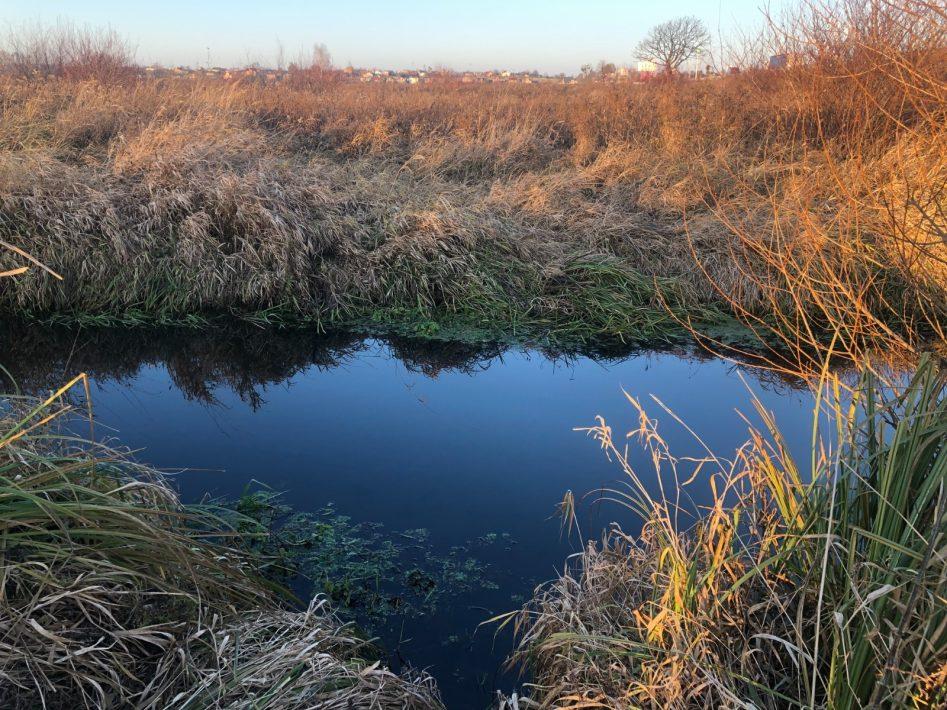
The northern part of the Lviv agglomeration covers areas that combine natural landscapes, agricultural land, and industrial zones. Within this area, unique peat bogs and wetlands have been preserved - remnants of a natural wetland complex that plays an important role in regulating the hydrological balance of the Poltva River basin, a tributary of the Western Bug.
During the 20th century, peat bogs underwent intensive drainage and exploitation. Drainage systems created for agricultural needs disrupted the natural water regime and caused soil degradation. At the same time, the expansion of urban development in Lviv and its surroundings led to a further decline in groundwater levels, which had a negative impact on biodiversity - in particular, the number of orchids, wetland birds, and other rare species decreased.
An additional problem is the illegal extraction of peat by local residents, which leads to the destruction of the natural structure of peatlands, an increased risk of fires, and higher carbon emissions.
Currently, about 2,500 hectares of degraded peatlands have been designated as a landscape reserve of local importance, which creates a basis for their restoration.
The northern part of the Lviv agglomeration covers areas that combine natural landscapes, agricultural land, and industrial zones. Within this area, unique peat bogs and wetlands have been preserved - remnants of a natural wetland complex that plays an important role in regulating the hydrological balance of the Poltva River basin, a tributary of the Western Bug.
During the 20th century, peat bogs underwent intensive drainage and exploitation. Drainage systems created for agricultural needs disrupted the natural water regime and caused soil degradation. At the same time, the expansion of urban development in Lviv and its surroundings led to a further decline in groundwater levels, which had a negative impact on biodiversity - in particular, the number of orchids, wetland birds, and other rare species decreased.
An additional problem is the illegal extraction of peat by local residents, which leads to the destruction of the natural structure of peatlands, an increased risk of fires, and higher carbon emissions.
Currently, about 2,500 hectares of degraded peatlands have been designated as a landscape reserve of local importance, which creates a basis for their restoration.
Project's objectives
The project aims to promote climate change adaptation, biodiversity conservation, and improvement of residents’ quality of life through the restoration of degraded peatlands in the Lviv Agglomeration using sponge measures. The planned actions include:
• Conducting a comprehensive environmental assessment of peatlands before and after the implementation of sponge measures, using the IUCN methodology and, where feasible, additional evaluation steps, covering biodiversity (vegetation, vertebrates, and invertebrates) as well as soil and water conditions.
• Developing a strategic sponge strategy for peatland restoration with 5- and 20-year horizons, integrating forecasts of hydrological conditions, land use scenarios, and the potential installation of observation wells to monitor groundwater levels.
• Creating a practical roadmap for implementing sponge measures, providing municipalities, scientists, and communities with step-by-step guidance to carry out long-term restoration initiatives within the project’s timeframe and budget.
• Implementing pilot sponge measures to restore vegetation on approximately 30 hectares, focusing on typical Alnion and Salicion plant communities, including up to 10 woody species (trees and shrubs) and up to 20 herbaceous species, ensuring feasibility under the current project resources.
• Actively engaging communities and stakeholders in joint planning and decision-making through workshops, educational programs, and volunteer initiatives, ensuring participatory governance of restored peatlands.
• Developing a communication campaign to raise public awareness about the environmental and socio-economic benefits of peatland restoration and the role of sponge measures in urban climate resilience.
• Conducting a comprehensive environmental assessment of peatlands before and after the implementation of sponge measures, using the IUCN methodology and, where feasible, additional evaluation steps, covering biodiversity (vegetation, vertebrates, and invertebrates) as well as soil and water conditions.
• Developing a strategic sponge strategy for peatland restoration with 5- and 20-year horizons, integrating forecasts of hydrological conditions, land use scenarios, and the potential installation of observation wells to monitor groundwater levels.
• Creating a practical roadmap for implementing sponge measures, providing municipalities, scientists, and communities with step-by-step guidance to carry out long-term restoration initiatives within the project’s timeframe and budget.
• Implementing pilot sponge measures to restore vegetation on approximately 30 hectares, focusing on typical Alnion and Salicion plant communities, including up to 10 woody species (trees and shrubs) and up to 20 herbaceous species, ensuring feasibility under the current project resources.
• Actively engaging communities and stakeholders in joint planning and decision-making through workshops, educational programs, and volunteer initiatives, ensuring participatory governance of restored peatlands.
• Developing a communication campaign to raise public awareness about the environmental and socio-economic benefits of peatland restoration and the role of sponge measures in urban climate resilience.
Involved Partners
| Authority type | Authority name | Role | Comments |
|---|---|---|---|
Project area
2500 ha
Area subject to Land use change or Management/Practice change (ha)
Approximately 30 hectares where direct sponge measures will be applied and tested
Size
30
Size unit
ha
Financing authorities
Community involvment
No
Design consultation activity
| Activity stage | Name | Key issues | Comments |
|---|---|---|---|
Policy target
| Target purpose |
|---|
Policy pressure
| Pressure directive | Relevant pressure |
|---|---|
Policy impact
| Impact directive | Relevant impact |
|---|---|
Requirement directive
| Requirement directive | Specification |
|---|---|
Contractual arrangements
0
| Arrangement type | Responsibility | Role | Name | Comments |
|---|---|---|---|---|
Part of wider plan
0
Wider plan type
| Wider plan type | Wider plan focus | Name | Comments |
|---|---|---|---|
Monitoring activities: Baseline and post-implementation ecological and hydrological assessments using the IUCN methodology, complemented by additional indicators where feasible; Groundwater level monitoring through observation wells installed at pilot sites; Vegetation surveys to assess habitat recovery and species composition; Periodic evaluation of hydrological performance, including water retention capacity and seasonal water balance.
Success factor(s)
| Success factor type | Success factor role | Comments | Order |
|---|---|---|---|
Driver
| Driver type | Driver role | Comments | Order |
|---|---|---|---|
English