Summary
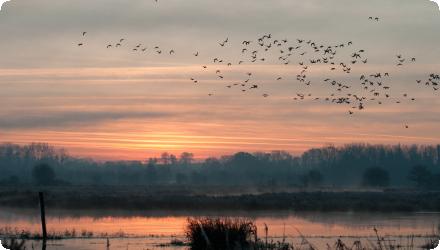
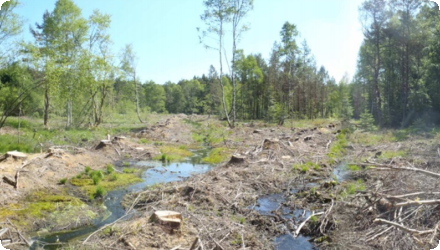
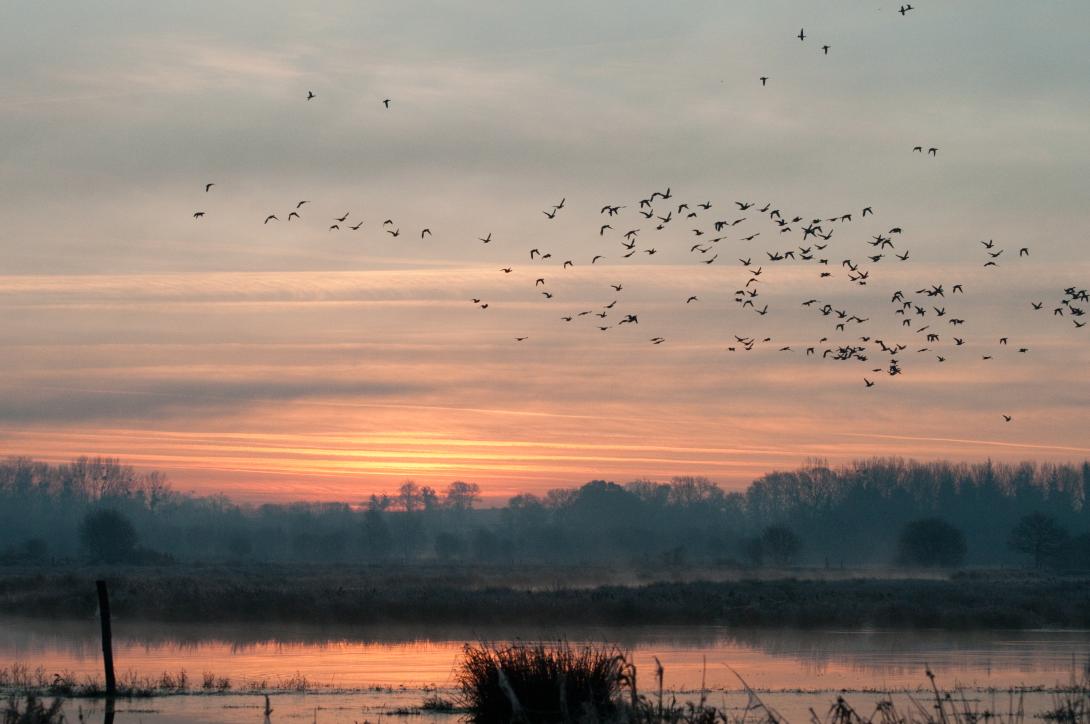
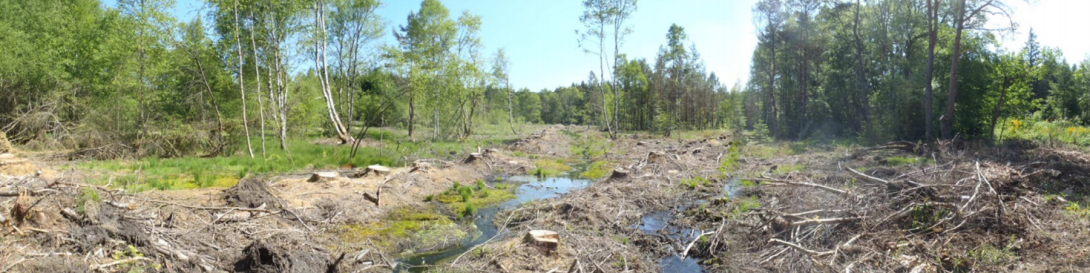
Since 1984, the Ille-et-Vilaine Hunting Federation has been restoring a 550-ha peat marsh heavily drained and cropped in the 20th century. Maize fields were converted to hay meadows and pasture through agreements with farmers; a peat bog and a reedbed were restored; and water levels are artificially managed to enable winter flooding. The Méleuc was re-routed into a more natural course. The goals (improve staging conditions for migratory waterbirds and recover marsh functions (carbon sequestration, natural water purification)) have been met for bird use, while water-level management still needs optimisation. Recent sources add that the site forms part of the Ramsar “Bay of Mont-Saint-Michel” and its Natura 2000 network; roughly 380 ha are held by FDC35 and the Foundation for the Protection of Wildlife Habitats. A major reedbed project (“Bois de la Mare”) cleared poplar/spruce to restore ~16 ha of phragmites as compensation linked to the Mont-Saint-Michel maritime project, awarded France’s Ecological Engineering Prize in 2018. Management relies on mowing then grazing via agreements with about twenty farmers; hunting is excluded except targeted wild-boar control, and guided public activities are now offered. In 2021 the regional scientific council (CSRPN) issued a favourable opinion toward designation as a Regional Nature Reserve over a 768-ha perimeter (process ongoing). Winter counts report up to c. 6,000 anatids.