Last update
2025
Summary
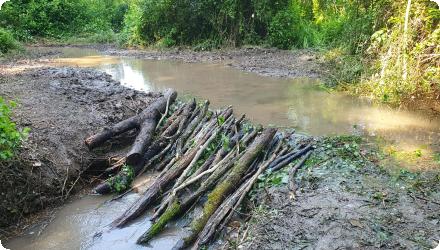
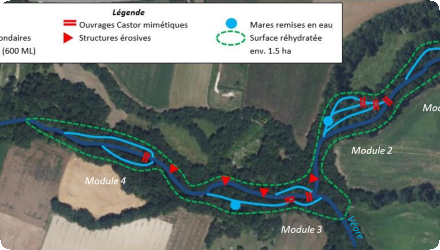
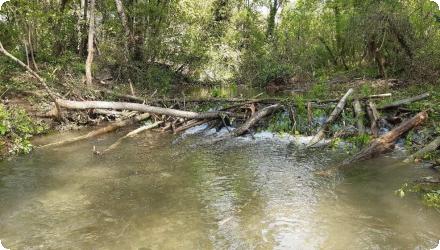
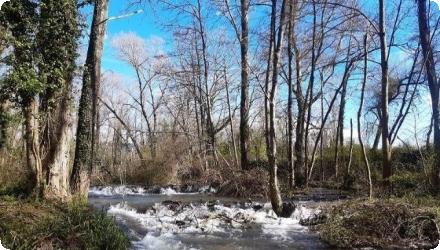
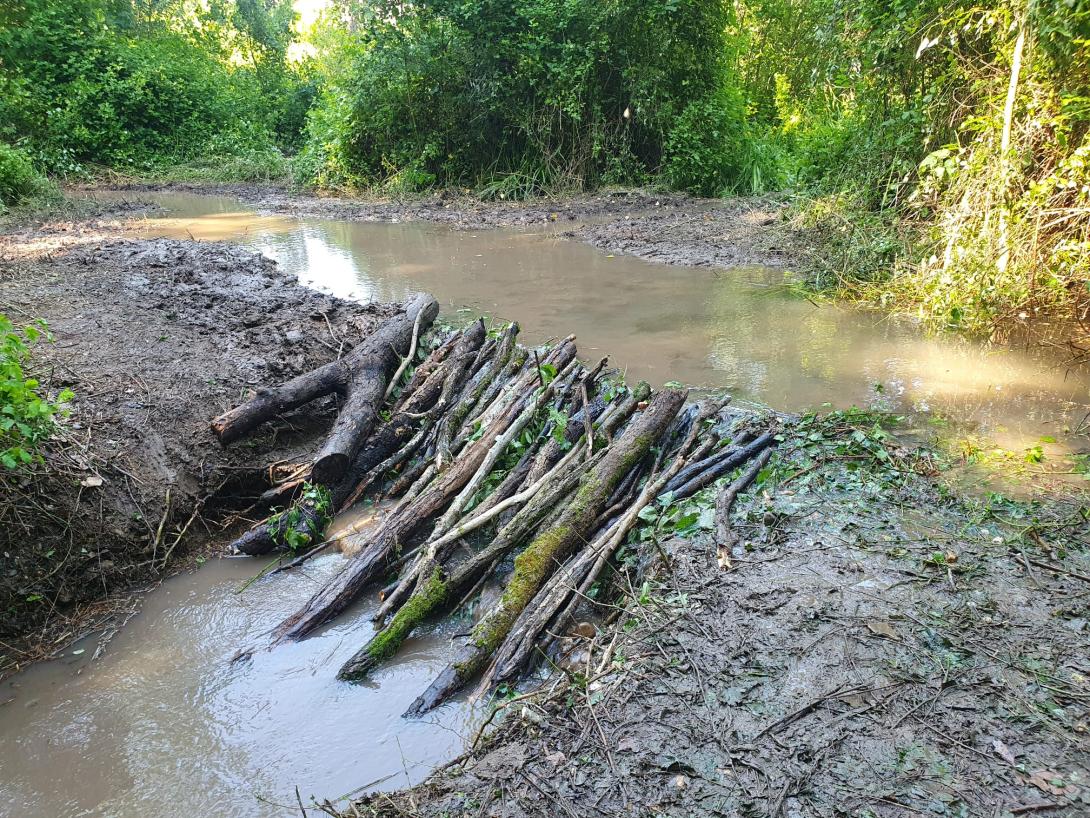
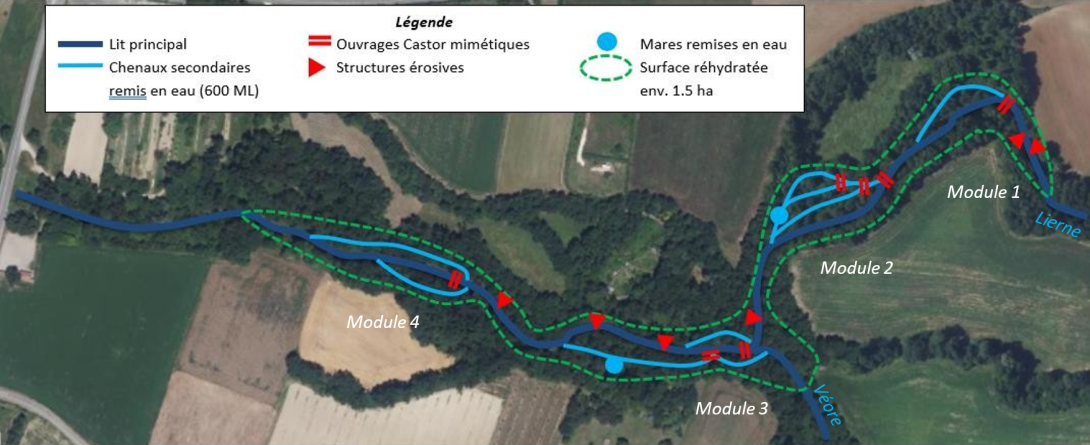
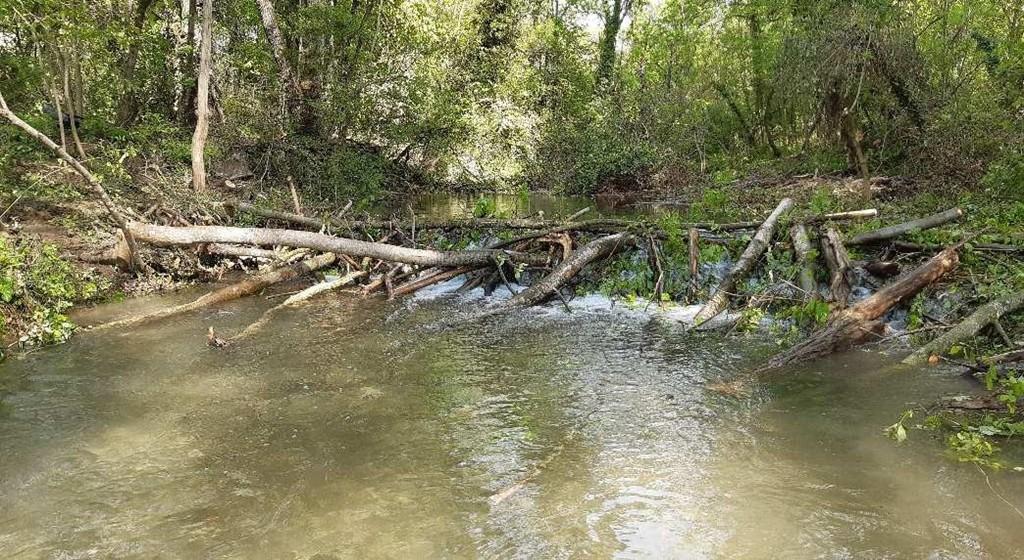
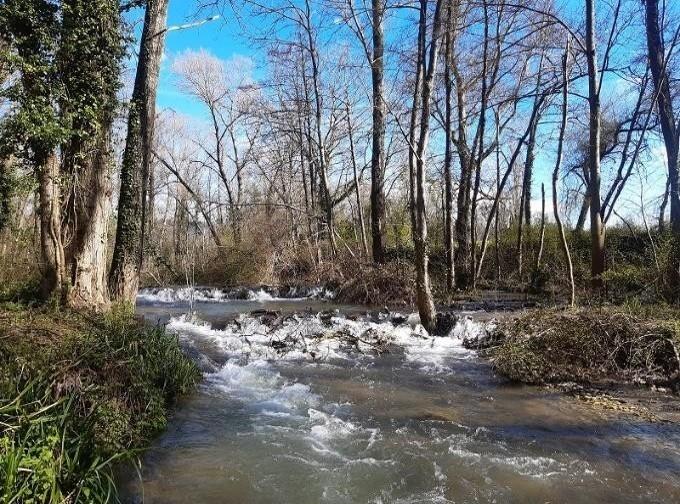
Low-tech regeneration of functional processes in waterways and wetlands based on beaver ecology and differentiated management of driftwood and woody debris. A gentle, non-intrusive, adaptable, and reversible operation. The project was carried out on the Lierne and Véore rivers (Drôme, France) to restore degraded river sections by using low-tech structures inspired by beaver dams. Over three one-week phases (spring 2023 and twice in spring 2024), river agents from Valence Romans Agglo built around fifteen structures using only local wood and hand tools. These interventions aimed to reconnect incised channels with their alluvial terraces and rehydrate former side channels. The works were performed without heavy machinery or imported materials, during a practical training led by Association Rivière Rhône Alpes Auvergne (ARRA²). Visible results include lateral river reactivation, aggradation of the riverbed, slower flows, and restored hydrological complexity. Several secondary channels and wetland areas have been permanently reconnected. The site now shows a clear diversification of aquatic, subaquatic, and wetland habitats, including backwaters, forest ponds, sediment deposits, and newly humidified vegetation zones.
Position
Latitude
44.907790
Longitude
5.062254
Installation date
Spring and Autumn 2023, Spring 2024
Implementation Status
RBD code
FRD
Transboundary
0
Photo gallery
Location of the project
The sites are located in the Lierne and Véore rivers, inside the cities of Chabeuil and Châteaudouble, both in the Drôme department, France
NUTS Code
FR71 - Rhône-Alpes
Project's objectives
Restore morphodynamic processes
Stop or reverse channel incision
Slow down flows
Diversify flow patterns and aquatic habitats
Reconnect alluvial terraces
Rewet side channels and floodplains
Increase hydrosystem complexity
Stop or reverse channel incision
Slow down flows
Diversify flow patterns and aquatic habitats
Reconnect alluvial terraces
Rewet side channels and floodplains
Increase hydrosystem complexity
Involved Partners
| Authority type | Authority name | Role | Comments |
|---|---|---|---|
Climate zone
warm temperate moist
Temperature
13.4
Precipitation
881
Annual rainfall range
600 - 900 mm
Elevation range
250-275 m
Vegetation class
Riparian forest
Water bodies: Ecological Status
Moderate
Water bodies: Chemical Status
Good
Water quality status
The hydromorphology of rivers is degraded
Project scale
Micro
Project scale specification
Project applied to specific reaches of Lierne and Véore rivers
Performance timescale
< 1 year
Area specifications
~1000 m river reach impacted, up to 50 m active channel width restored
Mimic beaver ecosystem engineering.
Low cost engineering : Low-tech, adaptive structures, use of local wood and materials.
Low cost engineering : Low-tech, adaptive structures, use of local wood and materials.
Strategic placement to restore water retention and floodplain connection.
Biophysical preconditions: remnant floodplain, abandoned side channels
Total cost
€ 25,000
Costs total information
Self-financing - local water authority operating budget - for more than 1,000 linear meters of watercourses developed and regenerated.
All of the improvements were carried out by the community's river agents and as part of a training course organized by ARRAA.
All of the improvements were carried out by the community's river agents and as part of a training course organized by ARRAA.
Financing authorities
Type of funding
Local funds
Comments
Antirely funded on the classical operation budget.
Compensations
0
Policy context
The Lierne and Véore are relatively well-preserved rivers but show signs of incision, leading to channelisation, simplification, and disconnection from adjacent wetlands. These areas were shifting toward xerophilous forest, with the river system confined to a fixed main channel. Fortunately, near-channel terraces remain natural, and distant agricultural lands are unaffected by planned restoration works.
Community involvment
Yes
Design consultation activity
| Activity stage | Name | Key issues | Comments |
|---|---|---|---|
|
Implementation phase
|
Technical Days
|
Technical demonstration of the measures
|
|
|
Screening phase
|
Consultation with local residents owners to explain the issues and objectives and obtain their authorization
|
2023
|
|
|
Screening phase
|
Consultation between mayor and elected officials of the commune of Chabeuil
|
2023-2024
This consultation convinced the mayor of the town. |
Target Remarks
Channel incision
Floodplain disconnection
Morphological simplification
Ecological degradation
Floodplain disconnection
Morphological simplification
Ecological degradation
Pressures remarks
Incised rivers
Disconnected terraces
Previous river simplifications
Disconnected terraces
Previous river simplifications
Requirement directive
| Requirement directive | Specification |
|---|---|
|
Water Framework Directive (WFD) 2000/60/EC
|
Achieving good ecological status
|
Requirement directive remarks
Watercourses classified as biological reservoirs and as nitrate-vulnerable areas.
Contractual arrangements
0
Part of wider plan
0
Visual inspections
Installed piezometers in reconnected terraces
Installed piezometers in reconnected terraces
Qualitative field observations and photographs
Improved drought and flood resilience.
The river is visually more attractive. It is also more conducive to aquatic life (fishing).
The river is visually more attractive. It is also more conducive to aquatic life (fishing).
Information on retained water
Slower flows, reconnection of terraces and floodplains, increased water storage and lateral hydrology, active channel width increased from 4–6 m to up to 50 m. Visually, we can see that the river has regained lateral dynamics, that the bottom of the riverbed has become steeper and higher, and that the water's path has generally become more complex and slower.
Information on Reduced depth to groundwater level
The beaver-mimicking structures reactivate hydrosystem-groundwater exchange zones and optimize aquifer recharge.
Information on Water quality overall improvements
Sediment deposition, alluvial bed recharge, oxygenation of water
1
Increased habitat heterogeneity, restoration of lentic and lotic habitats, favorable conditions for aquatic fauna. Visually, we observe a complexity and diversification of the substrate, aquatic, underwater, and terrestrial wetland habitats (backwaters, secondary streams, forest ponds, humid woodlands, deep waters, pits, sedimentary deposits).
Key lessons
Beaver-inspired techniques are effective in restoring water retention for degraded woody rivers.
Small-scale, low-tech interventions can have large hydrological effects.
It is essential to properly identify the problems and anticipate the effects produced by the developments that must address them. It is important not to make "the cure worse than the disease," even if one of the major advantages of the approach is that it is completely reversible if the effects produced were not desired and acceptable.
Small-scale, low-tech interventions can have large hydrological effects.
It is essential to properly identify the problems and anticipate the effects produced by the developments that must address them. It is important not to make "the cure worse than the disease," even if one of the major advantages of the approach is that it is completely reversible if the effects produced were not desired and acceptable.
Success factor(s)
| Success factor type | Success factor role | Comments | Order |
|---|---|---|---|
|
Other
|
main factor
|
Use of simple, natural materials |
|
|
Existing staff and consultant knowledge
|
main factor
|
Site-specific structure design |
|
|
Other
|
main factor
|
Mimicking natural processes |
Driver
| Driver type | Driver role | Comments | Order |
|---|---|---|---|
|
Past flooding events
|
main driver
|
Past droughts (2022, 2023)
|
|
|
Balancing different objectives
|
secondary driver
|
Need to reverse ecological degradation
|
Transferability
Conduct a thorough site assessment and a robust diagnostic. This approach is not a one-size-fits-all solution and cannot be reproduced everywhere. Especially suited for degraded lowland rivers with incision and floodplain disconnection, highly adaptable to the local specificities.
Lead by the project's success, several new mimetic beaver structures were installed along the urban crossing of the town of Chabeuil. This operation, less ambitious than the one further upstream on the Lierne-Véore, has the main objective of diversifying and increasing the complexity of aquatic habitats and flow conditions.
Lead by the project's success, several new mimetic beaver structures were installed along the urban crossing of the town of Chabeuil. This operation, less ambitious than the one further upstream on the Lierne-Véore, has the main objective of diversifying and increasing the complexity of aquatic habitats and flow conditions.
Source(s)
English