Last update
2025
Summary
This project is a permaculture-based regenerative agroecological farm and agritourism initiative located in Cairo Montenotte, Italy. It integrates syntropic planting, swales, and keyline water management to create a resilient, productive farm that harmonizes with the natural Mediterranean mountain environment. The design focuses on water infiltration, soil fertility, biodiversity enhancement, and establishing a low-stress, small-scale business producing organic food and offering educational workshops.
Position
Latitude
44.338
Longitude
8.140
Installation date
2020
Implementation Status
Contact
Pietro Zucchetti – Italian Permaculture Istitute
Transboundary
0
Photo gallery
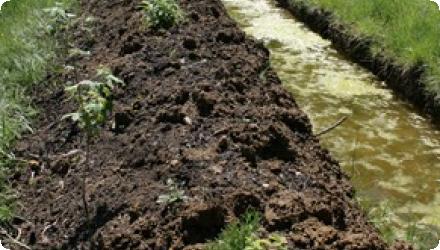
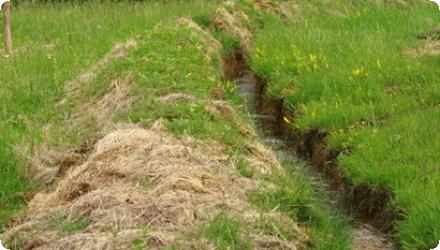
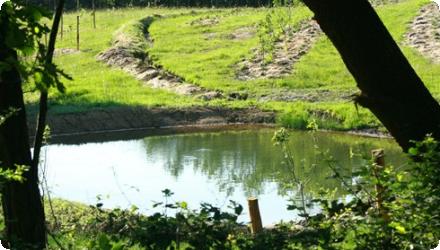
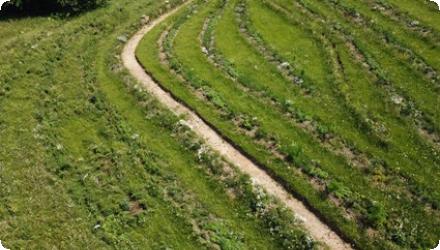
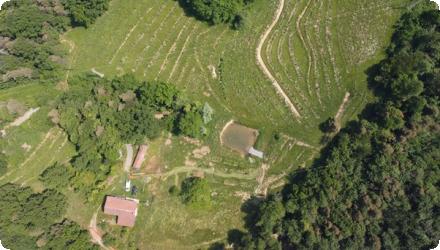
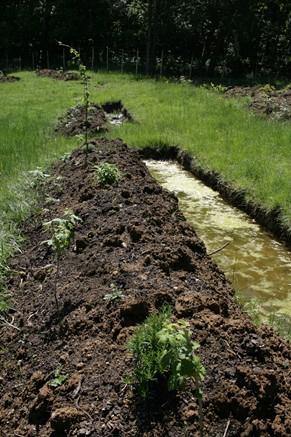
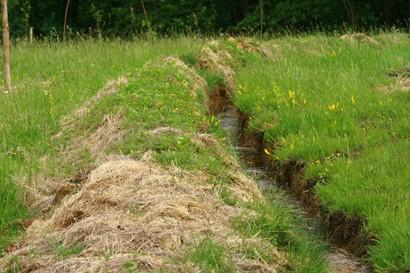
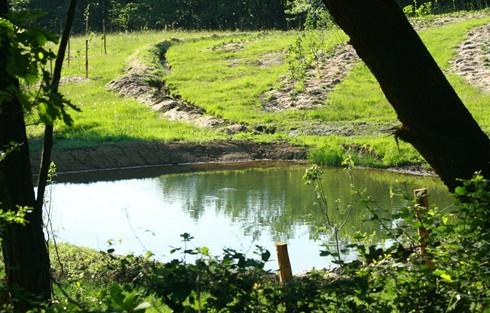
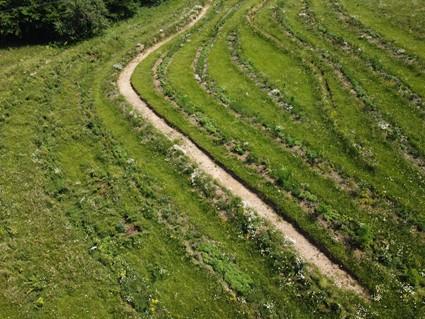
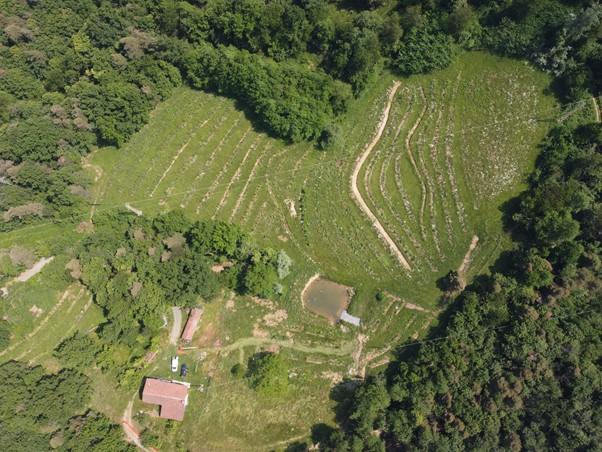
Location of the project
Cairo Montenotte, Loc. Moglie Bertei (SV), Italy — foothills of the Apennines. Approx. 44.338° N, 8.140° E (Cairo Montenotte, SV, Italy)
Project's objectives
Capture and infiltrate 20 to 30 mm rainfall events per occurrence
Reduce surface runoff and erosion on clay loam slopes Increase soil organic matter, microbial activity and humus
Stabilise microclimate and drought resilience for agroforestry
Support agritourism, education and diversified production
Reduce surface runoff and erosion on clay loam slopes Increase soil organic matter, microbial activity and humus
Stabilise microclimate and drought resilience for agroforestry
Support agritourism, education and diversified production
Involved Partners
| Authority type | Authority name | Role | Comments |
|---|---|---|---|
Climate zone
cool temperate moist
Temperature
12.7°C
Annual rainfall range
600 - 900 mm
Elevation range
431 m
Vegetation class
Mixed agroforestry with coppices (oak, chestnut, hazel), fruit and nut orchards, berries, wild herbs, and ground covers.
Water bodies: Ecological Status
Good
Water bodies: Chemical Status
Good
Water quality status
Oxygenated water, no anaerobic biological life, clean rivers, water
Project scale
Micro
Project scale specification
specific site focused on permaculture farm and water retention systems.
Performance timescale
1 - 4 years
Project area
2 ha
Lifespan
50 + years
Multifunctionality: combining water retention, food production, biodiversity, and education.
Restoration: rehabilitating degraded soils and landscape.
Community involvement: workshops and agritourism.
Storm design: systems handle moderate Mediterranean rainfall events (e.g., 1-year and 2-year storms).
Design capacity: swales and keyline designed to capture and infiltrate up to 20-30 mm rainfall events per occurrence, enhancing groundwater recharge and reducing erosion.
Restoration: rehabilitating degraded soils and landscape.
Community involvement: workshops and agritourism.
Storm design: systems handle moderate Mediterranean rainfall events (e.g., 1-year and 2-year storms).
Design capacity: swales and keyline designed to capture and infiltrate up to 20-30 mm rainfall events per occurrence, enhancing groundwater recharge and reducing erosion.
Clay loam soils with moderate compaction in some fields limit infiltration but improved via subsoiling and mulching.
The shape of the land to be considered, ridge, slope is important,
Microclimate factor is fundamental, annual rainfall, exposure, winds
Slope, shape of the valley, travels more in length than on flat ground
Favourable conditions:
Presence of diverse native and cultivated vegetation enhancing infiltration.
Availability of organic materials for mulch and compost.
Private land ownership facilitating flexible design and management.
The shape of the land to be considered, ridge, slope is important,
Microclimate factor is fundamental, annual rainfall, exposure, winds
Slope, shape of the valley, travels more in length than on flat ground
Favourable conditions:
Presence of diverse native and cultivated vegetation enhancing infiltration.
Availability of organic materials for mulch and compost.
Private land ownership facilitating flexible design and management.
Total cost
€ 30,000
Costs total information
Earthworks (swales, terraces, keyline): €7,000
Fencing, plants, planting, labor, compost/manure: €23,000
Fencing, plants, planting, labor, compost/manure: €23,000
Financing authorities
Type of funding
Private funds
Comments
Private investment only
Compensations
0
Policy context
To develop a self-sufficient agroecological farm and agritourism, with food production for family and guests, selling fruits, nuts, berries, mushrooms, honey, and offering workshops. The project aims to harmonise life with nature while running a small, low-stress business.
Land ownership
Privately owned land with direct management by client.
Community involvment
Yes
Design consultation activity
| Activity stage | Name | Key issues | Comments |
|---|---|---|---|
|
Implementation phase
|
Educational workshops and agritourism during implementation and operation
|
Target Remarks
Enhance sustainability of rural land use; promote ecological farming; foster local economic diversification.
Policy pressure
| Pressure directive | Relevant pressure |
|---|---|
Pressures remarks
Soil erosion on slopes
Low soil organic matter and weak soil biology
Seasonal water stress on ridges
Low soil organic matter and weak soil biology
Seasonal water stress on ridges
Policy impact
| Impact directive | Relevant impact |
|---|---|
Contractual arrangements
0
Part of wider plan
0
Soil health monitored via microbiological testing; water infiltration observed visually; plant health and biodiversity periodically assessed.
Informal, project-led observations and soil tests; no formal public reporting system.
Informal, project-led observations and soil tests; no formal public reporting system.
Maintenance
Swales require no ongoing maintenance post-establishment. Mulch replaced periodically by living ground covers. Tree pruning seasonal. Compost tea applications intermittently.
Qualitative assessment supported by soil microbiology data and field observations; resilience to drought, floods, and fire demonstrated.
Support for agritourism business and education.
Information on retained water
Enhanced water retention and reduced erosion : Improved infiltration, reduced surface runoff, water retained invisibly in soil.
Information on Water quality overall improvements
Reduced erosion, increased humus and microbial activity.
1
Increased biodiversity (flora and fauna). Increased humus and microbial activity
Information on Other biophysical impacts
Improved soil carbon storage and fertility.
Microclimate regulation.
Microclimate regulation.
Key lessons
Integrating permaculture design with water harvesting creates resilient agroecosystems.
Private initiative is crucial where public support is lacking.
Combining synthetic and natural methods (swales, keyline, syntropic planting) yields effective results.
Private initiative is crucial where public support is lacking.
Combining synthetic and natural methods (swales, keyline, syntropic planting) yields effective results.
Success factor(s)
| Success factor type | Success factor role | Comments | Order |
|---|---|---|---|
|
Financing possibilities
|
main factor
|
Funding, long-term perspective |
Driver
| Driver type | Driver role | Comments | Order |
|---|---|---|---|
|
Organisation committed to it
|
main driver
|
Client vision for self-sufficiency and low-stress business.
|
Transferability
Highly replicable in Mediterranean climates with similar topography; may require adaptation for local soil and legal conditions.
Cost effectiveness
Moderate investment (€30k/2ha) yielded high ecological and economic returns in resilience, productivity, and business foundation.
English