Last update
2026
Summary
The ORAGE project (Opportunities to develop guidelines on the management of agricultural plots and agricultural catchment areas to improve water resource management) aims to provide farmers and local authorities with technical, economic and social guidelines for sustainable water management through regenerative hydrology. The aim of this project is to improve water retention in the soil and reduce the risks of drought and erosion, whilst maintaining farm productivity. The project facilitates cross-sector collaboration between all stakeholders. For this project, the Porte de DrômArdèche community of communes, a project partner, will serve as the pilot catchment area. Its work will focus on trialling Phase 1 of the resource guide “Towards Regenerative Hydrology (PUHR)”, developed by the association of the same name, with the aim of developing a project to regenerate water cycles at the level of an agricultural sub-watershed. This work will enable the regenerative hydrology methodology to be tested and refined at a regional level.
Position
Biogeographical Region
Continental
Project
NWRM
SpongeScapes
National Id
France
Installation date
2026-2029
Implementation Status
Contact
maiti.boussit@vegepolys-valley.eu
Transboundary
0
Photo gallery
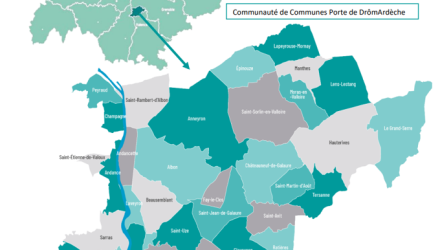
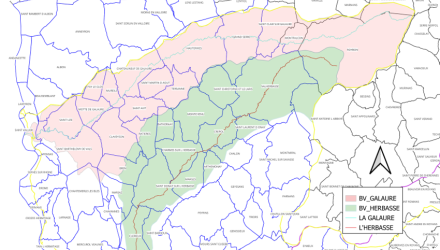
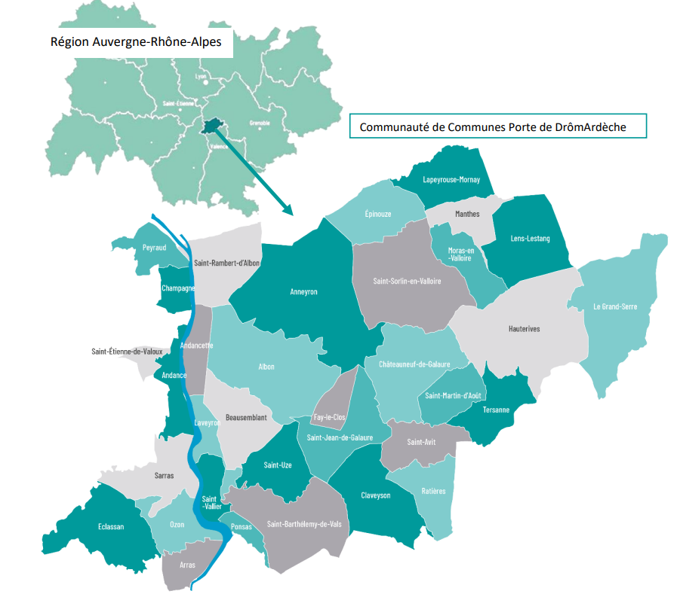
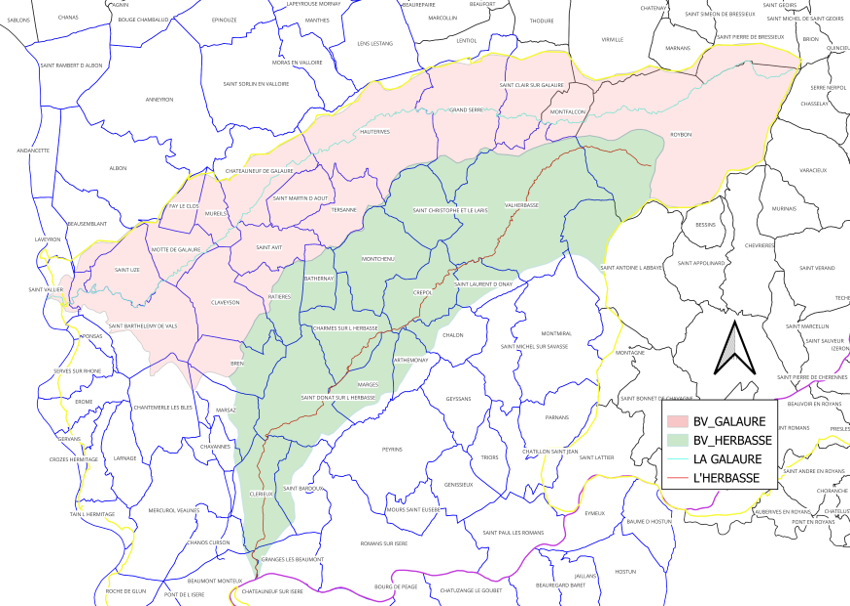
Location of the project
The project is located within the Porte de DrômArdèche community of communes.
NUTS Code
FR71 - Rhône-Alpes
Project's objectives
The aim of the project is to develop technical guidelines on water management measures on agricultural plots (soil infiltration and storage, erosion reduction, etc.) based on farmers’ experience.
Project's objectives:
⟶ Identify priority areas and select pilot areas
⟶ Implement a regenerative hydrology project at the catchment level
⟶ Establish a monitoring protocol for regenerative hydrology measures and analyse their effects
⟶ Assess the impact of regenerative hydrology measures
⟶ Obtain technical and socio-economic data on the measures implemented to combat erosion and improve water management
⟶ Train, advise and support project leaders in the implementation of their regenerative hydrology measures
Project's objectives:
⟶ Identify priority areas and select pilot areas
⟶ Implement a regenerative hydrology project at the catchment level
⟶ Establish a monitoring protocol for regenerative hydrology measures and analyse their effects
⟶ Assess the impact of regenerative hydrology measures
⟶ Obtain technical and socio-economic data on the measures implemented to combat erosion and improve water management
⟶ Train, advise and support project leaders in the implementation of their regenerative hydrology measures
Involved Partners
| Authority type | Authority name | Role | Comments |
|---|---|---|---|
Climate zone
warm temperate dry
Temperature
11.6
Annual rainfall range
1200 - 1500 mm
Project area
420.80km2
Area specifications
The ORAGE project is organised across two distinct geographical scales, combining a broad regional focus with local pilot sites:
Broadly speaking, the ORAGE project’s study and implementation area covers the Auvergne-Rhône-Alpes region. Activities to identify innovations and develop technical benchmarks focus more specifically on three departments in the Rhône Valley: Drôme, Isère and Rhône.
At the operational level, the specific pilot project trial area (led by the Porte de DrômArdèche community of communes (420.80 km²)) is situated within the Galaure and Valloire catchment areas. It is within an agricultural sub-catchment area of this territory that the regenerative hydrology methodology is being tested.
Broadly speaking, the ORAGE project’s study and implementation area covers the Auvergne-Rhône-Alpes region. Activities to identify innovations and develop technical benchmarks focus more specifically on three departments in the Rhône Valley: Drôme, Isère and Rhône.
At the operational level, the specific pilot project trial area (led by the Porte de DrômArdèche community of communes (420.80 km²)) is situated within the Galaure and Valloire catchment areas. It is within an agricultural sub-catchment area of this territory that the regenerative hydrology methodology is being tested.
Design capacity description
⟶ Carrying out agro-pedoclimatic and hydrological assessments for the years 2030, 2024 and 2050. (early 2026 to June 2027)
⟶ Implementation of the methodological guide (support for local authorities, capacity-building and training, strategy and action plan, terms of reference, governance). (March 2026–end of 2028)
⟶ Implementation, development and trials relating to regenerative hydrology. (March 2026–end of 2028)
⟶ Roll-out to other water catchments under pressure. (March 2026–end of 2028)
⟶ Development and implementation of a multidisciplinary measurement protocol. (January 2027 – end of 2028)
⟶ Organisation of training on the monitoring protocol for technicians from the Chambers of Agriculture. (January 2027 – end of 2028)
⟶ Creation of a database. (Jan 2027 – end of 2028)
⟶ Analysis of initial data (Jan 2027 – end of 2028)
⟶ Review of the current state of knowledge on agroecological practices and nature-based solutions. (Jan 2027 – end of 2028)
⟶ Interviews with experts and practitioners. (Jan 2027 – end of 2028)
⟶ Qualitative assessment of developments and roll-out at a number of pilot sites. (Jan 2027 – end of 2028)
⟶ Innovation mapping in the Rhône, Drôme and Isère departments. (Throughout the project)
⟶ Characterisation of the identified development sites. (Throughout the project)
⟶ Identification of priority sites for in-depth interviews. (Throughout the project)
⟶ Creation of a working group with nursery growers. (Throughout the project)
⟶ Development of a benchmark project to serve as inspiration. (Throughout the project)
⟶ Panel of case studies. (Throughout the project)
⟶ Development of a methodological guide on the design, implementation and management of regenerative hydrology schemes. (Throughout the project)
⟶ Implementation of the methodological guide (support for local authorities, capacity-building and training, strategy and action plan, terms of reference, governance). (March 2026–end of 2028)
⟶ Implementation, development and trials relating to regenerative hydrology. (March 2026–end of 2028)
⟶ Roll-out to other water catchments under pressure. (March 2026–end of 2028)
⟶ Development and implementation of a multidisciplinary measurement protocol. (January 2027 – end of 2028)
⟶ Organisation of training on the monitoring protocol for technicians from the Chambers of Agriculture. (January 2027 – end of 2028)
⟶ Creation of a database. (Jan 2027 – end of 2028)
⟶ Analysis of initial data (Jan 2027 – end of 2028)
⟶ Review of the current state of knowledge on agroecological practices and nature-based solutions. (Jan 2027 – end of 2028)
⟶ Interviews with experts and practitioners. (Jan 2027 – end of 2028)
⟶ Qualitative assessment of developments and roll-out at a number of pilot sites. (Jan 2027 – end of 2028)
⟶ Innovation mapping in the Rhône, Drôme and Isère departments. (Throughout the project)
⟶ Characterisation of the identified development sites. (Throughout the project)
⟶ Identification of priority sites for in-depth interviews. (Throughout the project)
⟶ Creation of a working group with nursery growers. (Throughout the project)
⟶ Development of a benchmark project to serve as inspiration. (Throughout the project)
⟶ Panel of case studies. (Throughout the project)
⟶ Development of a methodological guide on the design, implementation and management of regenerative hydrology schemes. (Throughout the project)
Total cost
422 473 €
Costs total information
Funding bodies: FEADER, RMC Water Agency
Financing authorities
Community involvment
No
Design consultation activity
| Activity stage | Name | Key issues | Comments |
|---|---|---|---|
Policy target
| Target purpose |
|---|
Policy pressure
| Pressure directive | Relevant pressure |
|---|---|
Policy impact
| Impact directive | Relevant impact |
|---|---|
Requirement directive
| Requirement directive | Specification |
|---|---|
Contractual arrangements
0
| Arrangement type | Responsibility | Role | Name | Comments |
|---|---|---|---|---|
Part of wider plan
0
Wider plan type
| Wider plan type | Wider plan focus | Name | Comments |
|---|---|---|---|
Climate monitoring: Rainfall, temperature, humidity, wind, solar radiation, atmospheric pressure, ETP
Hydrological monitoring: Water level, flow temperature, atmospheric pressure, air temperature, turbidity
Erosion monitoring: Morphological changes to watercourses, monitoring of gully erosion on agricultural plots
Soil monitoring: Soil profile, soil structure, permeability, texture, density, organic matter, moisture content, temperature, soil hydromorphism
Groundwater monitoring: Piezometric level, spring discharge, piezometric survey (high water, low water)
Hydrological monitoring: Water level, flow temperature, atmospheric pressure, air temperature, turbidity
Erosion monitoring: Morphological changes to watercourses, monitoring of gully erosion on agricultural plots
Soil monitoring: Soil profile, soil structure, permeability, texture, density, organic matter, moisture content, temperature, soil hydromorphism
Groundwater monitoring: Piezometric level, spring discharge, piezometric survey (high water, low water)
Key lessons
The commitment of the partners here – the DrômArdèche community of communes, as a pilot project – is very important. The political impact affects the region.
Success factor(s)
| Success factor type | Success factor role | Comments | Order |
|---|---|---|---|
|
Attitude of decision makers
|
main factor
|
Strong commitment from the community of communes to the project
|
Driver
| Driver type | Driver role | Comments | Order |
|---|---|---|---|
Transferability
The aim is to be able to roll out these practices to other sub-catchment areas or other communities of municipalities
Source(s)
English