Summary
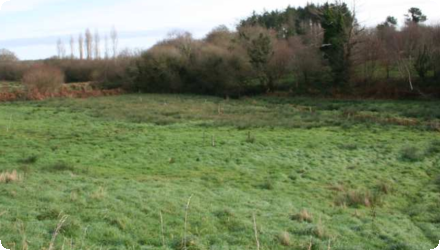
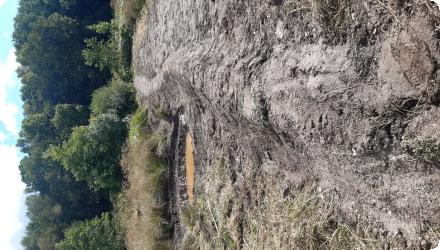
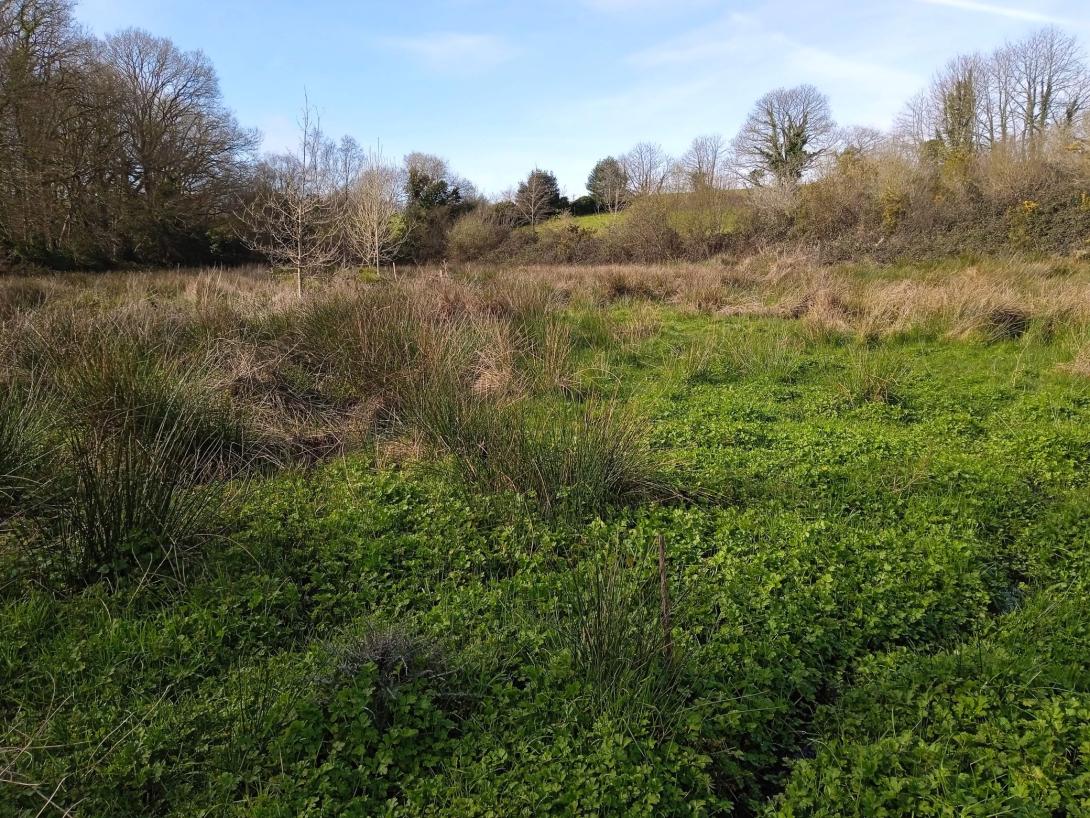
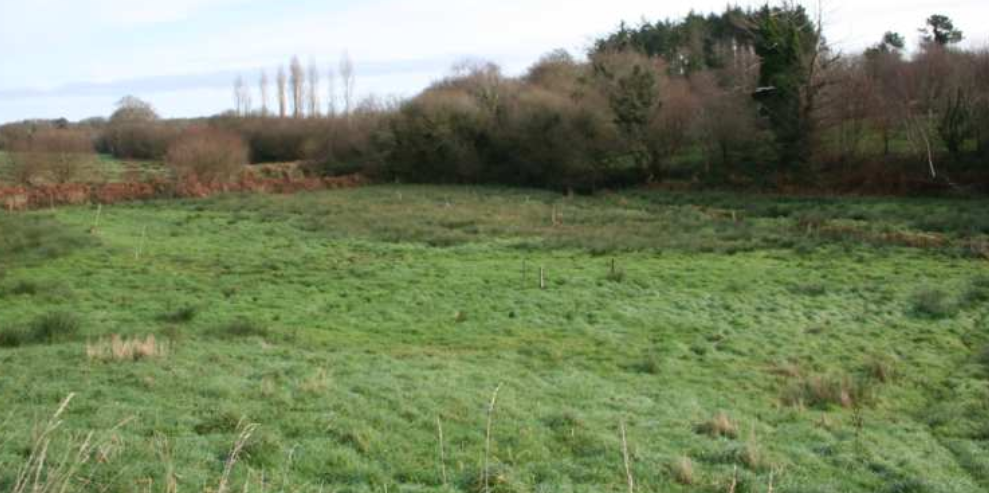
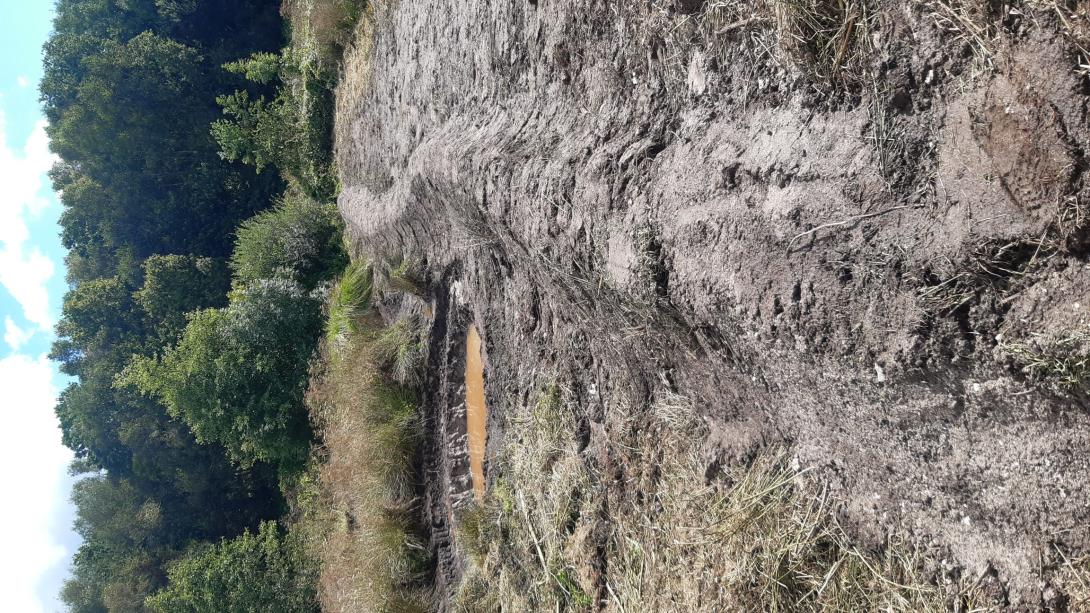
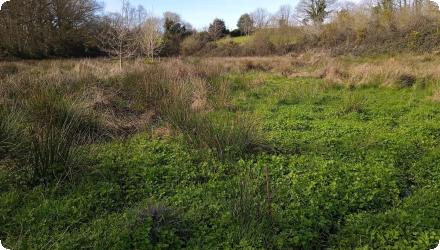
Headwater wet meadow (Saint-Évarzec, Finistère) where two drainage ditches short-circuited a hillside spring and routed nitrate-rich flows directly to the stream. In 2014, the ditches were infilled (north ditch partly to keep upstream runoff entering the meadow) and a small berm removed, with protected-species precautions. The short-circuit was eliminated: all slope water now crosses the wetland, maintaining high N removal; soil saturation increased and low-water levels rose slightly near the former ditch. Agricultural operability decreased (bearing capacity), so mowing is now feasible only in very dry years; the plot is used within a Brittany “pie-noir” grazing circuit.

However, the potential for agricultural exploitation since implementation is not as high as hoped, unlike the very satisfying hydrological effect : the meadow remans wet even during very dry years like 2022. The peaty wet part of the site is intentionally left to natural woodland succession (hoping for future understorey grazing), as it is not suitable for agricultural use otherwise.

The project owner/operator is the Communauté de communes du Pays Fouesnantais with RERZH technical support and monitoring. The costs were very low, an excavator hire for ~€560 and the rest of the works costs were included in the collectivity's budget (studies/monitoring covered by RERZH).

More recently, after the initial over-excavation and reuse of oxidised berms diverted part of the spring toward the southern sector, increasing waterlogging and limiting mowing, a corrective package created a small pond at the spring with overflow toward the peatier/northern side, resumed brush-cut mowing to restore a haying dynamic, and reinforced invasive nutria control in 2024.
Last update
2025
Summary
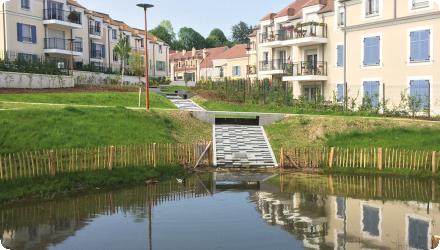
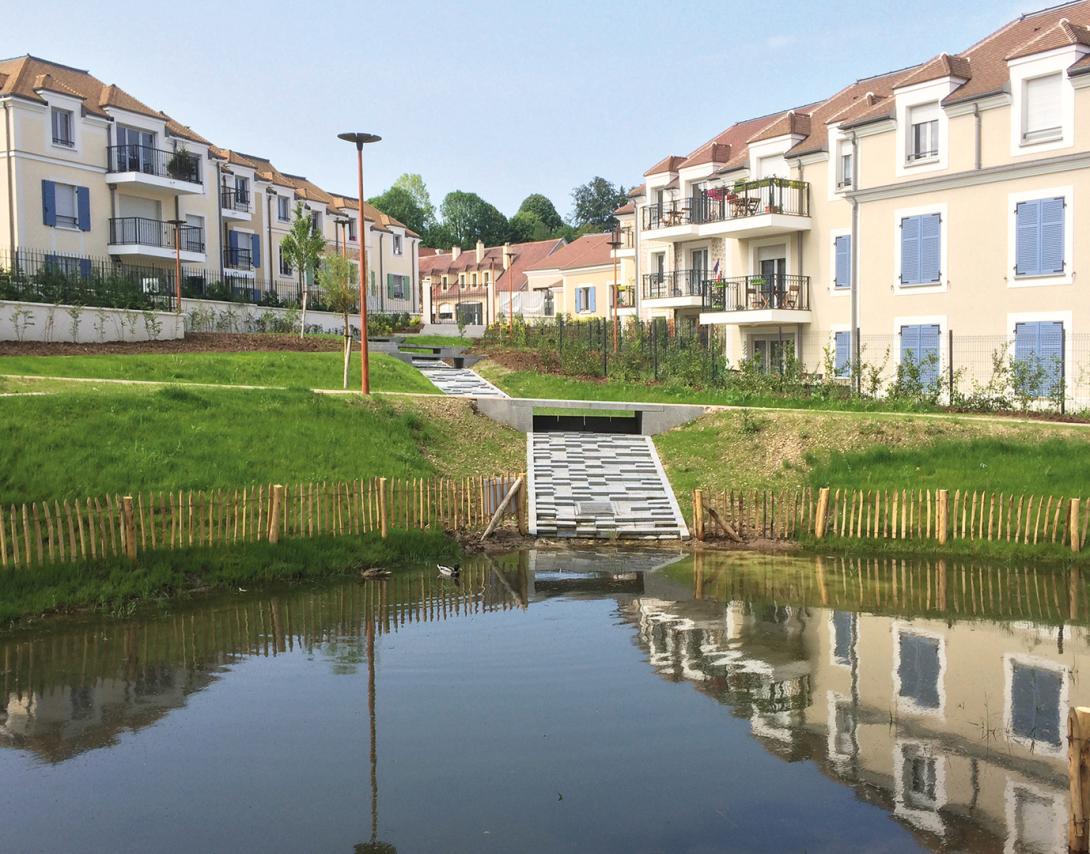
Fourqueux (≈4,000 inh.) requalified its centre with new housing and created the “Jardin des Eaux” to manage stormwater from ~1.7 ha. The park routes runoff through a sequence of dry basins to a planted permanent pond, infiltrating frequent rain and avoiding direct discharge to the separate sewer draining to the Seine via the ru de Buzot. Delivered in 2016 after 2014–15 studies (as part of the Cœur de village programme), the site is both hydraulic infrastructure and neighbourhood amenity. Recent technical records report ~482 m³ of storage and ~5,000 m³/year of volumes kept out of sewers (≈80% of ~700 mm annual rainfall) over ~9,000 m² of active surfaces; typical events up to ~8 mm are handled on site, with measured infiltration times of 15–58 h depending on the basin. The landscaped area itself is ~3,800 m², reconnects clean water to the ru, and supports colonisation by aquatic fauna. The project has been showcased in professional visits and local programming, and remains highlighted by Saint-Germain-en-Laye; it was co-funded by AESN, Île-de-France Region and Yvelines Department.
Last update
2025
Summary
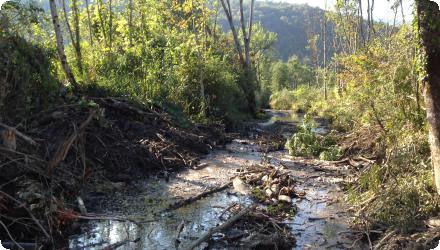
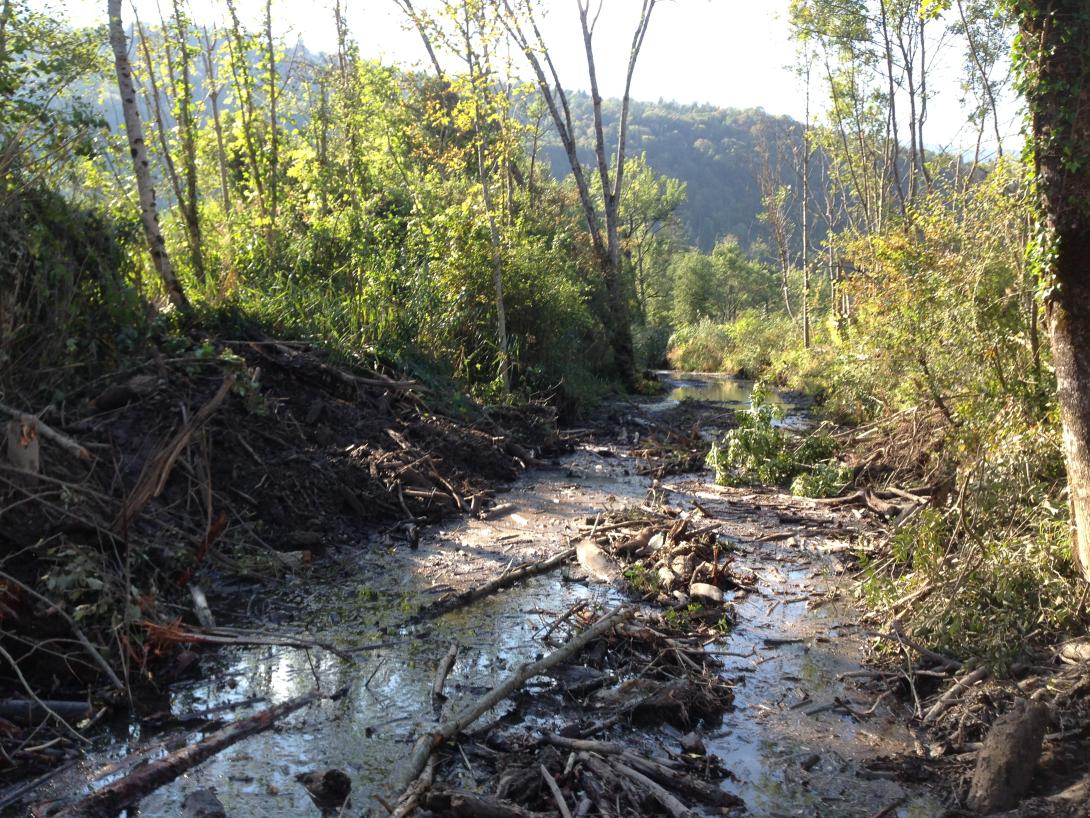
Due to major developments over the past two centuries, the Eau Morte Valley (a tributary of Annecy Lake) has a hydrosedimentary dysfunction with incised areas and areas with sediment excesses and an alluvial marsh disconnected from flooding. To reduce the impacts of the river's floods on uses, and to prevent the risk of urban areas flooding, a functional restoration programme for the valley has been developed by the federation of municipalities of Annecy lake sources. It was based on the renaturation of the Eau Morte bed, the functional restoration of the Giez marsh and the construction of crossing structures. This work has given the marsh a role as a flood expansion area. This project was also carried out by involving local residents in a process of territorial dialogue so that they themselves would be actors in the area and would participate in its management.
Last update
2025