Summary
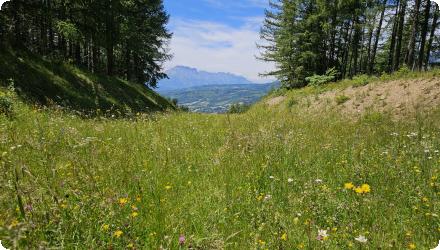
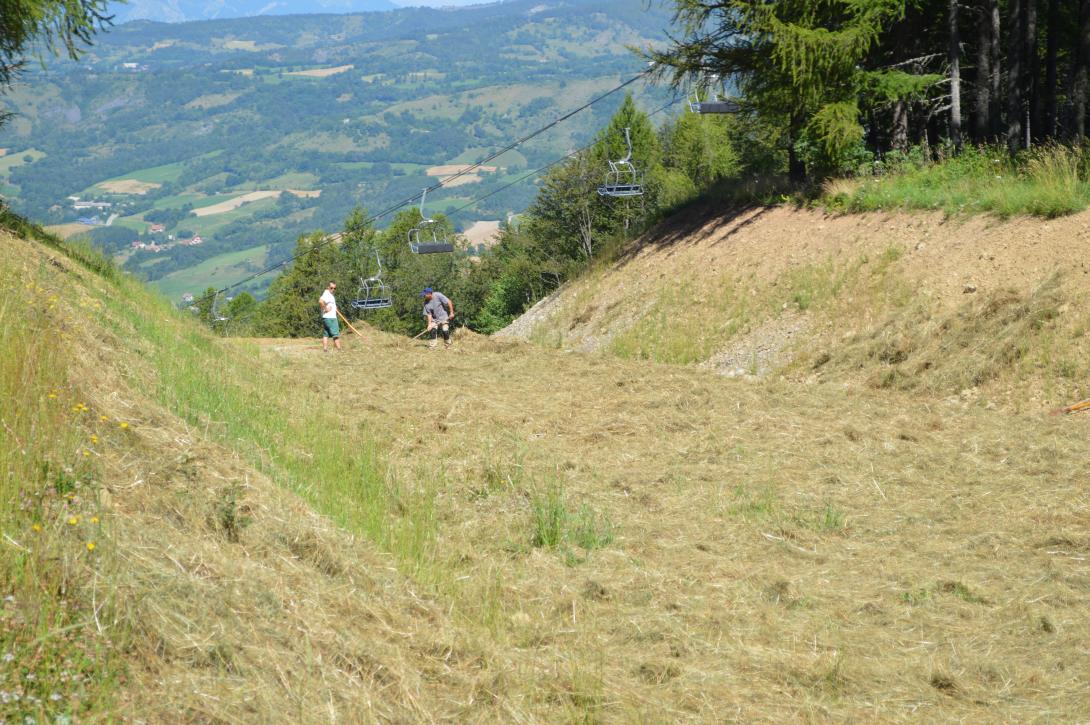
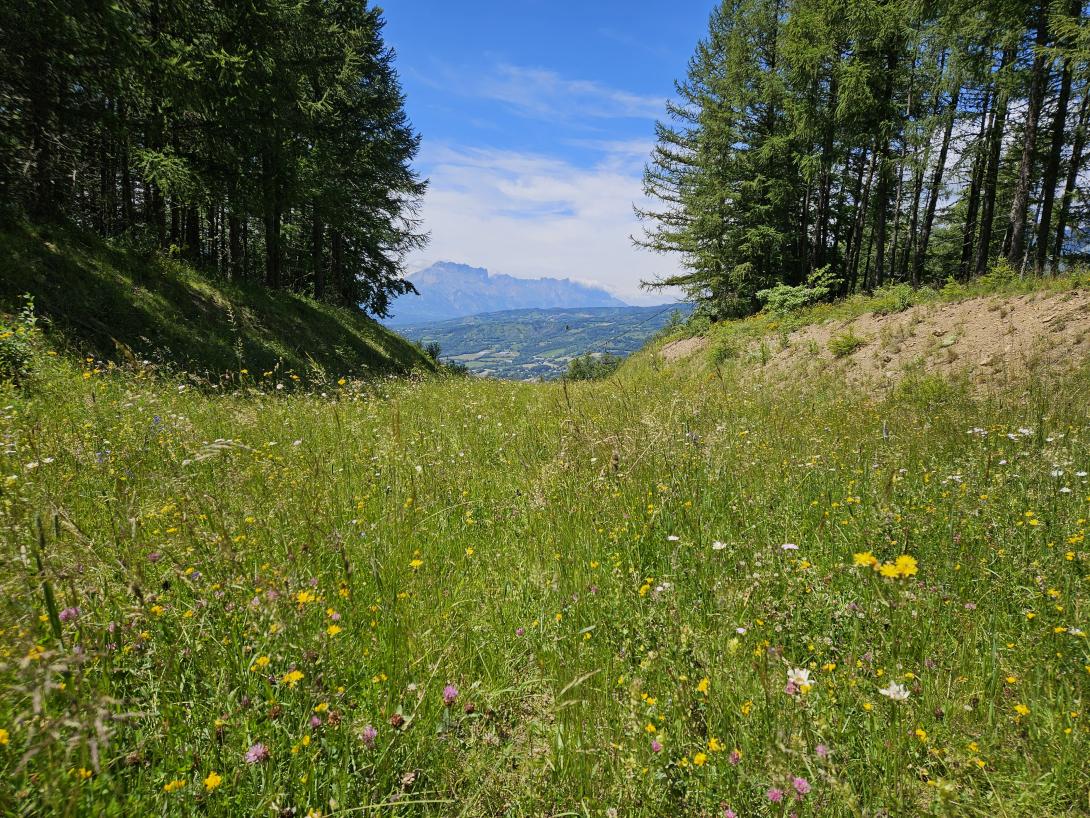
In Saint-Léger-les-Mélèzes (Hautes-Alpes), a ski slope stripped by 2015 remodeling linked with works around the upstream Libouze snowmaking reservoir was revegetated to curb erosion, improve snow retention and summer landscape, and allow grazing. The “green hay” transfer (hay harvested nearby and spread fresh) was applied in July 2016 after earlier attempts with commercial seed failed. Monitoring on fixed quadrats recorded rapid establishment of native meadow species; the slope was left ungrazed for two years to ensure rooting. Results reported by local stakeholders indicate reduced erosion and better snowpack persistence compared to conventional seeding. The operation formed part of the Sem’ les Alpes programme on local-provenance seed solutions for Alpine grasslands. Since then, CBNA has documented a second site in the resort (“Pied de station”, ~3,000 m²) using composted sewage sludge plus green hay, and regional partners and media have highlighted the Vernie Rouge case in compilations of ecological engineering exemplars.
Last update
2025
Summary
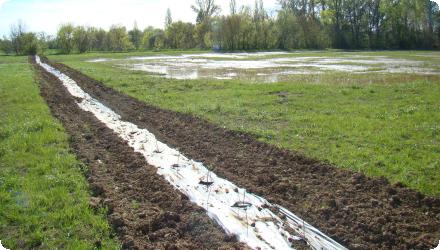
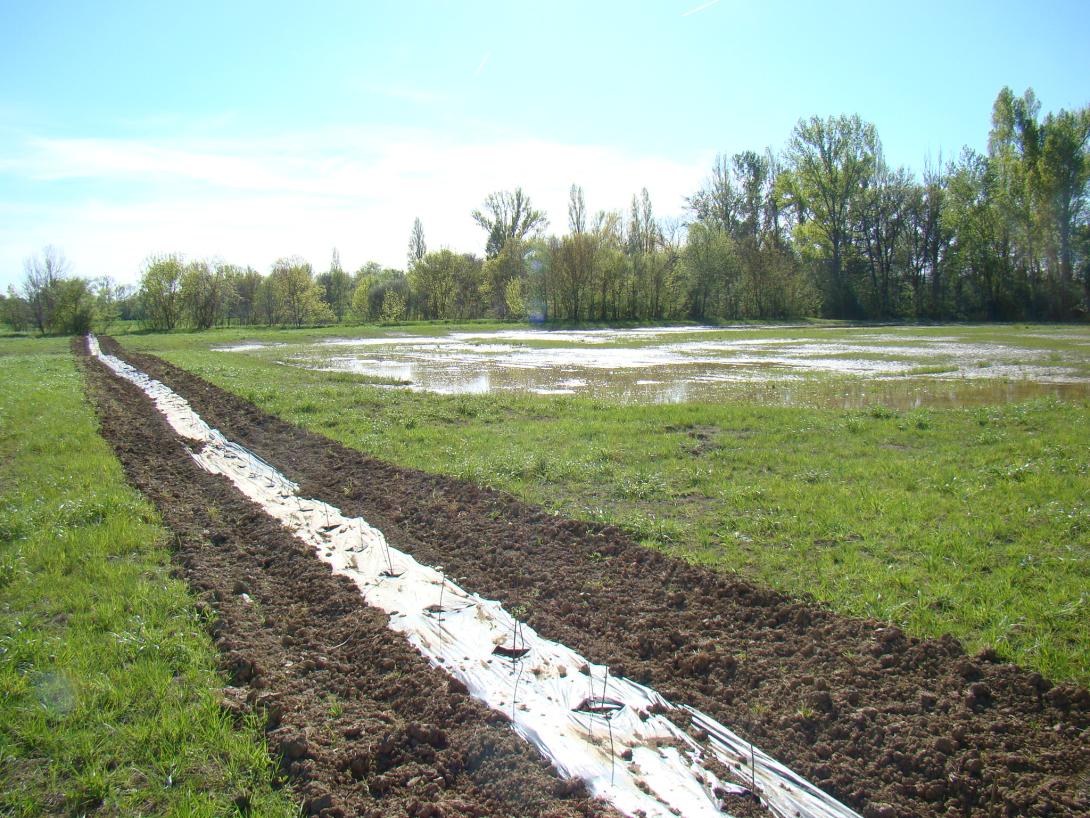
Upstream of L’Isle-Jourdain (Gers), the Save’s active floodplain hosts a complex of wet meadows. To safeguard the downstream drinking-water abstraction, restore wetland habitats and slow floods, the Gascogne Toulousaine community acquired a 13-ha riparian parcel (“Quintarets”), leased it under an agri-environmental contract, converted it to permanent natural grassland using late-cut “hay-flower” transfer, and dug shallow detention basins to retain floodwater and favour wetland plants. Since 2013 the municipality has embedded this action within a wider priority wetland area (~468 ha) and a Departmental Sensitive Natural Area (≈456 ha), with ongoing land purchases and site management led by the SYGESave river syndicate. Technical follow-up (2013–2017) reports rapid grassland naturalisation after hay transfer and longer water residence in the excavated basins. A major update is the June 2022 biotope protection order (APPB) for Bellevalia romana, which secures >22 ha within the L’Isle-Jourdain wetland. Overall, the Quintarets restoration is now part of multi-year catchment management that couples biodiversity protection, drinking-water safety, flood attenuation and public awareness.
Last update
2025
Summary
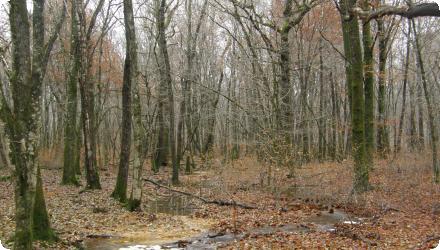
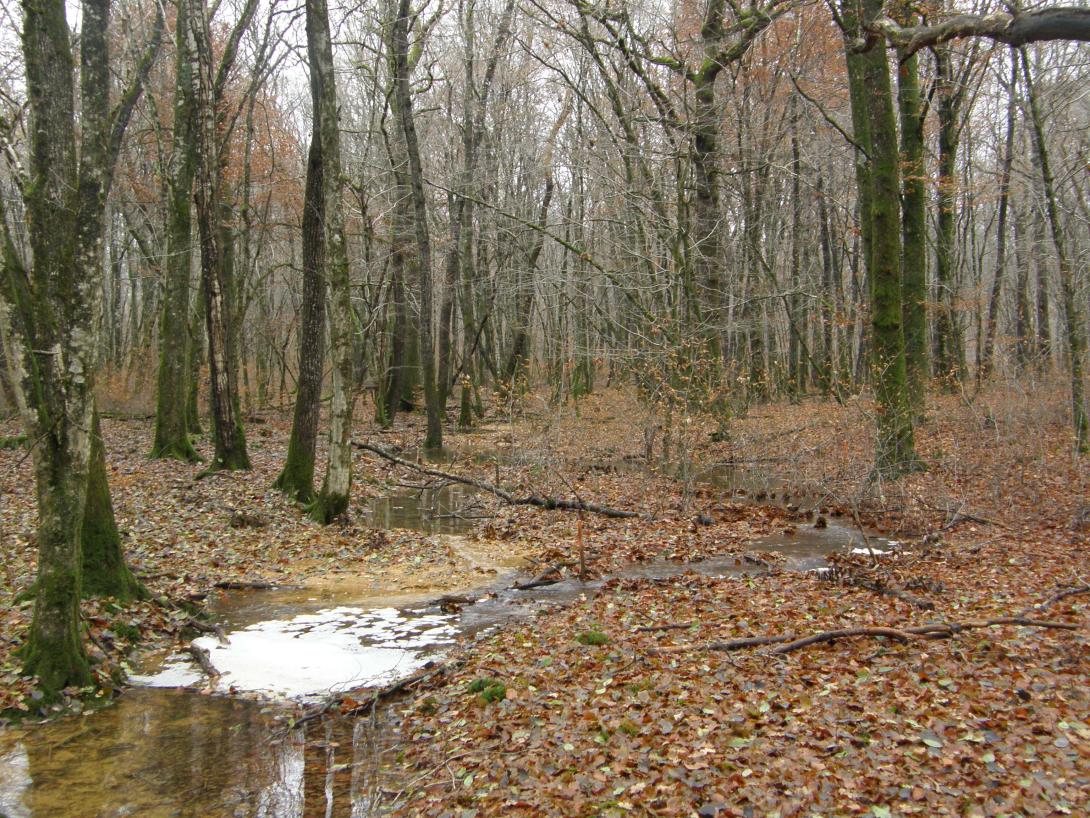
Chaux Forest is a timber production area threaded by many small, originally sinuous headwater streams. A 2006–2008 LIFE pilot restored two intermittent tributaries; building on those results, the National Forest Office (ONF) scaled up to ~45 km of temporary tributaries from 2015, redirecting flows to former meanders, adding coarse woody material and sediment to counter decades of straightening/drainage that had widened and incised channels, sped floods and lowered near-surface water tables. Since 2021, ONF and the Doubs-Loue river syndicate have restored ~13 km of the Clauge mainstem inside the forest (2021–2023): narrowing/raising the bed with vegetated berms, gravel recharge, selective infilling of over-wide sections and engineered log structures. Monitoring reports a strong hydrological response: depending on context, the hydropériode of the Clauge headwaters and intermittent tributaries now increases by ~2–6 months per year (including +3–12 weeks in spring), alongside recovery of aquatic bio-indicators. In June 2025 the project received the national “Rivière en bon état” distinction and the Nature-based Solutions award from the Rhône-Méditerranée-Corse Water Agency. Next step: design for restoring the Tanche tributary, with works targeted for 2026.
Last update
2025