
Photo gallery
Summary
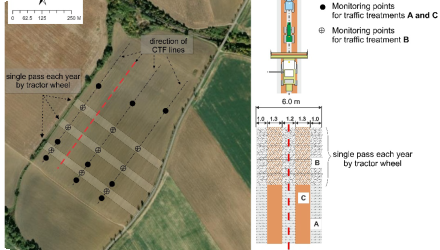
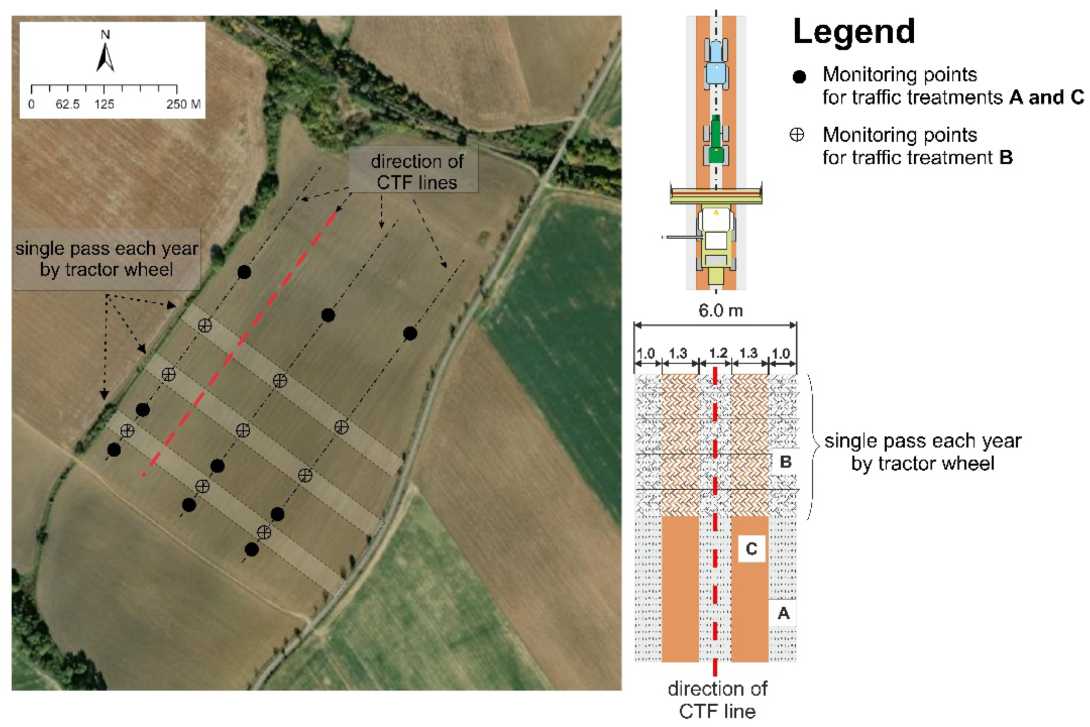
This case study documents a long-term Controlled Traffic Farming (CTF) experiment on a 16 ha steep arable field operated by the Slovak University of Agriculture near Kolíňany, Nitra Region, Western Slovakia. CTF was introduced in 2009 and the field-scale layout was established in 2010 using a 6 m machinery module with permanent tramlines. The design confines wheel traffic to fixed lanes so that about half the field remains traffic-free. Slopes are mostly 3 to 7 % on silt-loam soils in a continental climate.
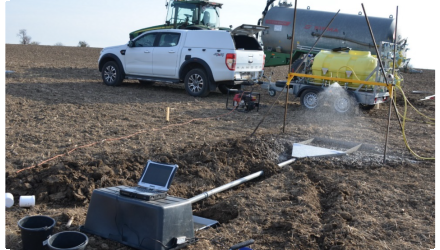
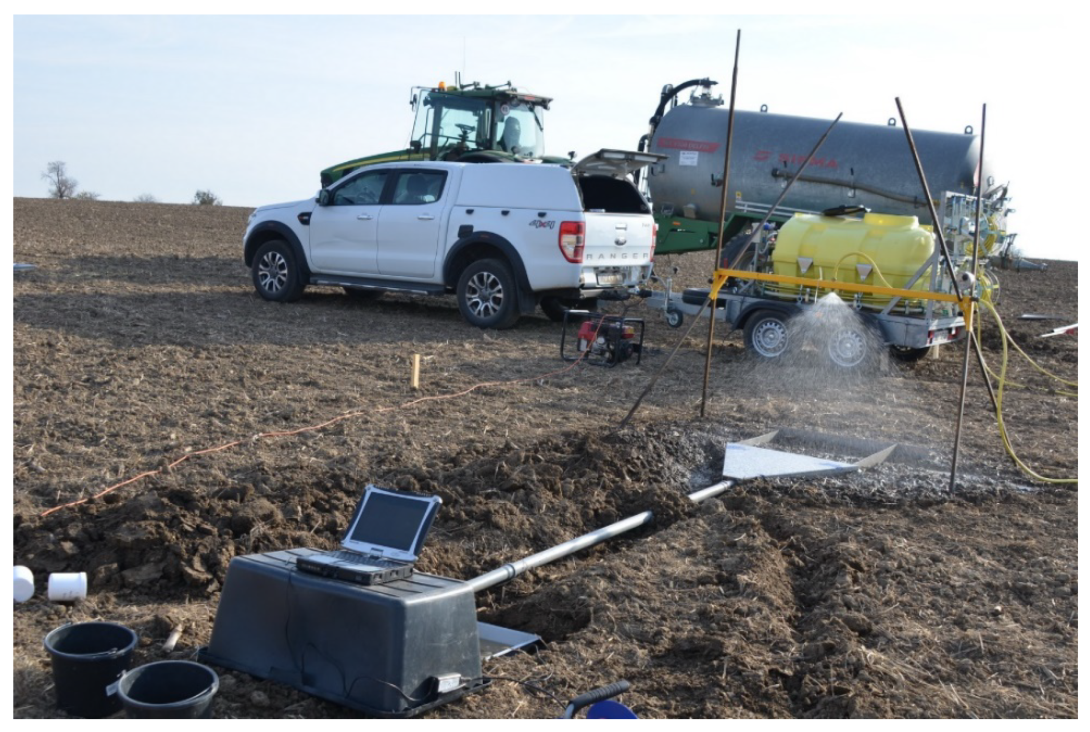
The objective was to test whether confining traffic reduces rainfall-induced runoff and soil loss under Central European conditions. The team combined erosion risk mapping using USLE and RUSLE with targeted field measurements. In 2021 they used a rainfall simulator on three locations representing different traffic intensities. They also assessed soil physical condition using a cone penetrometer.
Results show that the no-traffic area showed the lowest runoff, with runoff intensity after 20 min about ten times lower than in the multiple-traffic area. Total sediment collected after 35 minutes was about 70 % lower in no-traffic than in single-pass, and only a quarter of the multiple-pass loss. Across the 16 ha field, modelling indicated that roughly 30 % of the area has a potential annual soil loss of 5 to 15 t ha⁻¹, which aligns with Slovak regulatory thresholds. The traffic-free strips consistently exhibited better structure and infiltration, confirming the mechanism behind reduced runoff.
Implementation factors that supported performance include permanent tramlines perpendicular to slope, a consistent 6 m module, and continuity of the layout over more than a decade. The study also notes that European adoption often follows a tiered pathway, from low-cost layout conversion using existing machinery to wider modules that require equipment changes. While detailed costs for this site are not provided, prior European analyses show potential payback from yield and tillage savings as systems scale. Overall, the case provides robust, Central Europe-specific evidence that CTF can substantially reduce runoff and soil loss on sloping cropland when tramlines are maintained and operations are aligned to the layout.
The objective was to test whether confining traffic reduces rainfall-induced runoff and soil loss under Central European conditions. The team combined erosion risk mapping using USLE and RUSLE with targeted field measurements. In 2021 they used a rainfall simulator on three locations representing different traffic intensities. They also assessed soil physical condition using a cone penetrometer.
Results show that the no-traffic area showed the lowest runoff, with runoff intensity after 20 min about ten times lower than in the multiple-traffic area. Total sediment collected after 35 minutes was about 70 % lower in no-traffic than in single-pass, and only a quarter of the multiple-pass loss. Across the 16 ha field, modelling indicated that roughly 30 % of the area has a potential annual soil loss of 5 to 15 t ha⁻¹, which aligns with Slovak regulatory thresholds. The traffic-free strips consistently exhibited better structure and infiltration, confirming the mechanism behind reduced runoff.
Implementation factors that supported performance include permanent tramlines perpendicular to slope, a consistent 6 m module, and continuity of the layout over more than a decade. The study also notes that European adoption often follows a tiered pathway, from low-cost layout conversion using existing machinery to wider modules that require equipment changes. While detailed costs for this site are not provided, prior European analyses show potential payback from yield and tillage savings as systems scale. Overall, the case provides robust, Central Europe-specific evidence that CTF can substantially reduce runoff and soil loss on sloping cropland when tramlines are maintained and operations are aligned to the layout.
Last update
2025
Code
SA14
Sector
Agriculture
Year of Issue
2025
Summary
The process of managing the drainage volume and water table elevation by regulating the flow from a surface or subsurface agricultural drainage system.
Controlled drainage, also known as drainage water management, is the practice of using a water control structure to raise the depth of the drainage outlet, holding water in the field during periods when drainage is not needed. Unlike conventional free-draining...
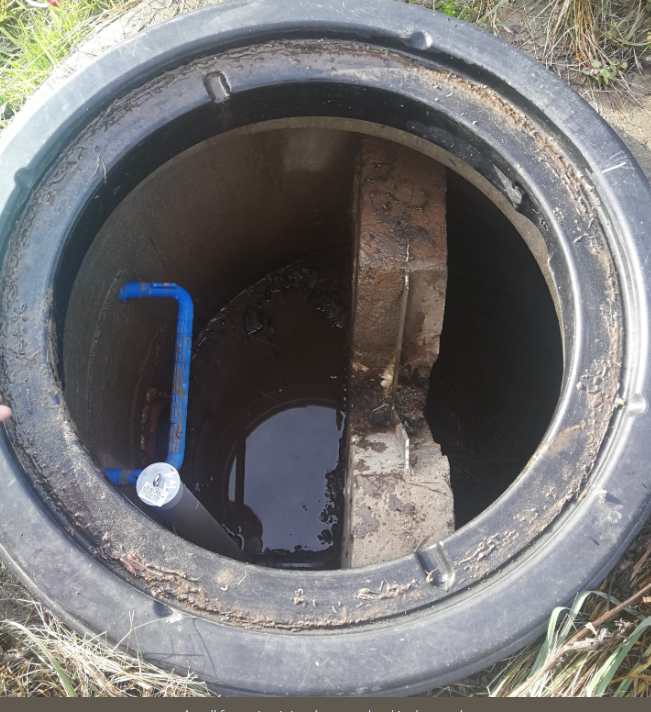 A controlled drainage manhole (Source: OPTAIN: Dotnuvélè River Basin [Lithuania])
Possible benefits with level
| Benefits | Level |
|---|---|
|
BP1 - Store runoff
|
Medium
|
|
BP2 - Slow runoff
|
Medium
|
|
BP5 - Increase evapotranspiration
|
High
|
|
BP6 - Increase infiltration and/or groundwater recharge
|
Medium
|
|
BP7 - Increase soil water retention
|
Medium
|
|
BP8 - Reduce pollutant sources
|
Medium
|
|
BP9 - Intercept pollution pathways
|
Medium
|
|
BP11 - Improve soils
|
Low
|
|
BP16 - Reduce peak temperature
|
Low
|
|
BP17 - Absorb and/or retain CO2
|
Low
|
|
ES1 - Water storage
|
Medium
|
|
ES3 - Natural biomass production
|
Low
|
|
ES4 - Biodiversity preservation
|
Medium
|
|
ES5 - Climate change adaptation and mitigation
|
High
|
|
ES6 - Groundwater/aquifer recharge
|
Medium
|
|
ES8 - Erosion/sediment control
|
Low
|
|
ES13 - Geological resources
|
Low
|
|
PO2 - Improving status of physico-chemical quality elements
|
Low
|
|
PO5 - Improving quantitative status
|
Low
|
|
PO6 - Improving chemical status
|
Low
|
|
PO7 - Prevent surface water status deterioration
|
Low
|
|
PO8 - Prevent groundwater status deterioration
|
Low
|
|
PO9 - Take adequate and co-ordinated measures to reduce flood risks
|
Medium
|
|
PO11 - Better protection for ecosystems and more use of Green Infrastructure
|
Medium
|
|
PO12 - More sustainable agriculture and forestry
|
High
|
Case study(ies)

Definition
River restoration is the set of actions that reinstate natural hydrological and geomorphic processes and reconnect a river with its floodplain and groundwater so ecosystems can self-organise. Process-based principles guide design toward causes rather than symptoms, matching actions to a site’s potential, acting at the right spatial scale and defining expected dynamics. In Europe, WFD implementation and the Biodiversity Strategy operationalise this through measures that improve continuity for water, sediment and biota, re-establish ecological flows, and recover hydromorphology. Toolkits developed by REFORM, ECRR and partners translate these principles into practice and monitoring. Outcomes typically include improved habitat diversity, water quality co-benefits, floodplain storage and resilience to extremes, when measures are sequenced within a catchment-scale plan.
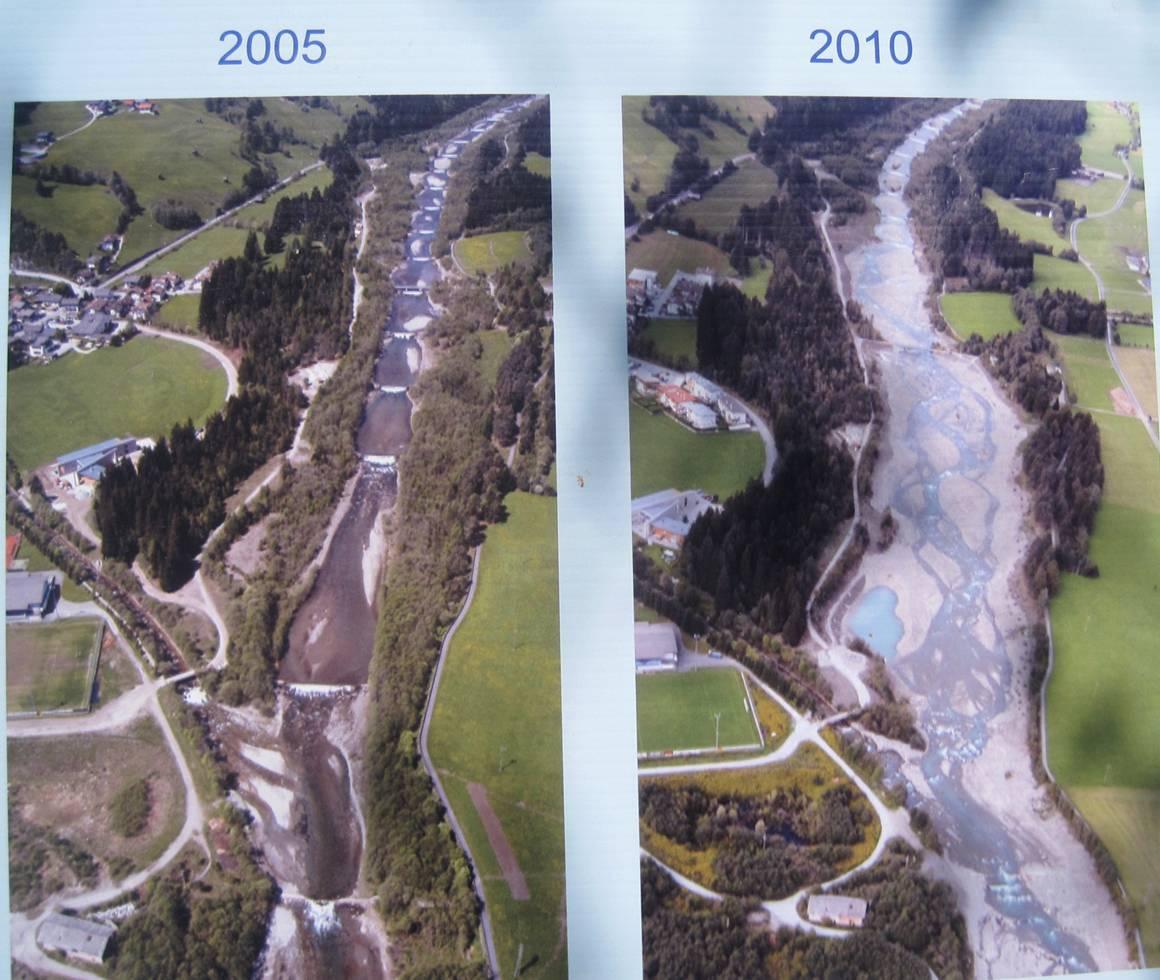
Source: ECRR - What is (ecological) river restoration ?
Code
SA06
Sector
Agriculture
Year of Issue
2025
Summary
Tillage is a mechanical modification of the soil. Intensive tillage can disturb the soil structure, thus increasing erosion, decreasing water retention capacity, reducing soil organic matter through the compaction and transformation of pores. Minimum tillage covers practices that reduce soil disturbance and keep crop residues on the surface. It improves infiltration, protects soil structure, limits erosion and preserves moisture by...
Possible benefits with level
| Benefits | Level |
|---|---|
|
BP6 - Increase infiltration and/or groundwater recharge
|
Low
|
|
BP7 - Increase soil water retention
|
Medium
|
|
BP8 - Reduce pollutant sources
|
High
|
|
BP10 - Reduce erosion and/or sediment delivery
|
Medium
|
|
BP11 - Improve soils
|
High
|
|
BP17 - Absorb and/or retain CO2
|
High
|
|
ES1 - Water storage
|
Low
|
|
ES4 - Biodiversity preservation
|
Medium
|
|
ES5 - Climate change adaptation and mitigation
|
Medium
|
|
ES6 - Groundwater/aquifer recharge
|
Medium
|
|
ES8 - Erosion/sediment control
|
High
|
|
ES9 - Filtration of pollutants
|
Medium
|
|
PO2 - Improving status of physico-chemical quality elements
|
Medium
|
|
PO3 - Improving status of hydromorphology quality elements
|
Medium
|
|
PO5 - Improving quantitative status
|
Medium
|
|
PO7 - Prevent surface water status deterioration
|
Medium
|
|
PO9 - Take adequate and co-ordinated measures to reduce flood risks
|
Medium
|
|
PO11 - Better protection for ecosystems and more use of Green Infrastructure
|
High
|
|
PO12 - More sustainable agriculture and forestry
|
Low
|
|
PO14 - Prevention of biodiversity loss
|
Low
|
Case study(ies)
Photo gallery
Summary
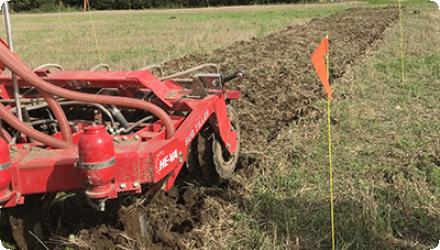
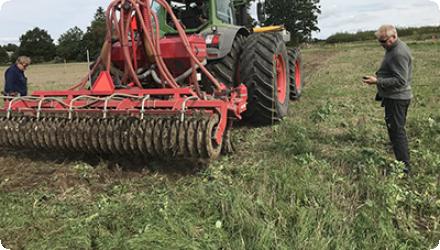
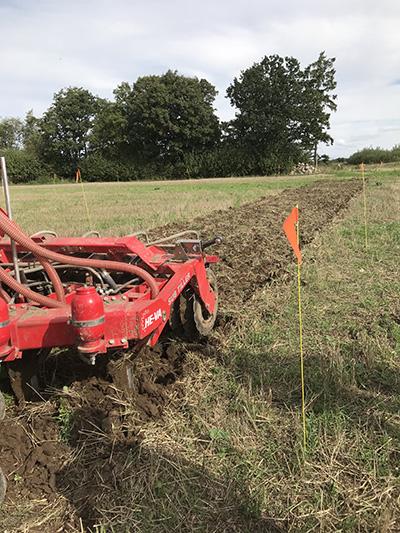
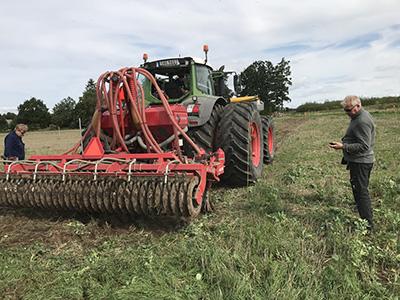
At Orup in Skåne, Sweden, SoilCare tested whether loosening a naturally compacted subsoil could improve rooting and yields. The site is a silty sand with high subsoil bulk density and roots seldom below 30 cm. The trial compared three treatments implemented once in autumn 2018: standard practice, subsoiling to the upper subsoil, and subsoiling with straw pellets injected into the 24 to 35 cm layer. A randomized block design with four replicates and 6 × 20 m plots was used. Winter wheat grew in 2019 and sugar beet in 2020. Measurements covered the volume of subsoil affected, root counts by depth, penetration resistance with a 2.5 MPa root-limiting threshold, bulk density and coarse fragments, soil C, N and pH in top- and subsoil, and yields.
Mechanical loosening created distinct subsoil rows. Only 38 to 45 percent of the upper subsoil volume was affected. Straw pellets settled at the bottom of loosened rows rather than mixing. Even so, rooting improved. Maximum rooting depth reached about 35 cm with subsoiling plus straw, compared to about 27 cm in the control. Penetration into the compacted layer increased from roughly 4 cm in the control to about 11 cm with loosening treatments. Despite better rooting, grain and beet yields did not differ significantly at whole-plot scale over two seasons. When results were adjusted for the fraction of subsoil actually affected by the strips, relative yields increased compared to the control.
Stakeholders judged the approach plausible and were interested in learning more, but highlighted barriers. Injecting large amounts of organic material is technically demanding and costly. Advisory capacity and subsidy flexibility matter for adoption. The short-term conclusion is pragmatic. Subsoiling, with or without straw pellets, improved rooting in a naturally compacted subsoil but did not deliver short-term yield gains. Longer-term, repeated treatments, alternative organic materials and multi-site testing are needed to understand agronomic and hydrological benefits.
Mechanical loosening created distinct subsoil rows. Only 38 to 45 percent of the upper subsoil volume was affected. Straw pellets settled at the bottom of loosened rows rather than mixing. Even so, rooting improved. Maximum rooting depth reached about 35 cm with subsoiling plus straw, compared to about 27 cm in the control. Penetration into the compacted layer increased from roughly 4 cm in the control to about 11 cm with loosening treatments. Despite better rooting, grain and beet yields did not differ significantly at whole-plot scale over two seasons. When results were adjusted for the fraction of subsoil actually affected by the strips, relative yields increased compared to the control.
Stakeholders judged the approach plausible and were interested in learning more, but highlighted barriers. Injecting large amounts of organic material is technically demanding and costly. Advisory capacity and subsidy flexibility matter for adoption. The short-term conclusion is pragmatic. Subsoiling, with or without straw pellets, improved rooting in a naturally compacted subsoil but did not deliver short-term yield gains. Longer-term, repeated treatments, alternative organic materials and multi-site testing are needed to understand agronomic and hydrological benefits.
Last update
2025