Authors
Nash, C.S., Grant, G.E., Charnley, S., Dunham, J.B., Gosnell, H., Hausner, M.B., Pilliod, D.S. and Taylor, J.D
Publisher
BioScience
Year
2021
Abstract
Beaver-related restoration is a process-based strategy that seeks to address wide-ranging ecological objectives by reestablishing dam building in degraded stream systems. Although the beaver-related restoration has broad appeal, especially in water-limited systems, its effectiveness is not yet well documented. In this article, we present a process-expectation framework that links beaver-related restoration tactics to commonly expected outcomes by identifying the set of process pathways that must occur to achieve those expected outcomes. We explore the contingency implicit within this framework using social and biophysical data from project and research sites. This analysis reveals that outcomes are often predicated on complex process pathways over which humans have limited control. Consequently, expectations often shift through the course of projects, suggesting that a more useful paradigm for evaluating process-based restoration would be to identify relevant processes and to rigorously document how projects do or do not proceed along expected process pathways using both quantitative and qualitative data.
Source type
Scientific Article
Authors
Law, A., McLean, F. & Willby, N.J.
Publisher
Freshwater Biology
Year
2016
Abstract
Reintroduced beavers (Castor fiber) can function as ecosystem engineers, offering a natural means of restoring degraded freshwater habitats. This study examined the impact of beaver dam construction on physically degraded headwater streams within a 13-hectare pastureland catchment in eastern Scotland. Through comparison of beaver-modified and unmodified sites, the research assessed whether hydromorphological changes induced by beavers lead to ecological improvements.

Beaver activity resulted in the formation of a series of dam pools, significantly increasing organic matter retention and aquatic plant biomass. Nutrient concentrations—particularly extractable phosphorus and nitrate—were notably lower downstream of beaver dams, suggesting improved nutrient retention, although suspended solids and water colour increased. While local (alpha) diversity of macroinvertebrates was reduced within beaver ponds, the overall (gamma) diversity across the stream landscape was higher due to habitat heterogeneity. Functional shifts in feeding guilds also indicated altered ecosystem processes.

These findings suggest that beaver dam-building can enhance physical complexity and biological diversity at the catchment scale, even in ecologically simplified, agriculturally impacted landscapes. The study supports the potential of beaver reintroductions as a low-intervention restoration tool, though trade-offs related to land use and fisheries require careful management.
Source type
Scientific Article
Authors
Diamond A.
Publisher
Northern Woodlands
Year
2023
Abstract
This article explores the use of Beaver Dam Analogues (BDAs) as a nature-inspired method for restoring degraded watersheds in the northeastern United States. Drawing on historical context, it highlights the ecological role beavers once played in shaping diverse, water-rich landscapes prior to their decline following European colonisation. While natural beaver populations are rebounding, many modern landscapes remain inhospitable or unsuitable for full reintroduction. BDAs offer a practical solution by mimicking the structural and hydrological functions of natural beaver dams. The piece documents hands-on restoration projects, notably in Vermont, where BDAs have successfully re-wetted floodplains, encouraged native plant growth, reduced erosion, and improved habitat conditions. Emphasising collaborative fieldwork, adaptive design, and traditional ecological knowledge, the article underlines how restoration practitioners are learning from beavers—both structurally and behaviourally—to reintegrate wood, water, and wetland dynamics into contemporary landscapes. It concludes by advocating for broader adoption of such low-tech, high-impact restoration techniques, while acknowledging the need for regulatory planning and long-term monitoring.
Source type
Journal
Authors
Albertson, L.K., Ouellet, V., Reinert, J.H., Korb, N. & Jaeger, M
Publisher
Aquaculture: fish and fisheries
Year
2022
Abstract
Beaver dam mimicry is an emergent conservation practice. We evaluated the influence of constructed riffles, a unique type of beaver mimicry aimed to store water and allow fish passage, on habitat for fishes in one control reach and one manipulated reach with mimicry structures added. The beaver mimicry reach had deeper pool habitats and deeper and wider riffle habitats compared to an unmanipulated control reach. Dissolved oxygen was similar among reaches, averaging 8.7 ± 0.2 and 8.9 mg/L in the beaver mimicry and control reaches, respectively. Sediment size was also similar among reaches, with a D50 of 8.1 and 10.6 mm in the beaver mimicry and control reaches, respectively. The beaver mimicry reach had little to no overhanging bank vegetation or riparian vegetation shade cover, while the control had 38% of its bank covered by canopy and 56% overhung by vegetation. These riparian characteristics result from a legacy of livestock grazing and lack of consistent vegetation planting during restoration. Longnose dace (Rhinichthys cataractae) and white sucker (Catostomus commersonii) dominated in the beaver mimicry reach, together comprising 70% of the fish assemblage post-structure installation. Arctic grayling (Thymallus arcticus) was not found in the beaver mimicry reach but was present in the control, albeit in small numbers of only 3% of the assemblage post-structure installation. These results highlight the need to consider both in-stream and riparian habitat features for fishes, as well as timescales of both hydrological and ecological outcomes in restoration design.
Source type
Scientific Article
Authors
Yeomans, P.A
Publisher
KEYLINE PUBLISHING PTY. LIMITED
Year
1958
Abstract
The Challenge of Landscape presents the foundational principles and practical application of Keyline Design, a pioneering system for sustainable land and water management developed by P.A. Yeomans in the mid-20th century. The book details Yeomans’s innovative approach to optimising the use of natural landforms to improve water distribution, increase soil fertility, and combat erosion. Central to the method is the identification of “keypoints” and “keylines” in the landscape, which guide the placement of earthworks and cultivation patterns to maximise water retention and enhance agricultural productivity. This work established Keyline Design as a vital framework for regenerative agriculture and landscape engineering.
NWRM(s)
Source type
Book
Publisher
Paysages Fertiles
Abstract
Keyline Design is a land and water management method developed by P.A. Yeomans, designed to regenerate soils, improve water distribution, and increase landscape fertility. It focuses on identifying a keypoint in the terrain—a subtle change in valley slope—and drawing keylines from this point to guide the placement of furrows, trees, roads, and water management features. Using a specialised plough, these furrows enhance soil aeration and water infiltration, redistributing runoff from valleys towards ridges to maximise moisture retention. This approach supports sustainable and resilient agriculture by working in harmony with natural topography and ecological processes.
NWRM(s)
Source type
Website
Authors
Giambastiani, Y., Biancofiore, G., Mancini, M., Di Giorgio, A., Giusti, R., Cecchi, S., Gardin, L. and Errico, A
Publisher
Land
Year
2023
Abstract
The global agricultural sector needs to implement good soil management practices, in particular to prevent erosion and to improve water-retention capacity. The introduction of tillage techniques along particular theoretical lines, called keylines, can make a significant contribution to improving the management of the soil and agricultural crops. The keyline system has been around for less than 100 years. With this preliminary work, we performed a comparative analysis of two small river basins (less than 100 ha) before and after keyline application, based on GIS computational models (TWI and SIMWE). The calculation models were elaborated starting from a DTM with 2 m resolution, obtained from a LIDAR survey. The comparative analysis, in qualitative terms, showed a positive effect of the keylines, both in terms of erodibility and infiltration of runoff water. The use of GIS models to verify the effectiveness in the planning phase can constitute a decision support system that guides agronomists, technicians, and farmers.
NWRM(s)
Source type
Scientific Article
Publisher
Cultures Permanentes
Year
2023
Abstract
Keyline Design is a land and water management approach developed by P.A. Yeomans in the 1950s. It uses topography to optimise water distribution, reduce erosion, and enhance soil health. By identifying “keypoints” in valleys and drawing gently sloped “keylines” towards ridges, the method redirects runoff to improve infiltration and resilience. A central tool is the Yeomans Plough, which aerates the soil without inverting it. Keyline Design promotes sustainable agriculture through more effective use of natural resources.
NWRM(s)
Code
N15
Sector
Hydro Morphology
Year of Issue
2025
Other sector(s)
Agriculture
Urban
Forest
Summary

Ponds are permanent bodies of water that store surface runoff with additional capacity to hold water during rainfall events. They come in different types, including retention, detention and multi-purpose ponds,  sediment capture ponds; shallow impoundments or flood storage reservoirs.

...

Possible benefits with level
Benefits Level
BP1 - Store runoff
High
BP2 - Slow runoff
High
BP3 - Store river water
Low
BP4 - Slow river water
Low
BP5 - Increase evapotranspiration
Low
BP6 - Increase infiltration and/or groundwater recharge
Low
BP7 - Increase soil water retention
Low
BP8 - Reduce pollutant sources
High
BP9 - Intercept pollution pathways
High
BP10 - Reduce erosion and/or sediment delivery
High
BP12 - Create aquatic habitat
High
BP13 - Create riparian habitat
Medium
BP13 - Create riparian habitat
Low
BP15 - Enhance precipitation
Low
BP16 - Reduce peak temperature
Low
BP17 - Absorb and/or retain CO2
Negative
ES1 - Water storage
High
ES2 - Fish stocks and recruiting
Medium
ES3 - Natural biomass production
Medium
ES4 - Biodiversity preservation
High
ES5 - Climate change adaptation and mitigation
Medium
ES6 - Groundwater/aquifer recharge
Medium
ES7 - Flood risk reduction
High
ES8 - Erosion/sediment control
Medium
ES9 - Filtration of pollutants
High
ES10 - Recreational opportunities
Medium
ES11 - Aesthetic/cultural value
High
ES12 - Navigation
Low
PO1 - Improving status of biology quality elements
Low
PO2 - Improving status of physico-chemical quality elements
Low
PO3 - Improving status of hydromorphology quality elements
Low
PO4 - Improving chemical status and priority substances
Low
PO5 - Improving quantitative status
Low
PO6 - Improving chemical status
Low
PO7 - Prevent surface water status deterioration
Medium
PO8 - Prevent groundwater status deterioration
Low
PO9 - Take adequate and co-ordinated measures to reduce flood risks
High
PO10 - Protection of important habitats
Medium
PO11 - Better protection for ecosystems and more use of Green Infrastructure
High
PO12 - More sustainable agriculture and forestry
Low
PO13 - Better management of fish stocks
Medium
PO14 - Prevention of biodiversity loss
High
Code
A16
Sector
Agriculture
Year of Issue
2025
Other sector(s)
Hydro Morphology
Summary

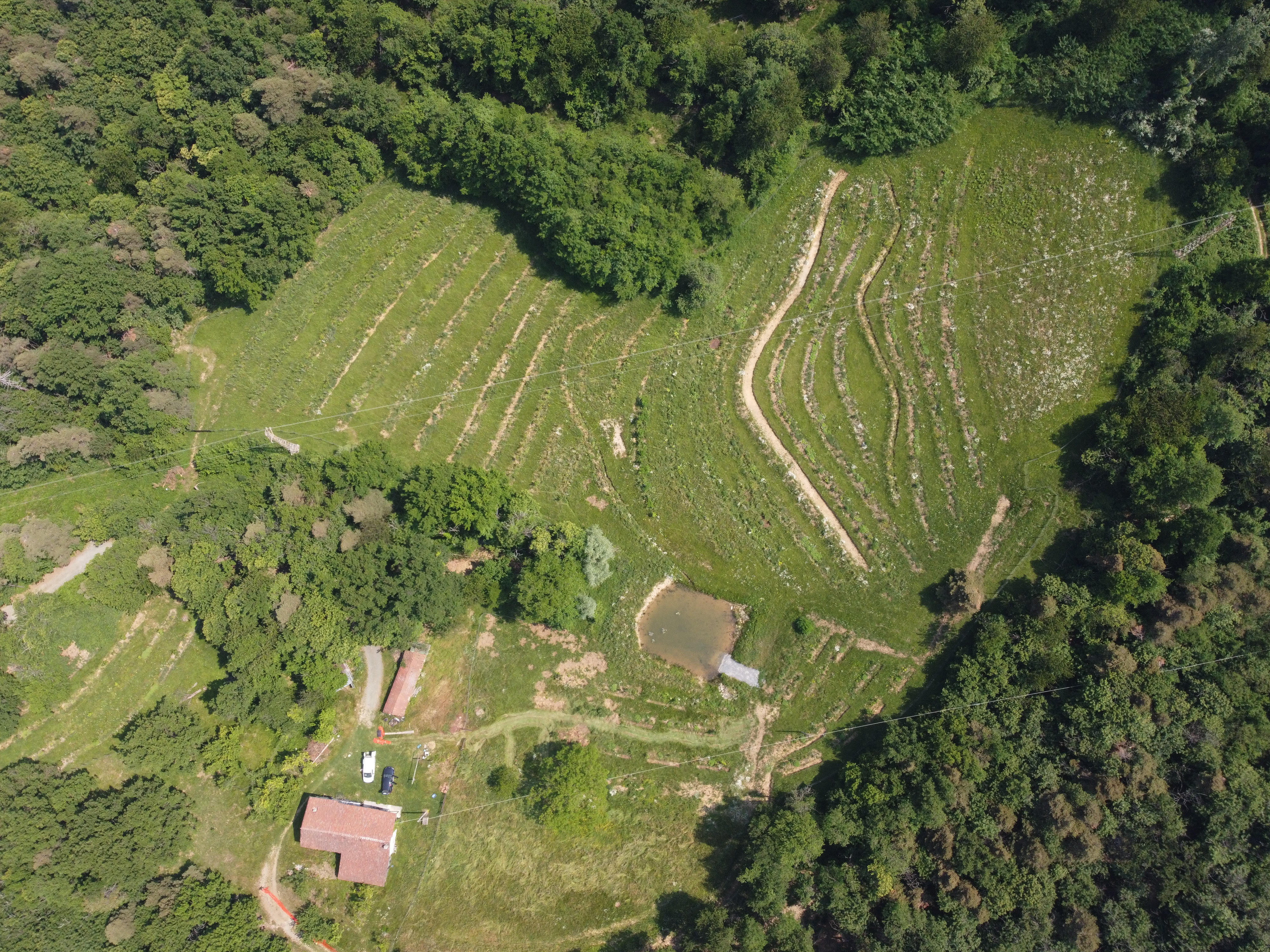
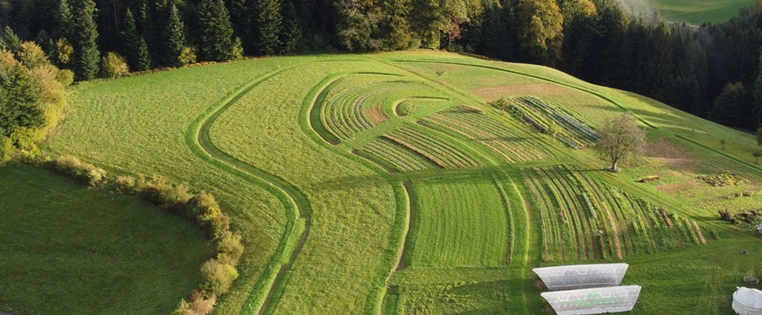
Keyline Design is a landscape management and regenerative agriculture tillage technique to optimise the use of water resources developed in the 1950s in Australia. The basic principle of keyline design is to create structures in the terrain that ensure that the water available from precipitation is absorbed, distributed and stored on the land in the best possible way.

A central concept...


Illustration: Key lines (DE) 

Source: Philipp Gerhardt - baumfeldwirtschaft.de


Illustration: Key line design, aereal view (IT)

Source: Pietro Zucchetti-Istituto Italiano di Permacultura

Possible benefits with level
Benefits Level
BP1 - Store runoff
Low
BP2 - Slow runoff
Medium
BP5 - Increase evapotranspiration
Medium
BP6 - Increase infiltration and/or groundwater recharge
Medium
BP7 - Increase soil water retention
High
BP8 - Reduce pollutant sources
Medium
BP9 - Intercept pollution pathways
Medium
BP10 - Reduce erosion and/or sediment delivery
High
BP11 - Improve soils
High
BP12 - Create aquatic habitat
Low
BP13 - Create riparian habitat
Medium
BP14 - Create terrestrial habitats
High
BP15 - Enhance precipitation
Low
BP16 - Reduce peak temperature
Medium
BP17 - Absorb and/or retain CO2
Low
ES1 - Water storage
Medium
ES3 - Natural biomass production
Medium
ES4 - Biodiversity preservation
High
ES5 - Climate change adaptation and mitigation
Medium
ES6 - Groundwater/aquifer recharge
Medium
ES7 - Flood risk reduction
Low
ES8 - Erosion/sediment control
High
ES9 - Filtration of pollutants
Medium
ES10 - Recreational opportunities
Low
ES11 - Aesthetic/cultural value
Medium
PO3 - Improving status of hydromorphology quality elements
Low
PO4 - Improving chemical status and priority substances
Low
PO5 - Improving quantitative status
Low
PO6 - Improving chemical status
Low
PO7 - Prevent surface water status deterioration
Low
PO8 - Prevent groundwater status deterioration
Low
PO9 - Take adequate and co-ordinated measures to reduce flood risks
Low
PO10 - Protection of important habitats
High
PO11 - Better protection for ecosystems and more use of Green Infrastructure
Medium
PO12 - More sustainable agriculture and forestry
High
PO14 - Prevention of biodiversity loss
High