Code
SU05
Sector
Urban
Year of Issue
2025
Other sector(s)
Agriculture
Summary
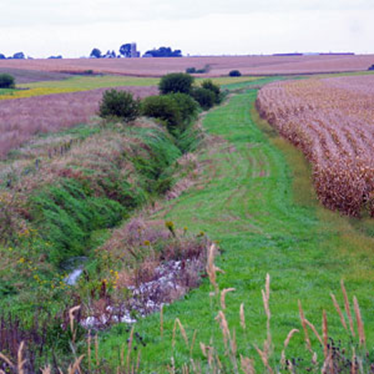
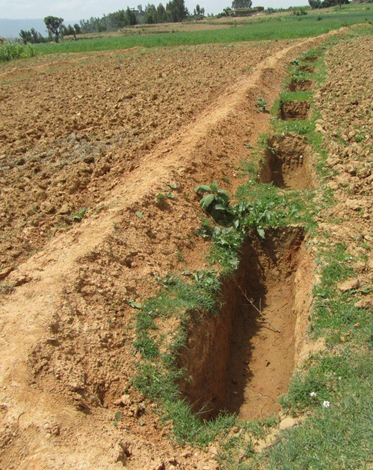
Channels and rills are shallow open surface water channels incorporated in to the start of a SuDS train. They collect water, slow it down and provide storage for silt deposited from runoff. They can have a variety of cross-sections to suit the urban landscape, and can include the use of planting to provide both enhanced visual appeal and water treatment.
The main role of channels and rills are to collect runoff at the start of a...
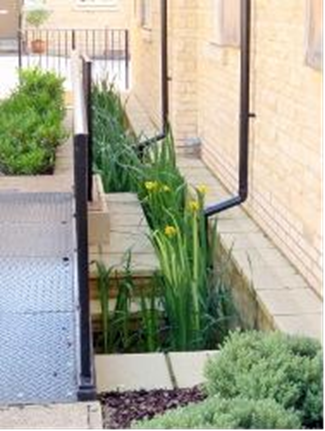
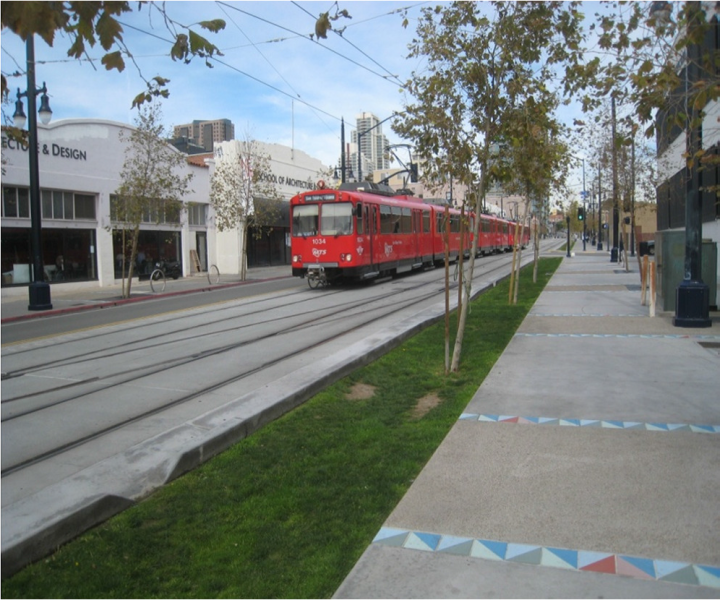
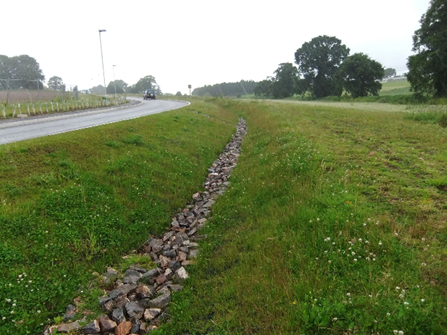
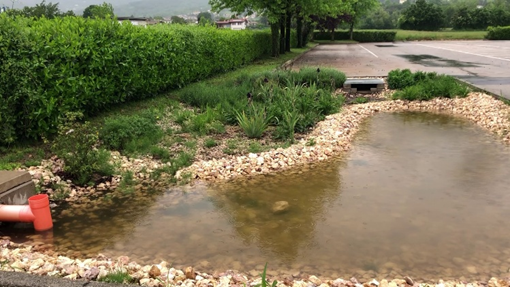
Channel in urban area
Source: susdrain
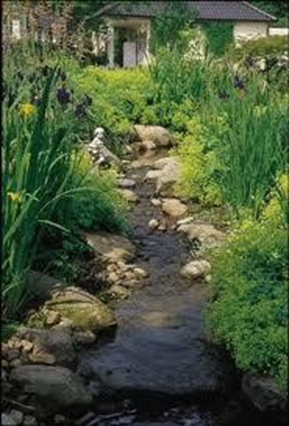
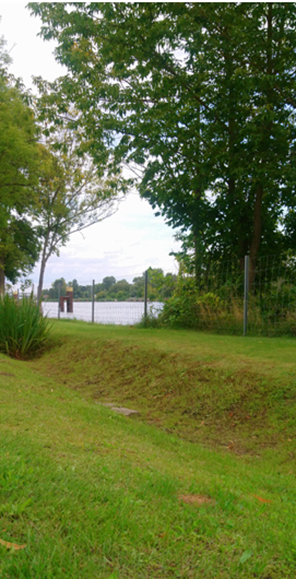
Rill in urban area
Source: Andras Kis’ presentation, NWRM Workshop 1
Possible benefits with level
| Benefits | Level |
|---|---|
|
ES3 - Natural biomass production
|
Low
|
|
ES4 - Biodiversity preservation
|
Low
|
|
ES5 - Climate change adaptation and mitigation
|
Low
|
|
ES7 - Flood risk reduction
|
Low
|
|
ES8 - Erosion/sediment control
|
Low
|
|
ES9 - Filtration of pollutants
|
Low
|
|
ES11 - Aesthetic/cultural value
|
Medium
|
|
PO9 - Take adequate and co-ordinated measures to reduce flood risks
|
Low
|
|
PO11 - Better protection for ecosystems and more use of Green Infrastructure
|
Low
|
|
PO14 - Prevention of biodiversity loss
|
Low
|
|
BP1 - Store runoff
|
Low
|
|
BP2 - Slow runoff
|
Medium
|
|
BP5 - Increase evapotranspiration
|
Medium
|
|
BP6 - Increase infiltration and/or groundwater recharge
|
Low
|
|
BP9 - Intercept pollution pathways
|
Medium
|
|
BP10 - Reduce erosion and/or sediment delivery
|
Low
|
|
BP12 - Create aquatic habitat
|
Low
|
|
BP14 - Create terrestrial habitats
|
Low
|
|
BP16 - Reduce peak temperature
|
Low
|
|
BP17 - Absorb and/or retain CO2
|
Low
|
Case study(ies)